










“Buyers don’t want to deal with goods from Israel”: Israeli exporters fear Europe-wide fallout
As Britain joins European efforts to restrict trade with Israeli settlements, manufacturers warn that buyers are unlikely to spend time determining where individual products were made. The concern is that measures aimed at settlements could evolve into a broader commercial barrier for Israeli exporters.
Over the past year, European countries have been advancing legislation and other measures to restrict trade with companies that manufacture products in Judea and Samaria, East Jerusalem and the Golan Heights. The initiatives have taken the form of primary legislation, government orders and import controls, with some moving beyond threats and declarations to actual legislation and restrictions.
Britain joined the effort yesterday, when the government announced sanctions targeting Israeli settlements in the West Bank. The sanctions, announced by Foreign Secretary Ed Miliband, will prohibit the purchase of goods and services from the settlements. The British government said the move is intended to promote a two-state solution and demonstrate support for the Palestinians. The British announcement was accompanied by a joint statement from 11 countries backing a two-state solution and condemning Israel’s activities in the territories. The countries - France, Canada, Spain, Ireland, Denmark, Finland, Sweden, Poland, Portugal, Norway and Iceland - also said they would support restrictions on trade in goods from the settlements.
Britain’s move came after the King of the Netherlands signed a decree that is expected to take effect on September 22. In Ireland, the president signed a law on July 23 prohibiting the import of products from Judea and Samaria and East Jerusalem, although it has not yet come into effect. Belgium is promoting an almost identical law that has not yet taken effect, while Canada and France are also threatening to join the initiatives.
According to data from the Foreign Trade Administration at the Ministry of Economy, the growing trade restrictions are causing concern among Israeli industrialists. In Spain, an order that took effect in September 2025 prohibits the import of products from East Jerusalem and Judea and Samaria. It also includes a ban on advertising products and services, an arms embargo and restrictions on the passage of fuel through Spanish territory. Ireland’s legislation, which has not yet come into effect, focuses on restrictions on imports rather than services or investments, although pressure has been building in the country to expand the measures.
According to data presented by Yulia Lerner-Snir of the Foreign Trade Administration, the Netherlands has completed one of the most far-reaching pieces of legislation seen so far in Europe. The order, which is expected to take effect in two weeks, differs from other European measures in that it also covers products manufactured in the Golan Heights, in addition to those from the territories and East Jerusalem. It also applies to Dutch citizens and corporations outside the Netherlands.
The Dutch order was adopted as a temporary measure for three years, unless the government decides to extend it. In addition, it prohibits the transit through the Netherlands of goods originating in Israeli settlements. A significant initiative is also being advanced in Belgium, after the country’s Council of Ministers approved an order regulating a ban on imports of products from Judea and Samaria and East Jerusalem. Belgium intends to prohibit all imports from these areas unless they are goods from Palestinian entities. The ban would also apply to products that were partially manufactured in the territories and East Jerusalem, but would not cover the Golan Heights. Norway is also seeing political and public discussion over the adoption of similar legislation.

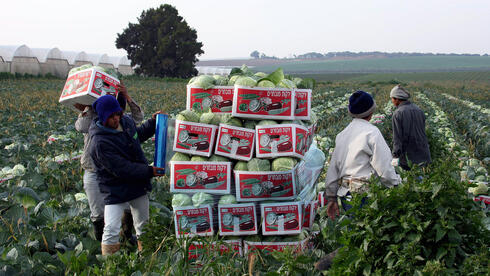
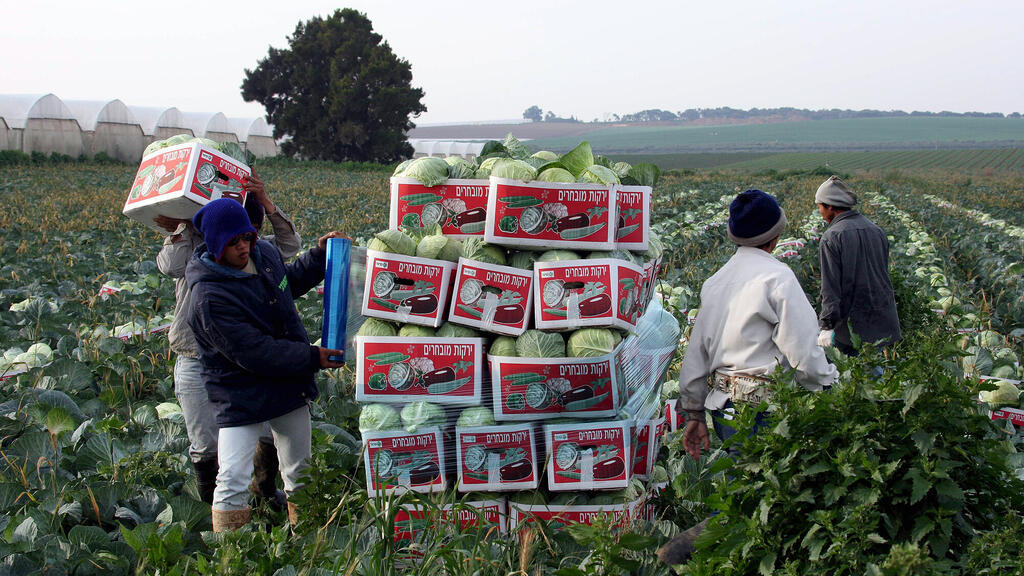
Products manufactured in Judea and Samaria include mainly dates, packaged salads and products from the irrigation industry. However, while the Foreign Trade Administration primarily points to products from the territories and East Jerusalem, as well as some agricultural products from the Golan Heights, industrialists argue that the impact is already extending to Israeli products more broadly.
Lior Levy, CEO of Biscol and chairman of the Food Industries and Cosmetics Industry Association of the Israel Manufacturers Association, is deeply concerned about the developments in Europe. He argues that Israeli exporters have faced growing difficulties selling goods to European countries in recent months, and not only products originating in Judea and Samaria.
“Buyers in Europe don’t care whether the product is manufactured in the territories, in the Golan Heights or elsewhere. In practice, these boycotts are on all products manufactured in Israel because buyers abroad don’t want to deal with goods from Israel and are not willing to start checking where the Green Line passes. Every company that sells to Europe and countries that implement regulations on boycotts will be affected. That’s all Israeli exports. Western Europe is increasingly left without Israeli products. This is a stressful and large-scale event. We are already at a point where this boycott, which is supposedly on products from the territories or the Golan Heights, is already permeating all Israeli products,” Levy said.
“According to Dutch law, selling a product that originates from the territories or the Golan Heights is punishable by six years in prison. The retailers there said, ‘Thank you, we don’t deal with that.’”
“A chain like Costco will now start to worry about whether the product is manufactured in the territories or not? It simply sees production in Israel and waves away the exporter. Why should it worry about it?” Levy added. “This is how Israeli exports are destroyed. The fear is that after the Netherlands, Spain and Britain, there will be no countries left in Europe to export to. Western Europe was the main pillar of Israeli exports. This is a catastrophe in terms of consumer products, and the Ministry of Economy tells us, ‘Look, the situation is difficult, look for other markets and invest a few million shekels to open markets.’”
Levy said the trade restrictions are coming on top of pressure from currency movements. “To the boycotts, we must also add the devaluation of currencies. We pay in shekels for payments and wages, but sell in dollars. For the same amount of produce, we received 17% less in the past year because of the decline in the dollar and euro exchange rates, and now we also have boycotts. All of this will catch up with us in 2026 when the state tells us, ‘There is a problem, find other markets.’ If France and Canada enter the event, it is crazy, we become another Russia in terms of the sanctions imposed on us.”
Industrial exports from Israel stood at approximately $56 billion in 2025. Exports to Europe accounted for 31% of total exports, while exports to the European Union alone accounted for 26.3%.
The Foreign Trade Administration at the Ministry of Economy acknowledges that the concern extends beyond companies directly affected by the restrictions.
“The boycotts by European countries directly block about 20 exporters, mainly of fresh produce, dates, salads and irrigation products. But when we talk about the chilling effect, we are talking about all Israeli exports, and this could also extend to medical equipment, medicines and consumer products,” said Roey Fisher, head of the Foreign Trade Division at the Ministry of Economy.
According to Fisher, “Britain, in its statement, built a coalition of countries that will support trade restrictions with Israel. Spain already has a ban, and in the Netherlands it will come into effect on September 22. But the British statement is particularly nauseating because of the harsh statements about Israel’s policy and statements about ethnic cleansing in the West Bank and illegal occupation. They talk about a ban on 30 products, but they are going to expand it. There are very harsh, significant statements in the British statement, and this is not healthy for us, to say the least, and the effect on Israeli exports is great, so we are working on alternative markets. But the exporter does not always know where the Green Line passes, and this will cause enthusiasm for working with Israel in general to cool, and we have to deal with this as strongly as possible.”
“When an exporter sells dates to a buyer abroad, he will not start explaining to him that they grow in the south of the Dead Sea and not in the north of the Dead Sea. Europeans do not need trouble in their lives, and this raises a great many challenges. However, most Israeli exports have real added value and Israeli products are in demand worldwide. 2025 was a record year for Israeli exports despite the situation,” Fisher said.
Following the publication of the Dutch order, Fisher said the Foreign Trade Administration spoke with each of the exporters growing dates in Judea and Samaria and developed a plan to open alternative markets, including India, the United Arab Emirates and South America, with countries such as Chile and Argentina.
“We opened the aid program and it has a track for exporters of fresh produce. They have to submit an application, and the grant in this program is up to 200,000 shekels per exporter.”
Exports from Judea and Samaria, East Jerusalem and the Golan Heights to Britain amount to $45 million, compared with total Israeli exports to Britain of $4.4 billion last year. Exports from the territories to the Netherlands amount to $50 million, most of it consisting of dates and salads.
Israel is trying to navigate an increasingly complicated trade environment. In Europe, the government is confronting growing restrictions on trade with Israeli settlements, while in the United States, President Donald Trump’s tariff plan is creating another source of pressure on exports.
“We are on the defensive on many fronts and we are constantly being pushed back, and we have managed to grow exports even in the past year, despite the disasters that befall us,” Fisher said.



