










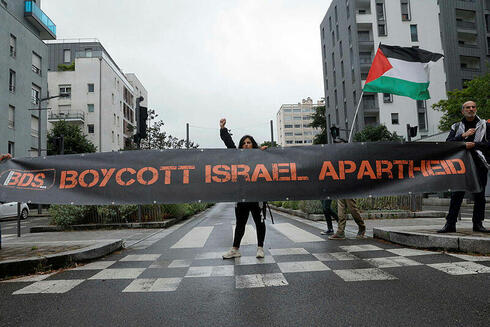
Israel can absorb a settlement boycott. The bigger risk is what comes next
The direct economic impact of Britain’s new measures is negligible, but 11 other countries quickly backed restrictions on settlement trade. The danger for Israel lies in sanctions expanding from products to companies, financial institutions and other parts of the economy.
What began as a British measure of seemingly negligible economic significance took on a very different dimension within hours.
Britain announced that it would ban imports of goods from Israeli settlements in the West Bank and establish a new sanctions regime targeting companies and individuals that provide services connected to settlement expansion. At first glance, the direct economic impact on Israel appeared almost insignificant.
The numbers explain why. According to the Central Bureau of Statistics, Israeli exports of goods to Britain, excluding diamonds, amounted to about $1.24 billion in 2025, compared with approximately $1.28 billion in 2024, a decline of about 3.6%.
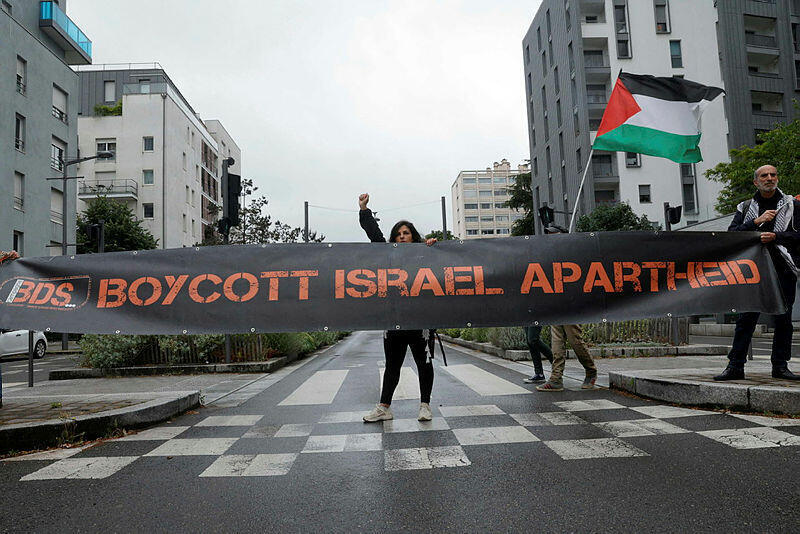
But goods are not the main component of what Israel sells to Britain. In 2024, the latest year for which the CBS provides a full breakdown of business-services exports by destination, Israel exported about $2.9 billion in business services to Britain, more than twice the value of its goods exports.
That distinction matters. Goods can be targeted relatively easily through import restrictions. Services are far harder to separate by geography, particularly when the service involves software, research and development, computing, financial services, intellectual property or other forms of knowledge.
The British figures also demonstrate how marginal settlement trade is relative to the broader economic relationship. Britain estimates that total trade with Israel reached about £6 billion ($8.1 billion) in 2025. By comparison, trade with the Palestinian territories amounted to only about £38 million, or slightly more than half a percent of that total, and that figure covers the Palestinian economy as a whole.
The volume of trade that would be directly affected by the British settlement ban is therefore tiny.
That calculation changed, however, when 11 additional developed countries joined a statement calling for restrictions on trade with settlements. The group includes France, Canada, Spain, Ireland, Denmark, Finland, Sweden, Poland, Portugal, Norway and Iceland.
The distinction between the countries is important. They did not all announce that they were immediately imposing a British-style ban. The joint statement refers to introducing national restrictions, supporting European restrictions or considering such measures in accordance with domestic procedures.
But the significance for Israel is nevertheless clear. What appeared in the morning to be a unilateral British measure that might or might not be replicated elsewhere had, within hours, become a position shared by a group of 12 developed countries. Eight are members of the European Union, while Norway and Iceland are deeply integrated into the European market. Britain and Canada are also among the world's largest economies.
The size of the markets involved makes the development more significant, even if the settlement-related trade itself remains small.
According to CBS data, the 12 countries imported about $6.8 billion worth of Israeli goods in 2025, excluding diamonds, compared with about $8.1 billion in 2024. Much of that decline was related to volatility in exports to Ireland, particularly a sharp drop in Israeli chip shipments, largely from Intel, alongside a shift in chip exports toward other markets, especially the United States.
The broader order of magnitude is nevertheless clear: these are important markets for Israeli exporters.
And goods tell only part of the story.
Israel's economic relationship with developed markets is increasingly based not on physical products but on knowledge and services. According to CBS data, Israeli exports of business services to 10 of the 12 countries for which separate figures are available totaled approximately $6.77 billion in 2024. Norway and Iceland are not listed separately in the services data, meaning that the figure is a lower bound.
Combining goods and business services, Israel exported at least $15 billion worth of products and services to these countries in 2024, roughly NIS 45 billion.
That is a substantial economic relationship. But it does not mean that the British measure, or even the broader group of countries supporting restrictions on settlements, represents a macroeconomic shock to Israel today.
Most of Israel's trade with these countries has nothing to do with the settlements. And much of that trade cannot simply be stopped at a port. It consists of software, computing, research and development, financial services, intellectual property and other services.
Even within goods exports, products originating in the settlements account for only a small share.
The more consequential question is therefore no longer how many dates, avocados or bottles of wine are exported from the West Bank. It is whether the focus of sanctions moves from the product to the company.
Britain's new sanctions regime is intended to allow action against companies and individuals providing services such as construction, infrastructure financing and real estate for settlement expansion. That creates a potentially much broader area of exposure.
The scale becomes apparent when looking at the database of companies linked to settlement activity maintained by the UN High Commissioner for Human Rights. About 87% of the companies on the list are Israeli, 138 out of 158.
These are not primarily small manufacturers operating beyond the Green Line. The database includes all five of Israel's major banking groups; construction and infrastructure companies including Shikun & Binui, Sapir, Ashtrom, Denya and Electra; communications companies including Bezeq, Pelephone, Cellcom, Partner and HOT; retailers including Shufersal and Rami Levy; and energy companies including Paz, Delek, Dor Alon and Sonol, alongside transportation companies and other major businesses.
That does not mean that all of these companies will be placed on a British sanctions list, or on the lists of any of the other 11 countries. There is currently no basis for making such a claim.
But it illustrates where the potential economic risk lies.
An Israeli bank does not necessarily have to be sanctioned itself to face economic consequences. A European bank, pension fund or institutional investor could decide that doing business with it requires additional legal checks, special compliance approvals or an assessment of the risk of future sanctions.
In financial markets, this is often referred to as de-risking: when the cost and uncertainty of maintaining a relationship become high enough, the simplest response can be to avoid the relationship altogether.
That is where the issue becomes potentially much larger than the direct value of settlement exports.
There is also a second risk: that the measures spread beyond Britain and become a broader European or Western policy. That process has already begun, at least politically, with 12 countries now supporting restrictions on settlement-related trade or considering such measures.
The economic relationship between Israel and these countries also extends far beyond commerce.
Israel is deeply integrated into Europe's research system. It is a member of Horizon Europe, the EU's research and innovation program, and has participated in European framework programs since 1996. By April 2025, Israeli entities had recorded 909 participations in 747 Horizon Europe grants worth a total of €831 million. Under the previous Horizon 2020 program, Israeli entities received approximately €1.3 billion.
Those figures represent thousands of relationships between Israeli and European universities, researchers and companies. Israel also participates in European academic programs such as Erasmus+, while Israeli football has been part of UEFA since 1994.
The broader point is that Israel's integration with Europe extends well beyond exports and imports. Its universities, technology companies, researchers, cultural institutions and sports organizations operate within European systems and networks.
That is why the long-term economic risk is not that Britain or another country stops buying dates or wine produced in the West Bank. It is that the distinction between Israel within the Green Line and the settlements gradually becomes less meaningful in the way foreign companies, financial institutions, investors, universities and other organizations assess their relationships with Israel.
That has not happened yet. In fact, the countries supporting the latest measures have explicitly stressed that their target is the settlements and that they intend to maintain trade with Israel inside the Green Line.
But the speed with which Britain was joined by 11 other countries is itself significant.
The size of the direct boycott is therefore not the main issue. The more important question is the size and speed of the coalition supporting settlement-related restrictions, and where its policy might go next.
Israel's economy can absorb the loss of settlement-related trade with these countries. The greater risk begins if the line moves from the product to the company, from the company to the bank that finances it, from the bank to the investor that owns it, or from the company to the university and public institutions that collaborate with it.
The final variable is political. With Israel entering an election period, there appears to be little indication that the current government intends to reduce tensions surrounding settlement activity in the West Bank. On the contrary, the issue has become an increasingly prominent part of the political debate.
That leaves Israel facing a risk that is difficult to measure in trade statistics: not the loss of a few million dollars in settlement exports, but the possibility that restrictions initially aimed at the settlements gradually increase the cost of doing business with Israel more broadly.



