










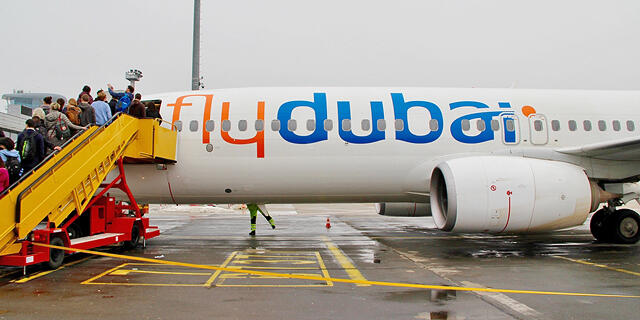
Israeli jets scrambled after Flydubai flight sends distress signal, lands in Saudi Arabia
Israel increasingly assesses the incident was not security-related, with preliminary inquiries pointing to a violent altercation between the pilots.
Israeli fighter jets scrambled on Wednesday after a Flydubai flight from Dubai to Tel Aviv transmitted a distress signal, prompting an emergency response as Israeli authorities increasingly assess that the incident was not security-related.
The aircraft, which was carrying more than 150 Israelis, has landed in Saudi Arabia. Preliminary inquiries by airport staff indicate that a violent altercation occurred between the pilots, according to the emerging assessment in Israel. The incident may have involved violence against crew members, prompting the pilots to transmit the distress signal.
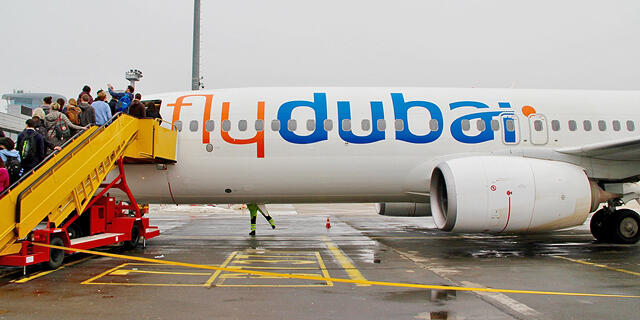
Passengers have been instructed to remain on board the aircraft and are awaiting further instructions.
Flydubai issued the following statement:
"Flight FZ1073, operating from Dubai (DXB) to Ben Gurion Airport (TLV) on September 30, was involved in an incident during the flight. The aircraft landed safely in Tabuk (TUU), and all passengers are safe and accounted for. The safety and well-being of our passengers and crew remain the company's top priority. Our teams are working closely with the relevant authorities. Further updates will be provided as additional verified details become available."
At Ben Gurion Airport, the landing of two Flydubai flights was delayed while security forces attempted to establish contact with the aircraft that had transmitted the distress signal. Other flights at the airport are operating as usual.
Prime Minister Benjamin Netanyahu and Defense Minister Israel Katz convened an urgent security consultation following the incident.
The IDF Spokesperson's Unit said the Chief of the General Staff had held a situational assessment with the Air Force commander, the head of the Operations Directorate, the head of the Military Intelligence Directorate and other commanders.
According to data from tracking website FlightRadar24, the aircraft, a Boeing 737 MAX 8 with registration A6-FKF, initially broadcast emergency code 7700, indicating a general emergency. Subsequently, some tracking systems reported the transmission of code 7500, signifying "unlawful interference." There has been no official confirmation from Flydubai or civil aviation authorities that the aircraft transmitted the 7500 code.
Flight data shows that the aircraft crossed into Jordanian airspace but shortly afterward made a U-turn and headed back toward Saudi Arabia. Tracking data also showed that the aircraft descended to an altitude of approximately 15,000 feet, significantly lower than the standard cruising altitude for the route.
The flight had been scheduled to land at Ben Gurion Airport at around 09:10. The reason for the distress signal and the change in flight path was initially unclear, but the emerging assessment in Israel is that the incident involved an in-flight emergency rather than a security threat.
The passengers remain on board in Saudi Arabia as authorities work to establish the circumstances of the incident.



