










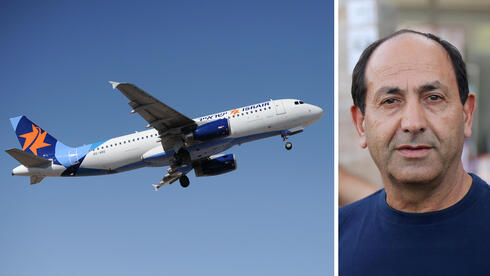
Israir posts deeper loss as war hits results and New York expansion drives spending
The airline's first-half loss nearly doubled to $35.5 million, even as it invested in wide-body aircraft and preparations for its planned New York route.
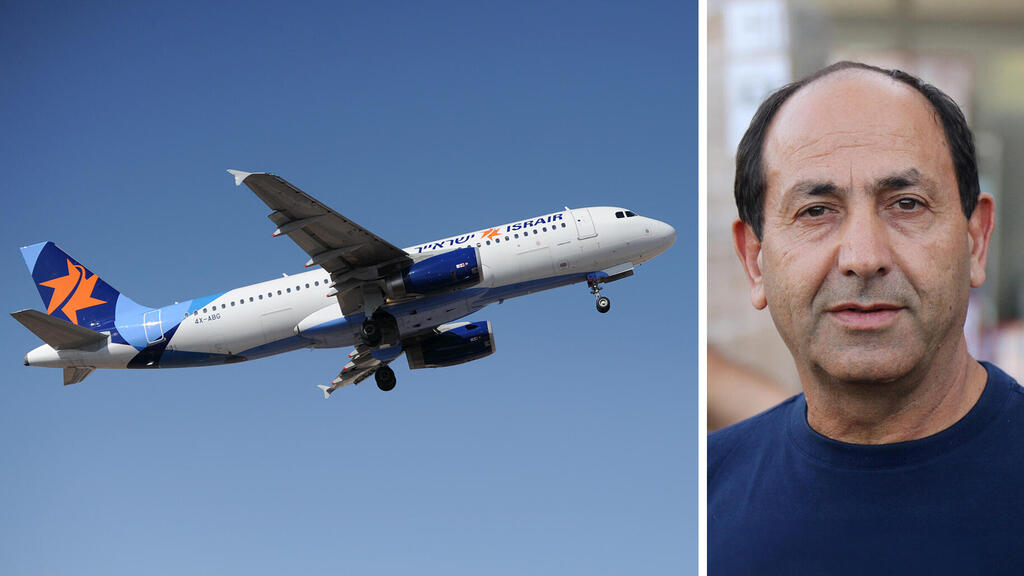
Israeli airline Israir, owned by businessman Rami Levy, reported its second-quarter and first-half results for 2026 on Wednesday, showing the impact of flight cancellations during Operation Roaring Lion, higher jet fuel prices and currency fluctuations. At the same time, the company is continuing to invest in expansion ahead of the launch of its New York route, setting an ambitious target for 2027 of more than 3 million passengers and approximately $1 billion in revenue.
Israir's net loss deepened to $35.5 million in the first half of 2026, compared with a loss of $17.2 million in the corresponding period last year, an increase of 89%. Revenue fell 8.6% to $249.5 million from $273.1 million a year earlier. The decline in revenue was accompanied by a sharp deterioration in gross profitability, with the gross margin falling from 7.4% to 1.6%.
The operating loss before other income widened to $26.4 million, compared with $6.7 million in the first half of 2025. EBITDAR, meanwhile, fell from a positive $12.3 million to a negative $6.8 million.
According to Israir, the war alone reduced its first-half results by approximately $26 million. The company also incurred about $4 million in expenses related to preparations for operating wide-body aircraft and launching the New York route, while investing approximately $500,000 in establishing a partnership with the SuperFly credit card club.
Israir expects to receive compensation from the state for damages related to the war. The company estimates that payments under the Finance Ministry's compensation framework will amount to between $4 million and $8 million and be received in the coming months. Israir said that excluding these extraordinary effects, its operating results and gross profitability were significantly stronger than the reported figures.
A central element of the company's growth strategy is its expansion into the U.S. market. Israir has completed the process of obtaining an expanded operating license from the Civil Aviation Authority, allowing it to operate wide-body aircraft in North America, Africa and Asia. It has also received approval from the U.S. Department of Transportation to market tickets to the United States and submitted the required documents to the Federal Aviation Administration for final operating approval.
Israir currently operates 10 aircraft with its own crews, including two wide-body aircraft. It also operates additional aircraft through short-term wet leases, with the number expected to reach 10 in September.
The company expects activity to improve in the second half of the year, driven by the launch of the New York route, additional seat capacity on existing routes, a seasonal recovery in demand and fares, state compensation and improved performance at its subsidiaries.
Israir is also seeking to diversify its revenue beyond traditional airline operations. Ski Deal, in which Israir owns a 51% stake, was hurt by the war during the most recent winter season, but the company said its current order backlog points to the potential for a record year in 2027.
Ski Deal distributed NIS 10 million in dividends in March, of which Israir received NIS 5.1 million (about $1.6 million). In May, it declared an additional NIS 6 million dividend, with Israir receiving NIS 3.1 million (about $1 million).
The expansion comes as Israir seeks to transform itself from a relatively small Israeli airline into a broader travel business with a larger international footprint. Its 2027 target of more than 3 million passengers and roughly $1 billion in revenue would represent a significant increase from its current scale, but the company is still emerging from a first half in which war-related disruption and higher operating costs sharply weighed on profitability.



