










“We invested before seeing a deck”: Why early-stage gaming funding is changing
Investors say presentations matter far less than founder speed, tool fluency, and the ability to launch quickly into competitive markets.
“We are at a Hebrew gaming conference held in Israel, but the biggest gaming power in the world today, by a wide margin, is Turkey,” said Eitan Reisel, Managing Partner at vgames, speaking on a panel at Calcalist’s gaming conference, held in collaboration with Google and Playtika. According to Reisel, the cyber era is over and the gaming era has arrived, yet Israel has fallen behind.
“Why are we behind?” Reisel continued, during a panel moderated by Nir Miretzky, Head of Innovation and AI at CrazyLabs. “It’s because we fall too much in love with products and don’t get to market quickly enough to test whether a game works. And our iteration speed, refining and improving, is not fast enough.”
1 View gallery
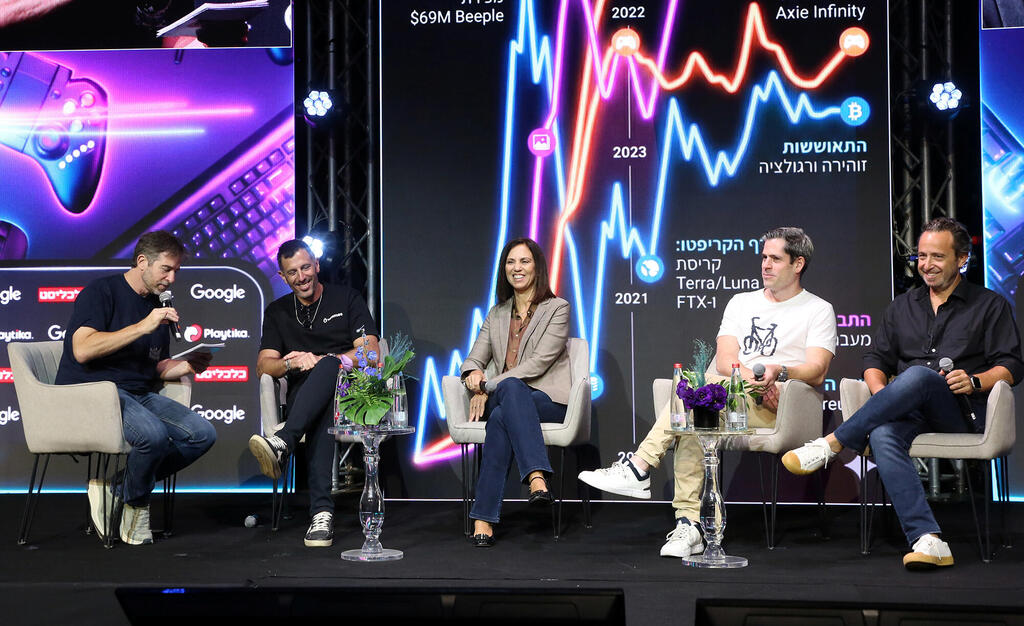
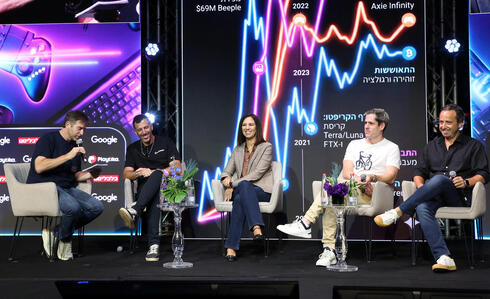
Gaming panel (from left): Nir Miretzky, Eitan Reisel, Dr. Vered Pnueli, Kevin Baxpehler, Elad Kushnir.
(Photo: Ryan Purvis)
Reisel asked why Israeli developers are not building on platforms such as Roblox. “All the worlds of UGC, user-generated content, are being driven by independent developers. There are so many platforms that there’s no reason Israeli talent shouldn’t be there as well.”
Asked about emerging trends, after years of hype cycles involving D2C, Apple- and Google-independent stores, GenAI, and previously crypto, the panelists were pressed on what they look for when a startup sends its fundraising deck.
Dr. Vered Pnueli, Head of the Master’s Program in Digital Game Design and Development at Shenkar, said: “GenAI will be a technology, not a trend. What’s interesting are the new trends it enables: tools for creators with strong ideas but without the time or money to execute them. We’ll see more skins, more character-creation options, and new experiences built around games. AI expands capabilities because it makes creation easier.”
Kevin Baxpehler, Managing Partner at Remagine Ventures, pointed to “real-world models” as an emerging theme. “The data generated inside gameplay is extremely valuable, and we’re seeing a trend of selling that data to AI companies.”
Related articles:
- "Gaming publishers must maintain a presence on Shorts, which is becoming the world’s leading short-form content destination"
- “What cyber is to Israel, gaming is to Turkey”: Inside a $3.3 billion industry on the rise
- "The competition in gaming is not only against other games, but for players’ time, attention and wallets"
Panelists noted that unlike the early iPhone era, when hits such as Angry Birds and Doom 2 showcased entirely new formats, GenAI has not yet produced a breakout gaming application that would have been impossible before.
Reisel cautioned against overestimating automation: “I wouldn’t say GenAI will replace everyone. Games still need an entrepreneur, a brain, to understand the consumer and teach the machine. In my opinion, half the LLM companies will vanish, as the giants are building massive models. Today, things need to move faster. If a company takes more than three months to get to market, I won’t invest.”
The conversation then shifted to how founders can distinguish substance from hype.
Elad Kushnir, angel investor, said: “In the end, we invest in people, not presentations, their energy, professionalism, experience. Whether the deck is good or bad matters far less. The investment is always in the team and the idea.”
Still, Kushnir noted that AI tools create efficiency. “In one of my portfolio companies, six developers do everything.”
Dr. Pnueli added that while gamers tend to be conservative, students are learning to use AI effectively. “Some come for the community rather than the game itself, but they increasingly understand how to use AI correctly. The fear is falling into banality.”
Reisel emphasized that early-stage presentations are often unnecessary. “The last five companies we invested in didn’t have a deck, we asked for one after we invested. This is the time to challenge the big companies, including mine. People fear the future because many jobs will disappear. For example, I’d short commercial real estate. But this is the time to build. Don’t be afraid, ship quickly, push games into the stores.”
Baxpehler added that there is meaningful opportunity in AI-native games. “Not Fortnite,” he said, “but super-casual titles, games you can build and push much more cheaply.”
Asked what skills they now look for in candidates, Baxpehler replied: “I’m mostly interested in what tools they use, because tools can be a shortcut. We constantly talk to our founders, and I’m always learning from the tools they adopt. I want teams that know the fastest shortcut to getting to a ‘yes’ or ‘no.’”
Finally, panelists reflected on past miscalculations.
Dr. Pnueli pointed to VR: “It has been the ‘next big thing’ for years. During the pandemic, it seemed we were finally shifting to VR. I told compelling stories about how it was coming, and I’m still waiting.”
Kushnir cited crypto gaming: “The industry missed the entire crypto-games phenomenon. There was a systemic failure of the whole industry, which thought it would work. Free-to-play crypto failed miserably because of a misunderstanding of how games function, a closed economy versus an open one. The industry giants completely missed it. I hope to be convinced otherwise by the next generation of crypto-game builders, but it’s very hard to persuade me it can work.”



