










“We are moments before the first real cyberwar, one in which not a single shot is fired”
Yossi Karadi, head of the National Cyber Directorate, says AI-powered attackers could lay digital siege to nations, forcing governments to rethink defense strategies.
“AI and cyber are an inevitable meeting point. AI is built on the digital infrastructure that has already transformed our lives. It doubles, even quadruples, our use and dependence on digital systems, and we see AI and cyber converging at three levels.
“First, using AI for cyber defense. We are improving, accelerating, and optimizing our defenses using AI capabilities.
“Second, defending AI systems themselves. When you use OpenAI or any other model, you must ensure the AI you’re relying on is secure and protected.
“And third, the most advanced stage, is AI versus AI, where autonomous agents conduct the attack and other agents lead the defense,” said Yossi Karadi, head of Israel’s National Cyber Directorate.
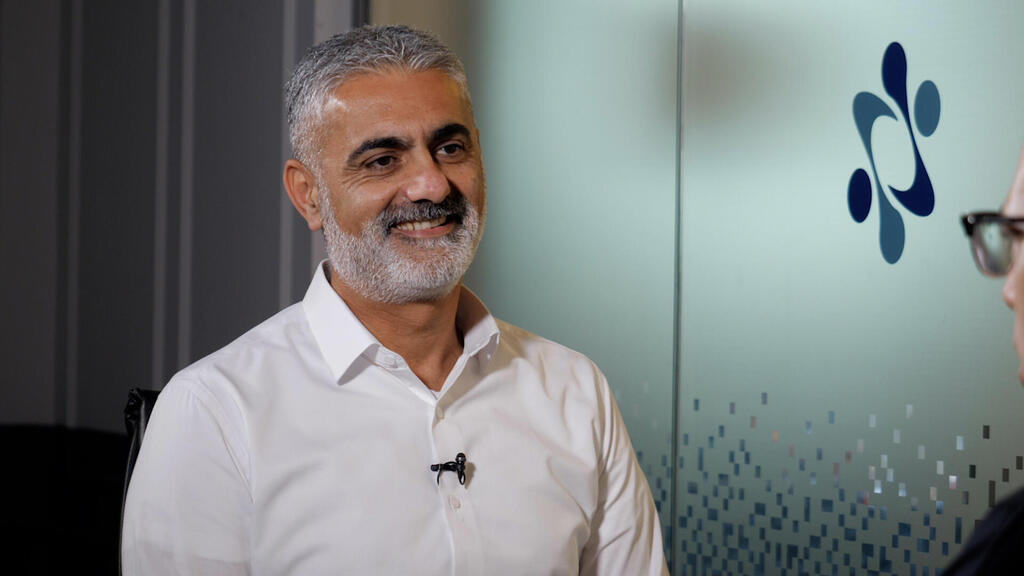
Karadi, speaking as part of Calcalist and Commit’s AI Week, elaborated on defending the country in an era of autonomous hackers, and detailed what Israel must do to maintain an edge as both attackers and defenders increasingly wield artificial intelligence.
How are cybercriminals using AI to plan attacks?
“We’re dealing with adversaries at different levels. According to a recent Microsoft report, Israel is the third most-attacked country in the world,” he said. “Among those attacks, we see very different tiers of attackers. Some already use AI to improve their code and malware, to make it smarter and more efficient.”
Does AI lower the barrier to entry for cybercriminals?
“Correct. The simple way to understand it is to look at ourselves. Today it’s much easier to write code, build software, or generate prompts at home and apply AI to whatever purpose you want. The same is true for our adversaries. It’s much easier for them to enter the field as AI-enabled attackers.
“There is still a big difference between a lone 16-year-old hacker, an advanced group, and a state-level actor. But AI raises the capabilities of all of them, allowing each tier to launch more advanced attacks.”
Karadi added that AI’s power extends far beyond generating malicious code. “AI can scan networks, identify weak points, attack 24/7, and learn quickly. It adapts its malware to the defender’s vulnerabilities, and it does all of this better than a human.”
How should AI systems be protected?
“We must protect AI at two levels: the algorithm itself, and the data that feeds it. The power of AI comes from ingesting large amounts of data and analyzing it. But if that data is tainted, if malware corrupts it, then even the best algorithm will produce damaged results.
“The second threat is direct attacks on the algorithm. OpenAI’s or Tesla’s models are ultimately algorithms running on machines. A smart attacker using AI can manipulate an algorithm without us realizing that the answers we receive are already compromised.”
How does AI improve cyber defense in ways that weren’t possible before?
“There are many solutions,” Karadi said. “For example, Israel already uses AI systems that can analyze large volumes of cyber incidents and determine that nine separate attacks actually come from the same source.
“We’re developing autonomous agents that perform fast, efficient work and support cyber defense teams. My goal is for agents to handle everything, from prevention, monitoring, and detection to incident response and closure.”
Will attackers and defenders eventually deploy AI agents against each other, with humans no longer involved?
“Yes,” Karadi said. “In modern warfare we talk about four generations. The first involved guns, planes, and tanks. Then came the era when people with keyboards appeared.
“In the second generation, cyberattacks began influencing the physical world. The third is where we are today, hybrid warfare, where tanks, planes, and weapons are used alongside cyberattacks.
“We are moments before the first real cyberwar, one in which not a single shot is fired. An adversary with advanced digital capabilities could besiege a country digitally, using AI-based cyberattacks to harm civilians. All it would take to end such a war is for the country to raise a white flag.”
And the role of humans?
“I still see humans leading the campaign. But I fully expect a stage where AI attackers and AI defenders confront each other on the battlefield as part of that first cyberwar we may be approaching.”
Is Israel prepared?
“Israel is attacked every day in cyberspace,” Karadi said. “This constant friction forces us to develop skills, capabilities, and tools. Our personnel grow more experienced and more capable. We are at a strong level of cyber defense.
“This is a very complex world, I will never say we are fully prepared or immune. But every day, we prove that we are being attacked and defending successfully, and citizens don’t feel it.”



