










Zenity raises $125 million Series C as AI agent security startup accelerates global expansion
Israeli cybersecurity company reaches $185 million in total funding as enterprises race to secure autonomous AI agents.
Zenity, which develops a platform for securing AI agents, has raised $125 million in a Series C funding round led by Norwest Venture Partners, with participation from new investors Qumra Capital, SoftBank Vision Fund 2, Hitachi Ventures, and LG Technology Ventures, alongside existing investors DTCP, Vertex Ventures, Third Point Ventures, and Intel Capital. Following the round, the company's total funding stands at approximately $185 million.
The funding is almost entirely primary capital and includes a small secondary component worth around $10 million, allowing some employees and founders to sell shares.
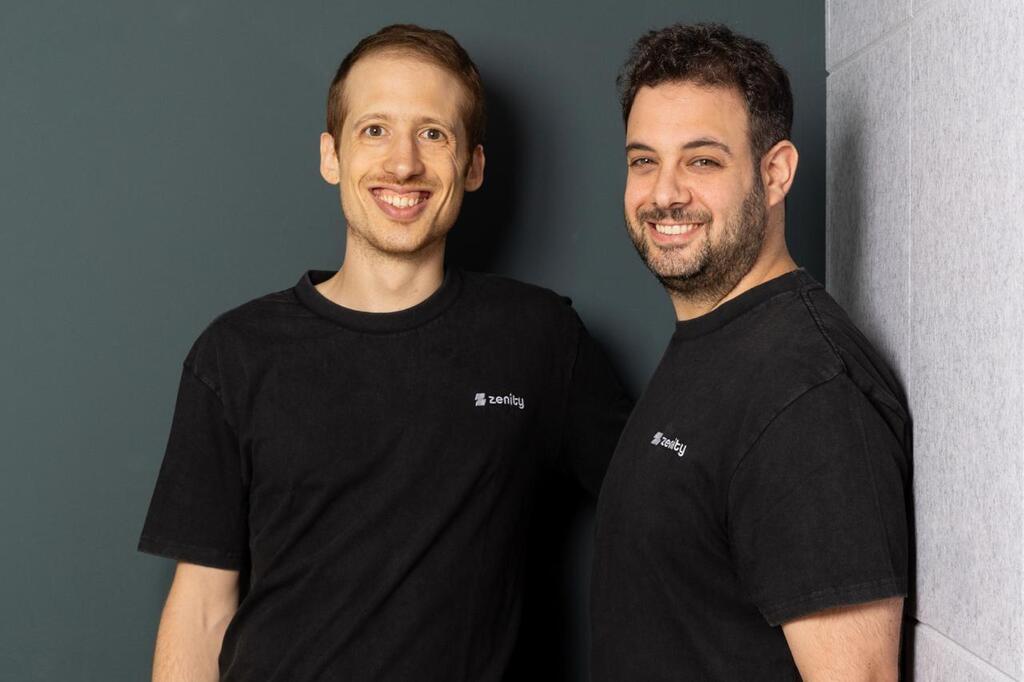
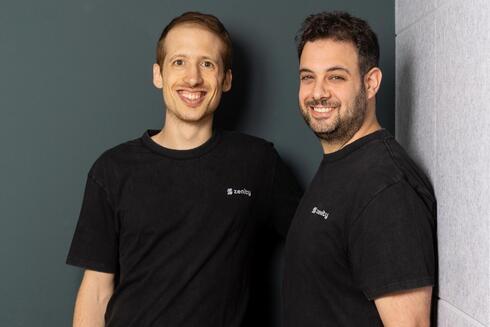
Zenity was founded in 2021 by Unit 8200 veterans Ben Kliger, the company's CEO, and Michael Bargury, CTO. The pair previously worked together at Microsoft, where they led the development of cloud and operational technology security products. Today, Zenity employs more than 230 people worldwide, including about 150 in Israel. Its research and development center is located in Tel Aviv, while sales, marketing and operations are managed from New York.
The company says its customers include Fortune 500 and Global 2000 enterprises across financial services, healthcare, pharmaceuticals, manufacturing and technology.
In an interview with Calcalist, Kliger said: "The world of AI is exploding. Every organization is deploying off-the-shelf AI agents or developing its own. Securing those agents and the actions they perform is becoming critical to successful AI adoption. It's time for us to accelerate our growth."
He added: "We already generate tens of millions of dollars in annual revenue. We're one of the leading companies in this market, and we've tripled revenue in each of the past two years. We're on track to triple it again this year because demand for AI agent security is growing rapidly."
"The market is competitive, and competition helps educate customers," Kliger said. "But we've been building this platform for several years. Today our capabilities are significantly ahead of many newer entrants. Our sales speak for themselves, and our technology is differentiated by what it can do while AI agents are actually running."
Kliger also pointed to Zenity's research team as a key competitive advantage.
"Our research lab regularly uncovers vulnerabilities and uncontrolled AI-agent behavior inside enterprises," he said. "That research directly feeds back into our product."
Until recently, most AI security solutions focused on protecting AI models or the prompt layer. As organizations increasingly deploy autonomous AI agents, however, security challenges have shifted. Unlike chatbots that simply answer questions, AI agents access enterprise systems, invoke tools, make decisions and execute business processes, creating an entirely new attack surface.
Zenity's platform analyzes how AI agents are embedded inside organizations, how they interact with enterprise systems and what business purpose they are intended to serve. It continuously monitors those agents in real time to ensure their actions remain aligned with corporate policies and permissions.
Rather than relying solely on prompt inspection or post-incident analysis, the platform evaluates the intent behind each AI action before it is executed, allowing organizations to approve, modify or block actions dynamically. It can distinguish legitimate activity from attempts to manipulate an agent or use it outside its intended purpose.
The platform supports enterprise AI environments including Microsoft Copilot, ChatGPT Enterprise, Gemini, Claude, Codex, Cursor, as well as internally developed AI agents.
Zenity has also gained recognition through its security research. Earlier this year, Gartner described the company as "the company to beat in AI agent governance." Meanwhile, Zenity Labs has disclosed several high-profile vulnerabilities affecting enterprise AI systems, including its AgentFlayer research, vulnerabilities in Microsoft Copilot Studio and attacks targeting Perplexity's Comet browser.
The new funding will be used to expand the platform, grow Zenity Labs, and accelerate the company's international expansion, particularly across Europe and Asia-Pacific.



