











"With all due respect to AI, in the end, scale-up is done with people"
In a panel on how startups can make the leap to global growth, held at the opening conference of ScaleUp House by Calcalist and Showcase IL in collaboration with LeumiTech, Nir Inbar of LeumiTech urged founders to raise enough money “to create a layer that allows you to make mistakes,” while Seffi Tsarfati of Google Israel said: “You need to define scale, whether it is a large number of countries and users or enterprise companies.”
“With all due respect to AI, in the end, scale-up is done with people who have a shared vision,” said Oded Har-Even, founder and managing partner at law firm Sullivan & Worcester, at a panel held as part of the opening conference of ScaleUp House, an initiative by Calcalist and Showcase IL in collaboration with LeumiTech.
The panel, moderated by Elihay Vidal of CTech, examined the challenges technology companies face as they move from being startups to businesses that need to scale rapidly and operate globally. In addition to Har-Even, the panel featured Seffi Tsarfati, head of strategic partnerships at Google Israel; Ishai Ram, deputy CEO and VP of cloud at Sela; Dikla Reznik-Erez, senior vice president at Phoenix ESOP; and Nir Inbar, head of growth companies at LeumiTech.
1 View gallery
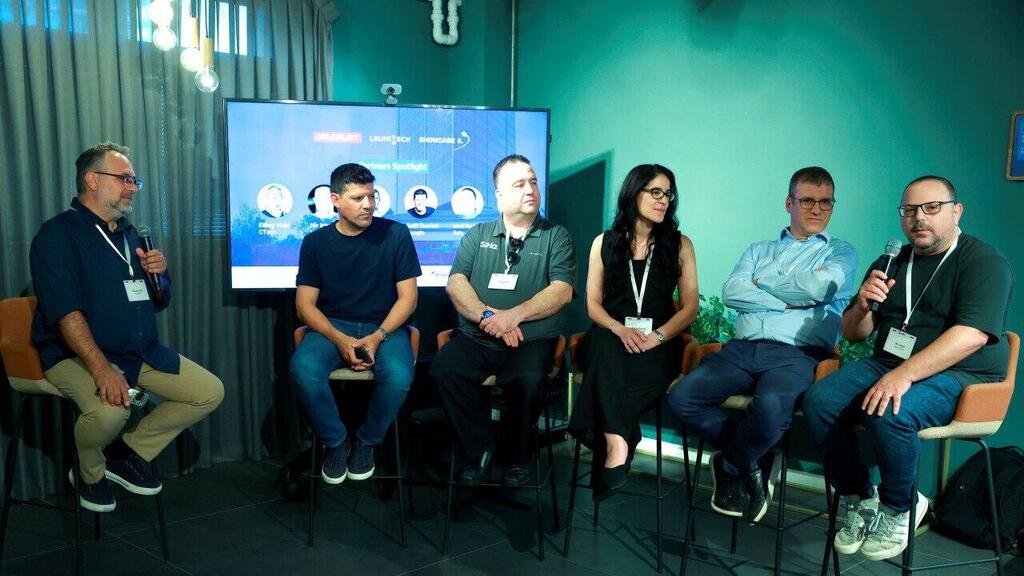
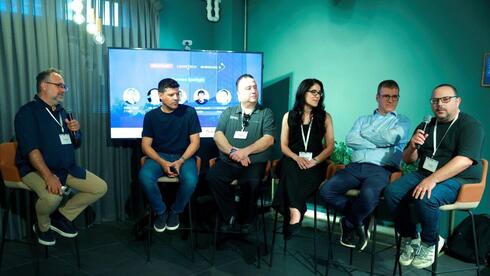
ScaleUp panel (from left): Elihay Vidal, Seffi Tsarfati, Ishai Ram, Dikla Reznik-Erez, Oded Har-Even, Nir Inbar
(Dana Kopel)
Dikla, how do you deal with growth in a period of technological uncertainty and a rapidly changing market?
Reznik-Erez: “Uncertainty in a changing market is not necessarily something to be afraid of. Quite the opposite. From 20 years of experience accompanying transactions, uncertainty leads to mental flexibility and creativity, in my opinion. When a company operates in such a period, it needs to show flexibility and balance, but the basic thing is to have control. We translate uncertainty into a structured, clear and simple process, combining technology with people.”
According to Reznik-Erez, even in an era when technological systems can centralize information in real time, the human element remains critical.
“You need an envelope of expertise and professionalism in all areas of equity, whether it is taxation, secondary transactions or IPOs, to turn complexity into simplicity and enable the company and the founders to act correctly and accurately.”
Seffi, what unique problems do Israeli companies face when they reach the scale-up stage?
Tsarfati: “A young entrepreneur has all the problems in the world. He looks at companies like Wonderful and Wiz and wonders how they got there. The Israeli ecosystem is different from other ecosystems, for the better. The Israeli entrepreneur has someone to ask, and the connections within the ecosystem are excellent.”
According to Tsarfati, reaching the global market is the result of a series of earlier milestones.
“Breaking into the world is a step that comes after many other steps — from raising money, through the product, to recruiting the first customers. What is exceptional here is Israeli entrepreneurship and the fact that there is someone to consult with and someone to ask at any moment.”
Oded, what makes a company global? Is selling in the U.S. enough?
Har-Even: “A company needs to expand in different places. Part of the problem is that there are many Israeli companies that fail to establish their global network. They have a representative here and a representative there, but in the end you have to establish a presence, set up an office and build serious partnerships, and you need enough money for that.”
According to Har-Even, investing heavily in a product alone does not guarantee that a company will successfully make the transition to its next stage.
“There are companies that have invested $200 million in a product. The product is excellent, but what do you do now that there is no more money? The plan for global expansion is no less important than building the product. Otherwise, you will not be able to move forward.”
Nir, what metrics should be on the dashboard of a CEO approaching the scale-up stage?
Inbar: “A company needs to start thinking more broadly when it has reached a point where it knows how to control one market well, when its product already shows that it has customers and it has cracked the way to reach many customers with relatively efficient resources.”
According to Inbar, there is no single formula that applies to every company.
“Every CEO needs to arrange their dashboard according to the KPIs that are relevant to their business. A playbook is not something that should simply be adopted. You need to go deep and understand the concrete parameters.”
Inbar highlighted the importance of sales growth, the ability to increase revenue from existing customers and the efficiency with which a company uses its cash.
“To get another dollar of sales, how much do you need to invest? And in the world of AI, you also need to include a metric of how your organization manages its AI and what its contribution is to costs and margins.”
Ishai, what technological challenges do companies that want to grow face?
Ram: “If five years ago we were constantly talking about the cloud, in the last four years we’ve been constantly talking about AI. But AI is a point in a much deeper graph. The question is where this world is going: Is my product adapted to a world with AI? Am I developing a product that will become obsolete? How do I combine AI with my needs, and how do I build my teams? There are a lot of considerations here, and building it right is one of the critical things.”
Finally, what will be the most important thing that allows companies to move from being a growing company to one that has truly scaled?
Ram: “You have to plan ahead, both in the business aspects and in the technological aspects. Don’t build something that might pass the demo but not the next stage. Build it right.”
Tsarfati: “You need to define in advance what your scale is. Do you want to be deployed in 30 or 50 countries, reach millions of users or serve a more limited audience of enterprise companies? You need to understand what scale you are aiming for and how you are going to reach it.”
Reznik-Erez: “In a world where there is an abundance of people and information, and where you can reach every person with a click, this is no substitute for expertise. In the end, the deep and true value is found in the human factor, in the trust built over the years and in the experience gained.”
Har-Even: “With all due respect to AI, in the end, scale-up is done with people who have a common vision. An entrepreneur needs to know how to bring in someone else who will strengthen his abilities. The second thing that should not be done is to take shortcuts. You need to go to experienced people who have already done these things, who will not use you as a guinea pig.”
Inbar: “You need to focus on culture and money. If you want to be a global company, build a global management team. You need people of all kinds of backgrounds and experience, who make one plus one equal three. And the second thing is money, because we don’t know what will happen and where AI will take us. You need to be well-funded and create a margin of error for yourself, to have the financial means to make mistakes as well, and to connect with global bodies that can give you value and not only money.”
Vidal summed up the elements a company needs to make the transition from startup to scale-up in one sentence: “Culture, money, no shortcuts, people, technology and advance planning.”



