










BiblioTech
CTech’s Book Review: Meaningful networking starts long before you need anything
Stav Shvartz, Head of Corporate Development and Tech Strategy at Ford Israel, shares insights after reading “Beyond Networking: Making Connections That Matter,” by Yaron Flint.
Stav Shvartz is the Head of Corporate Development and Tech Strategy at Ford Israel. He has joined CTech to share a review of “Beyond Networking: Making Connections That Matter,” by Yaron Flint.
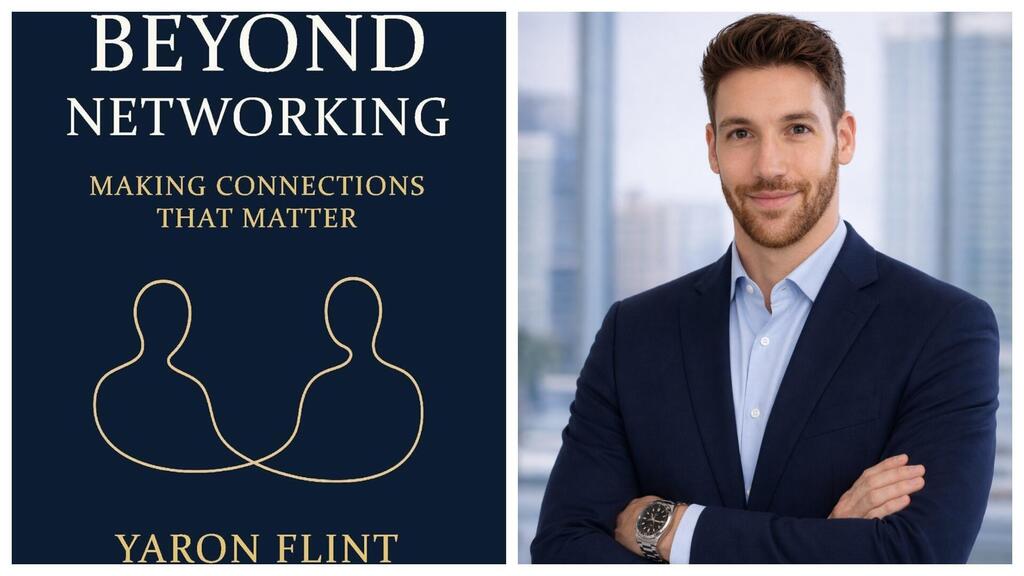
Title: Beyond Networking: Making Connections That Matter
Author: Yaron Flint
Format: Book
Where: Home
Summary:
Beyond Networking: Making Connections That Matter is an excellent and deeply relevant book about the real power of professional relationships. Rather than treating networking as a tactical activity focused on collecting contacts, attending events, or increasing online visibility, Yaron Flint reframes it as a long-term discipline built on trust, generosity, curiosity, and meaningful value creation. The book’s central message is both simple and powerful: the strongest networks are not necessarily the biggest ones, but the ones built with intention, authenticity, and consistent care.
What makes the book stand out is its combination of practical frameworks and real stories from accomplished connectors across different industries, cultures, and professional backgrounds. It is not just a book about how to meet more people. It is a guide to becoming someone people trust, remember, and want to collaborate with.
This message strongly resonates with my work as Head of Corporate Development and Tech Strategy at Ford Israel, where relationships are often the bridge between technologies, startups, internal stakeholders, and global business opportunities. It also connects naturally to my role as Managing Partner at Automobility, where long-term, cross-border trust is essential to creating real value.
Important Themes:
One of the most important themes in the book is the shift from transactional networking to meaningful connection. Flint challenges the common assumption that networking is mainly about reach, visibility, or access. Instead, he presents networking as the art of building trust-based relationships that create value over time. This is a much more mature, accurate, and useful view of how business relationships actually work.
The book is also very strong in its focus on generosity. Flint repeatedly shows that helping others, making thoughtful introductions, sharing knowledge, and offering value before asking for anything are not just “nice” behaviors. They are the foundation of lasting credibility and influence. In that sense, the book presents generosity as both a human quality and a strategic advantage.
Another important theme is intentionality. Networking is not random social activity. It should be connected to one’s goals, values, curiosity, and professional mission. This point felt especially relevant to my work at Ford Israel, where I often need to connect different worlds: startups, automotive technologies, corporate priorities, strategic partners, and internal decision-makers. The book captures the importance of building these relationships before a specific transaction or project is on the table.
Flint also challenges the tendency to approach networking opportunistically. Many professionals engage with their networks only when a specific need arises. The book encourages a more reflective approach, asking readers to think deliberately about how they build relationships and to invest in them with greater intentionality, depth, and long-term thinking.
A final major theme is community-building. The book shows that the highest level of networking is not personal advancement, but creating environments where others can connect, collaborate, and succeed together. That is where networking becomes leadership.
What I’ve Learned:
One of the strongest lessons I took from Beyond Networking is that meaningful networking starts long before you need anything. The best relationships are built over time, through consistency, trust, curiosity, and genuine interest. Many professionals only activate their network when they need help, advice, access, funding, or an introduction. Flint makes a very convincing case that this is too late and too narrow. A real network needs to be cultivated continuously.
I also learned to think about networking less as a contact list and more as a living system. A strong network requires care, follow-up, responsiveness, and thoughtful maintenance. A person you met once is not truly part of your network unless there is trust, relevance, and some form of ongoing relationship.
This lesson is highly relevant to my work at Automobility, where long-term global relationships are central to building opportunities across markets. In that kind of environment, credibility is not created in one meeting. It is built through repeated interactions, reliability, and the ability to create value for others over time.
Another learning I found especially useful is the importance of thoughtful introductions. A good connector does not simply connect two people. They understand context, timing, relevance, and mutual value. The book reinforced for me that being a strong connector is not about knowing the most people, but about understanding when, why, and how the right people should meet.
Critiques:
Overall, Beyond Networking is a very strong, insightful, and highly practical book. Its greatest strength is that it treats networking as a serious professional capability while keeping the human side at the center. It avoids shallow networking “hacks” and instead offers a much deeper and more useful framework based on trust, generosity, reputation, and long-term value creation.
If I had to offer a critique, it would be that the book contains many rich ideas, examples, and principles, and some readers might benefit from even more concise end-of-chapter summaries. A short “key takeaways” section or practical checklist after each chapter could help busy professionals immediately translate the insights into weekly habits.
Who Should Read This Book:
This book should be read by anyone who understands that relationships are central to professional success, but who wants to build them in a more authentic, effective, and sustainable way. It is especially relevant for entrepreneurs, business development leaders, corporate innovation professionals, investors, consultants, executives, and community builders.
A distinctive aspect of the book is the perspective behind it. Flint draws on extensive experience working across cultures, industries, and professional communities. This cross-cultural and cross-sector background allows him to identify relationship-building principles that remain relevant across different business environments while recognizing the nuances that make each context unique.
Startup founders can benefit from it because fundraising, hiring, partnerships, sales, and ecosystem-building all depend on trust. Corporate professionals can benefit because large organizations move through relationships, influence, internal champions, and cross-functional collaboration. Business development and partnership leaders will find it particularly useful because the book explains not only how to meet people, but how to build relationships that can eventually become meaningful outcomes.
I would especially recommend this book to professionals working between startups and large corporations, because that space depends heavily on trust, timing, credibility, and the ability to translate between different business cultures.
The book is also valuable for people who dislike traditional networking. Flint makes networking feel less artificial and more human. He shows that the best connectors are not necessarily the loudest people in the room, but those who listen carefully, follow through, help others, and build communities that create value over time.



