









BiblioTech
CTech’s Book Review: How the AI revolution is bringing the price of human knowledge close to zero (and what to do about it)
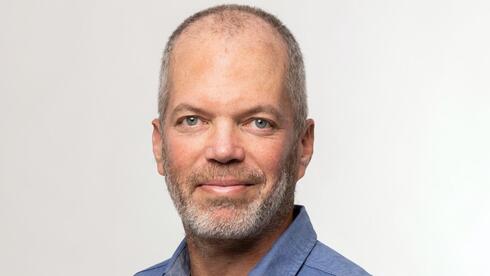
Nir Kozlovsky, a HealthTech co-founder, audio industry specialist and freelance consultant, shares insights after reading “Decoupling Intelligence”, by David Solomon.
Nir Kozlovsky, is a Tel-Aviv based HealthTech co-founder, audio industry specialist and freelance industry consultant. He has joined CTech to share a review of “Decoupling Intelligence”, by David Solomon
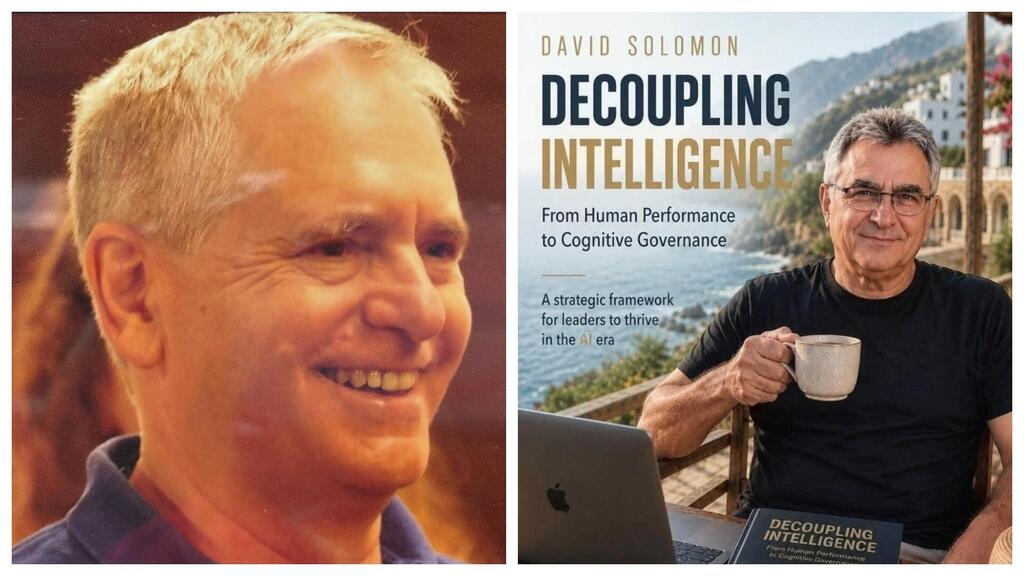
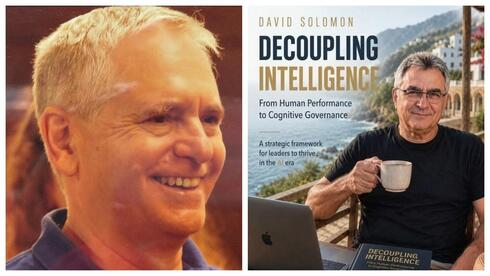
Title: Decoupling Intelligence
Author: David Solomon
Format: Book
Where: Home
Summary:
The AI revolution is probably the most important technological innovation of the 21st century. It is a tsunami that can change our entire society. David looks at how technological revolutions changed the course of history, and offers his interpretation. His analysis is that AI commoditizes knowledge. And since knowledge is what defines us as humans, and our value is determined by our knowledge.
The Industrial Revolution commoditized muscles (human and animal) and human value changed. The computer revolution increased the value of human knowledge even more. But now, human knowledge is greatly surpassed by Nvidia chips and OpenAI datacenters, the price of human knowledge will be close to zero. So what will happen to knowledge workers? They will need to adjust to being decision makers, not knowledge creators and holders. But will their wealth wither away and be usurped up by the new capitalist rubber (sorry, AI) barons? What will happen to society where a tsunami will drown its middle class? David does claim to offer the solution, but he does get us thinking on the problem.
Important Themes:
The AI revolution is another wave of revolutions that encompassed us humans in the last two centuries. The industrial revolution transferred the power (figuratively) from the artisan to the machine. Electricity was king. The social upheaval was great, but as the world adjusted, prosperity came.
The AI revolution will engulf us much faster. Electrification took decades. OpenAI can reach over one billion users in a year. Electrification made our muscles redundant, but it made our brain much more valuable. Knowledge workers are the pillar of modern society. And now AI will commoditize knowledge. AI can perform most knowledge tasks much faster and at unimaginable scale.
Humans will need to adjust. Holding knowledge holds no value anymore. What we humans will need to adapt is to oversee the machine. Not unlike the machine operator in the industrial revolution, we will need to learn to control AI and supervise it. We will need to redefine our skills and our professions. We will need to redefine our social standings.
Further, our leaders will need to redefine our society. If a datacenter employing a few hundreds of employees will own the knowledge of millions of knowledge workers, wealth will need to be redistributed too. Will a new Henry Ford rise, raising the salaries of his employees, so they can afford to buy Ford cars?
What I’ve Learned:
AI is here and it is a revolution. I am not a doomsdayer, but I know it will have significant effects on our lives.
David directed my train of thought. I have a much clearer view of the revolution, of the history of economic revolutions so I can analyze the revolution and its effects. On a personal level, David shows what we do need to do in order to weather the storm and come out of it stronger. I know that I must train myself to adopt AI and LLMs, and to learn how to supervise it and pilot it to where I want it to go. Possessing knowledge is not enough anymore. Now David teaches how I must learn to harness it in my direction.
Personally, AI is an opportunity for me. I will not be replaced by AI. But understanding its business dynamics helps me in building my own business. As AI will take over much of the digital workflow, I know where to concentrate my efforts. The winners will not be those who develop the best models, but those who know how to harness and supervise any digital process.
On a societal level, I find David's concept that AI commoditizes knowledge and thus brings its price to almost zero, as a groundbreaking idea that helps define the macro implications of the revolution. How will society learn to adopt? It is the understanding in this book that gives an insight on how to structure future society.
Who Should Read This Book:
This book is for every person whose profession relies on knowledge. If you are a lawyer, or a computer programmer or an economist, you must read this book. It will give you insights on how to prepare for the future.
And if you just live in this world, and even if you are not interested in AI or business, reading this book will interest you in the same way that a tsunami watch does.



