










Opinion
Drug development has a $2 billion problem. AI is finally solving it
Most clinical trials still fail, but what if AI simulated studies could change the odds? Eran Lerer, Managing Partner of Shoni Health Ventures explains why trial simulation is becoming pharma's new default.
Developing a new drug now costs pharmaceutical companies more than $2 billion on average, and takes upward of a decade to move from the lab to approval. Yet despite these enormous investments, most clinical trials still fail. Across all stages of drug development, roughly 90% of new drugs fail clinical studies, meaning only a small fraction of prospective drugs ever reach patients. In many of these cases, better trial design could make all the difference: predicting ahead of time whether a study is likely to succeed, avoiding that wasted investment, and helping researchers plan studies toward success, so more effective medicines reach patients around the world.
For years, “AI in healthcare” has been treated as more of a buzzword than a balance sheet item. That's changing fast in one specific corner of the industry: clinical trial simulation. A new generation of platforms can now model how a trial is likely to unfold, drawing on real world patient data, biological data, insurance claims, and clinical publications to build a detailed simulation of the study, predicting with striking accuracy whether it will succeed or fail before a single patient is ever recruited.

The appeal isn't the novelty of AI. It's the math. Measurable improvements in prediction accuracy translate directly into avoided failures: tens of millions of dollars saved per trial, and months or years shaved off development timelines. More importantly, it means more medicines reaching approval, to the benefit of patients everywhere.
Regulators are starting to catch up. The FDA published a formal framework in 2025 for evaluating AI in drug development, and the EMA issued its own reflection paper as well. Neither has thrown the door wide open yet, but both signal that simulation and synthetic control arms, using AI generated data to stand in for a comparison group and reduce the number of real patients needed, are moving from research curiosities to legitimate parts of the regulatory conversation.
Israel is emerging as one of the more interesting test cases. Earlier this year, the Ministry of Health published its first formal guidelines for managing AI based clinical trials, an early, deliberate signal that Israel wants to be a proving ground for this category, not just a spectator.
That signal is already showing up in the numbers. Roughly 30 Israeli companies now operate at the intersection of AI and drug development, and about 70% of them have Israel Innovation Authority backing. AI in drug development now spans the entire value chain, from early stage discovery and identifying new treatable targets, to planning clinical studies, running them, and ultimately submitting for FDA approval.
The clearest evidence that this is more than hype is who's writing the checks. Strategic investment arms of major pharmaceutical and consulting companies, not just financial VCs, are putting capital directly into this category. All 10 of the largest pharmaceutical companies globally have partnered with AI startups for drug development since 2023, and 9 of them are simultaneously building internal AI capabilities, according to CB Insights.
I've had a front row seat to this shift as Shoni led the seed round of QuantHealth, a Tel Aviv based company building AI driven trial simulation for pharma. The platform can predict whether a clinical study is likely to succeed or fail, and help structure many of the elements that shape a study's outcome, such as dosing, dosage, and the specific patient population selected, for optimized clinical impact. This week the company closed a $45 million Series B, a round size that would have been difficult to imagine for a clinical trial simulation startup only a few years ago, and a telling data point in its own right. Capital of that scale, in this specific use case, doesn't materialize unless the buyers, pharma companies themselves, are finding real value in the technology. QuantHealth already works with several of the world's leading pharma and biopharma companies, which is the kind of validation that turns an early conviction call into a category defining outcome.
None of this means the category has finished proving itself. Broader regulatory clarity beyond the FDA's and EMA's early frameworks is still needed.
What's happening now is bigger than any one funding round. It's early evidence that a persistent, decades old problem in drug development finally has a credible technological answer, and that Israel's digital health ecosystem, built over years of AI adoption across the healthcare value chain and electronic medical records, is positioned to be one of the places where that answer gets built. For an industry that spends over $200 billion a year globally on drug development, a serious dent in the 90% failure rate isn't a nice to have. It's overdue.
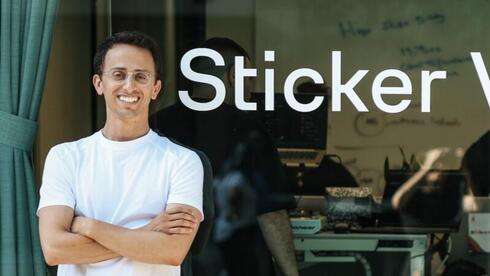
Eran Lerer is Managing Partner at Shoni Health Ventures.



