








Boarding Pass
Israeli startup secures $2.5M to recycle industrial gas waste instead of burning it
Founded in 2024 by former Intel engineers, CleanTech company CoolVOC is developing a no-combustion alternative to traditional gas treatment, aiming at a $15 billion market.
“Industrial emissions treatment today relies largely on thermal oxidation, which burns fuel to destroy VOCs, generates additional greenhouse-gas emissions and recovers $0 of the raw material it destroys,” says Limor Ostrovsky, CEO of industrial emissions treatment startup CoolVOC.
Founded in 2024 and backed by $2.5 million in funding, including a grant from the Israeli Ministry of Energy, CoolVOC is developing a no-combustion alternative that captures volatile organic compounds (VOCs) as reusable liquid material, ultimately recovering that waste as raw material instead of destroying it.
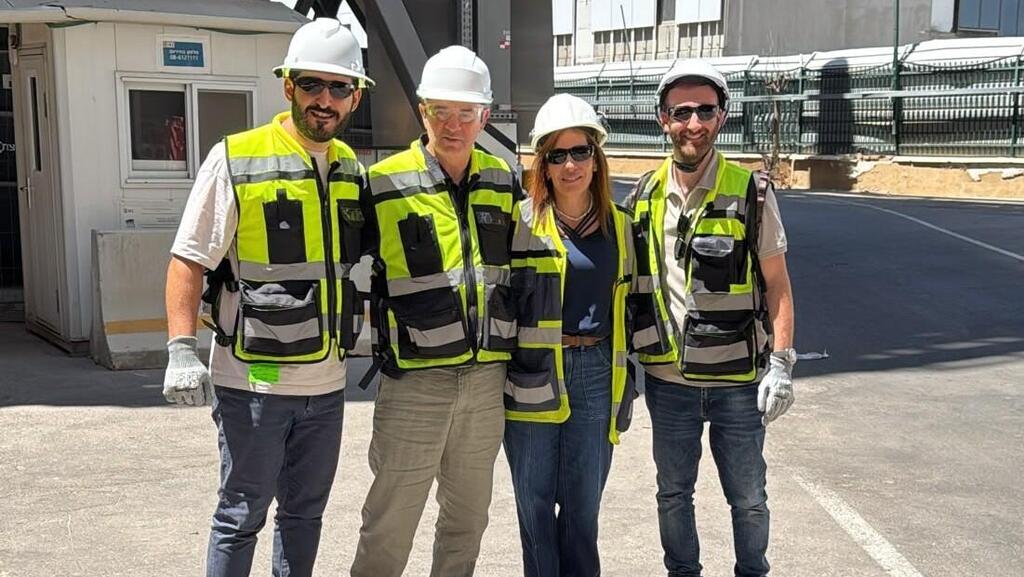
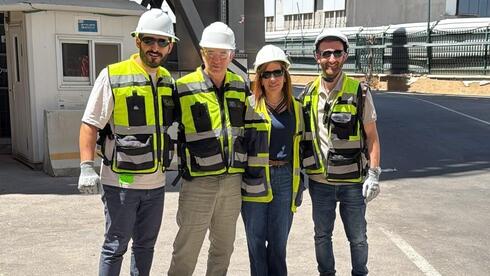
The company is initially targeting semiconductor, battery and pharmaceutical manufacturers. A first commercial pilot with a large international semiconductor corporation is underway for CoolVOC, alongside a pipeline that includes pharma, petrochemical and large paint companies.
You can learn more about the company below.
Company Name: CoolVOC
Sector: CleanTech, Industrial Emissions Systems (Chemical Emissions Recovery)
Product/Service description:
CoolVOC addresses a costly challenge in industrial production: how to treat harmful gas emissions that are created as a by-product of manufacturing. Today, these gases are typically burned in energy-intensive systems that destroy potentially valuable raw materials. CoolVOC replaces combustion with a modular system that captures volatile organic compounds (VOCs), re-condenses them into reusable liquid solvent and recovers material that would otherwise be destroyed.
Using adsorption paired with a closed, low-temperature loop, the technology is designed to deliver 99% VOC removal while reducing energy consumption by around 90%, with no combustion. Lower energy use and recovery of raw material are intended to deliver a short payback period and reduce operating costs while helping manufacturers meet current and future emissions requirements.
Founder Bios:
Yariv Gober (Director, Co-Founder and CBDO) is a former Intel process engineer with over 20 years experience in VOC abatement.
Avihai Israel (Co-Founder and Head of Innovation) is also a former Intel professional with experience in industrial plant design and construction.
Limor Ostrovsky (CEO) leads commercial strategy and stakeholder engagement, bringing 25 years of experience in senior management positions in the industry.
Israel Biran (Chairman) is a cleantech pioneer and former Earth and Beyond Ventures GP, and the founder of enVerid Systems.
Year of Founding: 2024
Last Investment Round: $2 million
Last Investment Stage: Pre-Seed (currently raising)
Date of Last Investment: 12/09/2025
Total investment to date: $2.5M (equity and non-dilutive grant funding to date)
Investors: Earth and Beyond Ventures, non-dilutive grant funding from the Israeli Ministry of Energy
Current number of employees: 5
Open positions: Two engineers, contingent on an upcoming project
Website: www.coolvoc.com
Social Media: LinkedIn
How was the idea born?
The idea was born from the founders' direct industry experience. After years of operating and overseeing emissions-treatment systems, they saw firsthand how much these systems imposed on plant operations: constant fuel use, safety and permitting overhead, and valuable raw materials simply destroyed as waste while generating no value in return. That firsthand view of the operational cost of conventional systems, combined with their engineering expertise, led them to develop a no-combustion alternative that recovers that waste as raw material instead of destroying it.
What is the need for the product?
Industrial emissions treatment today relies largely on thermal oxidation, which burns fuel to destroy VOCs, generates additional greenhouse-gas emissions and recovers $0 of the raw material it destroys. This is especially costly in semiconductor, battery and pharma facilities, where the economics of conventional systems worsen when emissions are less constant. Manufacturers need a way to meet tightening emissions rules while recovering, rather than destroying valuable raw material and using less energy to do so.
CoolVOC addresses a multi-billion-dollar global market that is expected to continue growing, driven by increasingly stringent emissions regulation, industrial expansion, energy costs and manufacturers' decarbonization targets.
How is it changing the market?
CoolVOC changes industrial emissions treatment by recovering VOCs as reusable liquid material instead of destroying them through combustion. For manufacturers, that can turn an unavoidable abatement cost into a process that also recovers valuable raw material, while sharply reducing the energy used for treatment.
The shift is reinforced by tighter emissions regulation, pressure to reduce energy consumption and growing demand for resource efficiency and circular manufacturing. CoolVOC combines liquid-phase recovery with zero combustion in the segment it targets. The system is designed for 99% VOC removal and around 90% lower energy consumption than traditional abatement.
How big is the market for the product and who are its main customers?
The TAM (Total Addressable Market) is approximately $15B and the SAM (Serviceable Addressable Market) is approximately $4B, growing at about 15% annually, roughly twice the growth rate of the broader market. The main customers are industrial emitters, particularly semiconductor fabs, as well as battery, pharma and automotive manufacturers. More than 30 new fabs are built each year, each with around $40M in abatement spending over a 2-3 year build. There are also approximately 32,000-43,000 installed gas-treatment systems globally, representing a large retrofit opportunity.
Does the product exist already?
Yes. The system is at TRL 6-7, and a pilot is being deployed at a large fab site of an international semiconductor corporation. The pilot is intended to generate durability data and support the path to a certified commercial system. A commercial product, targeting 99% VOC removal and recovery of captured VOCs for reuse, is planned for 2028, with first sales expected that year.
Who are the main competitors in this sector and how big are they?
The main incumbents are thermal oxidizers (RTOs) and carbon/rotor concentrator systems, with an installed base of roughly 32,000-43,000 units globally. For the emissions profile CoolVOC targets, both underperform on energy efficiency, CO₂ output and chemical recovery: they consume substantial energy and destroy rather than recover the chemicals. No incumbent currently offers liquid-phase recovery of volatile chemicals with zero combustion.
What is the added value that the founders bring to the company and the product?
The team pairs significant operating experience in industrial emissions treatment with CleanTech company-building and commercialization experience. CEO Limor Ostrovsky leads commercial strategy and stakeholder engagement based on 25 years in senior management positions in industry. CTO Dr. Udi Meirav brings the materials and process-engineering depth needed to take the technology from TRL 6-7 to a certified commercial system. Co-Founder and CBDO, Yariv Gober, and Co-Founder and Head of Innovation, Avihai Israel, are both former Intel engineers with more than 20 years of experience in VOC abatement and industrial plant design and construction. COO and Head of Engineering, Amir Regev, brings specialized engineering and materials expertise. Finally, Chairman Israel Biran is a CleanTech pioneer who founded enVerid Systems.
What will the money coming in from the round be used for?
The round will fund pilot deployment, durability testing, customer validation and the work needed to reach a certified commercial system. It is intended to provide approximately 24 months of runway to first commercial sales. Key milestones include bringing the semiconductor pilot live in Q4 2026, generating durability data, securing a first referenceable customer and advancing the existing pipeline of pilots during 2027.
In the "Startup Boarding Pass" section, CTech will cover the (relatively) small investments made in companies during the early stages of their existence - and the entrepreneurs and startups who have not yet had the opportunity to reveal their stories to the world. Please use the linked form and fill it out according to the guidelines. This form is intended for startups raising between $500,000 and $3 million from venture capital funds, angels, or official grants from Israeli and foreign institutions. If relevant, someone at CTech will be in touch for follow-up questions.



