









"Cyera is already the Wiz of data security. We want to be the Palo Alto Networks of data security"
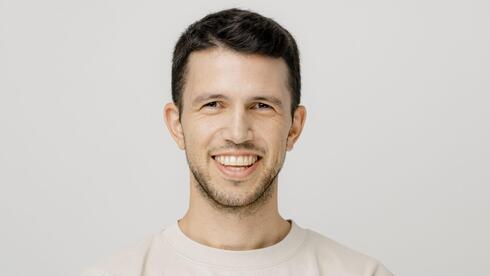
The Israeli AI-driven cybersecurity startup Cyera has grown from a near-zero-sales first year to a $9 billion valuation, leveraging advanced data protection tools for enterprises worldwide. Its founders, Yotam Segev and Tamar Bar-Ilan, discuss how they aim to scale the company to global tech giant status in a market reshaped by AI.
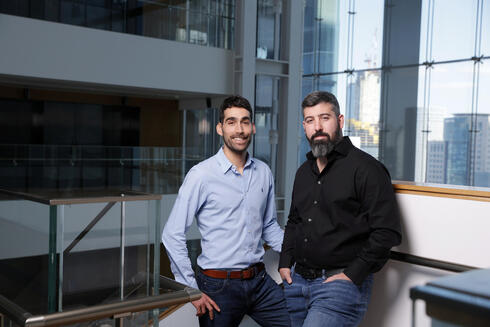
"No matter what, we won't tell the customer, you won't get this feature because of the war in Iran. Our problems are our problems, not theirs," say the two founders of the Israeli cybersecurity and artificial intelligence company Cyera, Yotam Segev (CEO) and Tamar Bar-Ilan (CTO). They came to Israel to celebrate the company’s fifth anniversary with employees around Purim. And there was a good reason to celebrate. After two difficult years of establishment, under the auspices of the AI revolution, the company is growing rapidly. The latest funding round in January 2026, led by investment giant Blackstone, was completed at a valuation of $9 billion, making it one of the largest private Israeli cyber companies. But in the meantime, despite the euphoria, they are stuck in Israel, without a party and with a war.
Segev, from the town of Alon HaGalil, and Bar-Ilan from Haifa ("My parents wanted girls and gave me and my twin brother girls' names"), both 32, met in the Talpiot program in the army, from where they were assigned to work together in Unit 8200. Five years ago, when they were discharged at the age of 27, they founded Cyera, which offers data protection for large organizations using AI tools. A third founding partner, Yonatan Itay, manages development and the company’s operations in Israel.
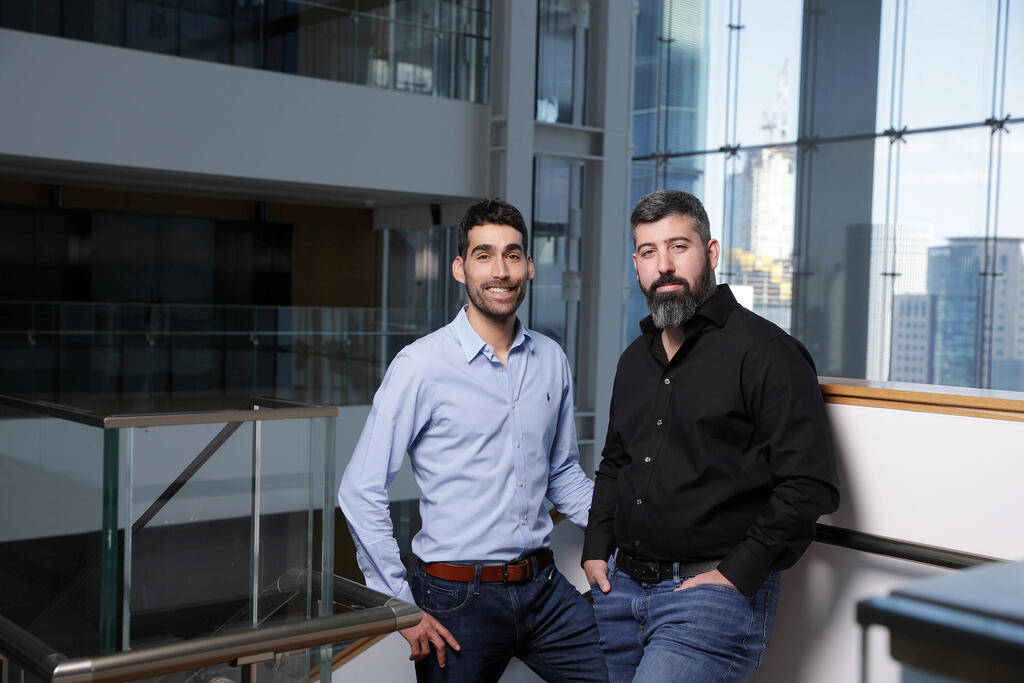
Four years ago, Segev moved the center of his life to New York to recruit customers and be closer to them. Bar-Ilan joined him in New York two and a half years ago. At the beginning of the journey, the company struggled to properly define the problem, and then struggled to recruit customers in a market where no one knew them, including a quarter with zero sales. But since then, over the past two years, Cyera’s growth has continued to surprise both the market and the founders themselves.
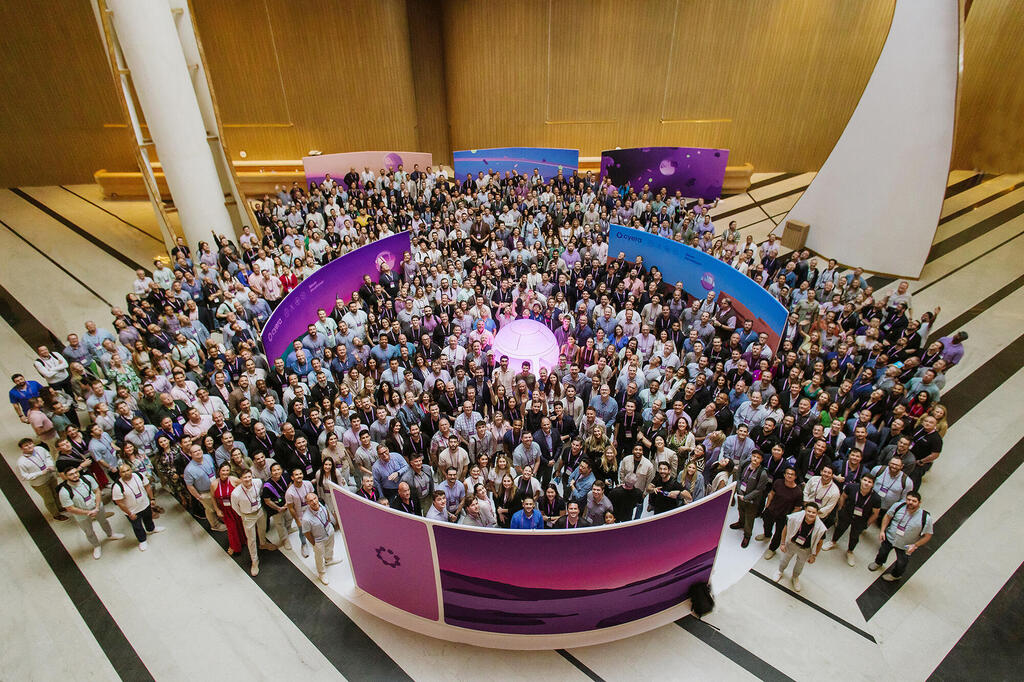
Cyera has 500 employees in its development center in Israel, another 500 employees in the US, and another 200 worldwide (Canada, East Asia, etc.). "Every year we have a Purim party and Cyera’s birthday, it’s a big event for us. The last two years there was a half-hearted celebration because of the hostages and the war, and this year we were finally hoping to celebrate wholeheartedly when everyone was home. We’ll probably have to wait until the sixth anniversary. We hope that the geopolitical achievements of the war will justify it," Segev says in an interview between one alarm and another in the offices on Harbaa Street in Tel Aviv.
Cyera’s extraordinary growth reached its peak in the latest fundraising round. It began with a $56 million Series A funding round in 2022, followed by a $100 million round in 2023, and then two rounds in 2024, one of $300 million, which made it a unicorn valued at $1.5 billion, and another $300 million at a valuation of $3 billion. Less than a year ago, in the previous fundraising round, a $540 million Series E was completed, also one of the largest in the history of Israeli high-tech, which set its valuation at $6 billion. And if it seemed that there were no more records to break, the latest fundraising round, led by Blackstone in January 2026, already valued the company at $9 billion.
Alongside the current fundraising, the company’s founders offered employees and relatively veteran investors the opportunity to sell some of their holdings to the Cyberstarts fund of Gili Raanan and Lior Simon, which has raised a dedicated fund aimed at purchasing employee shares in the companies in which it is invested. Participants include a number of prominent investors in the cyber industry, including Georgian, Greenoaks, and Lightspeed, alongside existing investors: Sequoia Capital, Sapphire, Redpoint, Cyberstarts, Coatue, Accel, and Spark Capital.
The new appointments at the company indicate the appetite and intentions of the founders and investors. Brandon Sweeney, with over three decades of experience leading technology companies through IPO processes and international expansion, after a series of senior management roles in major companies, has been appointed president. Shira Azran, Senior Partner at Meitar, has been appointed to lead the company’s global legal department, after 25 years of experience advising high-tech companies on IPOs, fundraising, and mergers and acquisitions. "We want to have an IPO option open to us in terms of legal infrastructure and the company’s foundations," they say.
Cyera’s product allows large organizations to identify where sensitive data is stored, protect it from unauthorized access, and enable the safe use of AI tools. But the successful fundraising rounds do not reflect the company’s difficult start, from an initially unfeasible idea to a challenging first year of sales, which culminated in a quarter with zero sales. In the third year of operation, they managed to stabilize sales, and two years ago the takeoff came.
You started with a failed idea.
Segev: "When Gili Raanan invested in us, he said, 'We’ll bring you to customers. Only if they say they’re interested and want to buy it - we’ll build it.' From these conversations with cybersecurity managers, we really understood that we needed to build something different. We came with a 'spaceship with lasers' for the world of data security (an agent that shows how your data moves between servers in the cloud). But the information security managers we spoke to explained that they don’t even have a donkey or a bucket to fetch water from the well."
What does this mean?
Segev: "That we needed to lower our goals a bit and go for something much more basic. We wanted to offer a sophisticated product in the spirit of Unit 8200. But we discovered that installing our software on every server would only complicate things for them. We realized that the big problem of large organizations is much more basic: what sensitive information do we have in the organization, and where is it located (to protect it and prevent leakage).
"After we raised the A round, expectations were very high. We raised $400 million in January 2022 from Doug Leone of Sequoia and Accel. A crazy amount, expectations were huge. We recruited our first sales team and thought we would start to see some momentum. In fact, the first year after this round was simply terrible. We were unable to sell at the volume we had planned; the situation worsened to the point of a quarter with zero sales, a quarter in which we were unable to close a single deal. Lior Simon from the Cyberstarts fund told us: 'One quarter of zero happens, two quarters of zero is already death.'"
How did you feel?
Segev: "I felt like we were a step away from the abyss. And not just any abyss, it was embarrassing. I thought it might not work. I asked Gili Raanan, 'Tell me, what happens if, despite everything, the spacecraft can’t take off?' He told me, 'It’s called a crater, it’s very unpleasant.' You raise capital and you’re not selling, it was incredibly tough. Investor expectations are of course part of it; they’re trying to tell you what a good company is. In 2022, we wanted to do $3 million in sales and we did $1.5 million; only a year later did it start to catch on. The most significant lesson was that you can’t pass responsibility to someone else. Just because you hired a sales manager doesn’t mean everything will be fine, everything is on your shoulders. You’re responsible for every aspect of the business; no one will solve your problems."
What do you do?
Segev: "The pressure was crazy. We fired the first sales team we hired without really knowing what we needed. I had just moved to the US in May 2022, with a 10-month-old baby. I left my wife and child at home, and from the moment I landed I was flying to clients all week, from Monday night until Saturday morning, to regain momentum, to create momentum, to make it work. The next quarter we managed to get back to half a million dollars in sales, and slowly, in the third year, we managed to climb from there. Things were already working, but with small sales numbers. Since then, every quarter has been better than the previous one, until in 2023 we really started running and the business began to pick up speed. We came to the industry from nowhere. When we started, I didn’t know a single information security manager in the world, today I have 1,000 on speed dial.”
What’s the jump from then to now?
Bar-Ilan: "The night after I moved to New York, we were sitting together at a bar and said, 'The goal is to reach $100 million in ARR in four years.' It took us less than half the time to get there. We secured multimillion-dollar contracts with some of the largest companies in the world this year. You talk to the most senior people in these organizations, accumulate contracts, and realize there is an opportunity here to build a huge company that has not been built in Israel before."
Segev adds: "We didn’t say ‘within four years’ because we were lazy. We thought that was the best we could achieve, and it happened in a year and a half instead of four. The leap we are experiencing in these two years is because all CEOs today want to use AI that runs on the organization’s data, their most valuable asset. We help organizations use AI on data in the best and safest way possible. Our software knows how to classify what is sensitive information for the organization and secure it without it being exposed or lost. The data is also your competitive advantage."
You didn’t start as an AI company.
Segev: "We didn’t plan to become a security company that leads the AI revolution. We came to catch waves, and we caught the biggest wave that ever came. We focused on where to place the surfboard. Data and AI go together everywhere; our beginnings in data naturally evolved into AI. We did serious work studying what hurts customers, and we had the energy to row fast enough to catch this wave."
How does the integration with AI work?
Bar-Ilan: "If, in a bank, every document has a dollar sign on it, then the question is where is the 1% of documents that really need to be classified as sensitive, and that’s what AI knows how to do. It’s about finding a needle in a haystack, finding the ‘signal.’ We have clients from completely different worlds, such as biopharma, streaming, banks, and more. Today, the technology is mature enough to allow us to understand each customer’s data, even if they are highly unique."
How does the breakthrough in AI technologies propel you to become a company worth $9 billion?
Segev: "The process of understanding and identifying information was a game changer. Because of the very close connection between AI and data, it made our product the most important problem in the organization right now. AI and data officers must map the data and understand who can access it, because this is the infrastructure that allows AI to operate within the organization, which is what all CEOs want today. We hit the ‘data security in the new world’ space and reached the most critical and precise point."
"We went from problem number five to problem number one"
Is your growth driven by AI?
Segev: "It started even before AI gained momentum. But as the company grew, AI arrived and turned the problem we were solving from a top-five issue into the number-one issue. When organizations want to deploy AI on their data, think of a bank’s security manager, they don’t even fully understand what they are trying to protect. Where is the sensitive information? What is the most sensitive data? And how do I give AI access to it? The basic problem we solve is helping organizations understand their sensitive information, where it is and who can access it. That’s the core of our product."
No fear of a valuation bubble? That you raised on AI hype and in two years we won’t understand why?
Segev: "It doesn’t feel like a bubble. It doesn’t look as glamorous as fundraising articles suggest - waking up at 4 a.m. and flying to clients. Of course, you have to make good decisions, hit the right market, and do a lot of hard work. Regarding the valuation, I suggest looking at who led the last round. It was led by Blackstone. These are not fantasy venture capitalists, they are highly analytical and calculated private equity investors. They wouldn’t have led a round at a $9 billion valuation if they didn’t believe they would generate a significant return in the coming years. These are not investors buying dreams. These are people who come to make money. Very calculated investors. tough New Yorkers."
These are not funds looking for returns in 10 years. They will want returns much sooner.
Bar-Ilan: "They believe that Cyera will be a company worth tens of billions of dollars within the next three to four years. They look at their Excel sheet and see the potential for significant returns in the near term. What’s exciting is the opportunity to build such a massive Israeli company."
And won’t platforms like Claude Code result in the rapid emergence of companies like yours, as some investors fear happened with Wix?
Segev: "This is a relevant question for every company today. Cyera is also adopting AI in software development at one of the highest rates in the world. There is no longer a programmer who writes software line by line, we accelerate development using Claude. But classification at the scale of billions of files and pieces of data, that’s what our software does. It’s clear that if our technology in two years remains the same as it is today, Cyera will have no right to exist. If we build software the same way it was built ten years ago, we will definitely become obsolete. It’s about being at the cutting edge, or becoming irrelevant.
"If our technology in two years remains the same as it is today, Cyera will have no right to exist. If we develop software the way it was developed ten years ago, we will definitely be extinct. It’s either being at the cutting edge or becoming obsolete."
"I saw the Israeli flag and started to cry"
Segev grew up in the communal town of Alon HaGalil in the Jezreel Valley, in a rural environment, but his father was a programmer. "Some fathers teach their children how to play soccer, he taught me the Visual Basic programming language as a child. At the age of 14, I opened a Dungeons & Dragons club in Alon HaGalil. Similar to today, it was about forming a group around an idea. It wasn’t a hobby, it was a livelihood.
"My mother has had a B&B there for many years. When I want to explain my obsession, I show how my mother had a B&B on Airbnb with 350 reviews and a perfect 5.00 rating. You have to be extremely meticulous to achieve that in a place in nature where there are snakes, worms, and rats. She is my example of standards that are almost impossible to meet. In the hospitality world, I wouldn’t want to do that. But in Cyera, I enjoy it."
Bar-Ilan, Segev, and Itai met when they enlisted in the same cohort in the prestigious Talpiot program, and from there were assigned to positions where they continued to work together in Unit 8200. Yonatan Itai, the development and site manager in Israel, missed the company’s establishment and the first funding round by a few months, and only recently were his title and holdings as a founding partner formalized.
"Yonatan was delayed because he was working on an important project at the Ministry of Defense at the time of the first funding round. He is practically our third pillar, and we recently officially introduced him as the third co-founder, when we could take a moment to stop, breathe, and thank him for his contribution, and for the importance of the Israeli site to us," says Segev.
"Yonatan is the most stable person I know, not excited by anything, working consistently six and a half days a week, 14 hours a day. He is constantly building and managing the Israeli site at an incredible pace. He is building a product that has brought us contracts with customers worth over $10 million a year, such as AT&T.
"Tamar and I spend most of our time in the field with clients. Tamar is the best at giving the client the most accurate answer to a problem on the spot; I am good at creating excitement and belief that something huge can be achieved. It’s about instilling confidence in 1,200 employees and hundreds of customers, that problems that have never been solved before can be solved. My father told me: no one will believe in what you do more than you do. The more you believe, the more you can achieve. The investors, the employees, the customers, it all depends on how much I believe in the company and in our ability to execute."
Did you feel like a fish in water after moving to the US?
Segev: "My four years here have passed quickly. I didn’t have time to blink. A few weeks ago, we went to enroll our son in a Jewish school. My wife and I were sitting in the admissions interview, and suddenly I looked up and saw a giant Israeli flag hanging in the lobby. I was overcome with emotion and started crying. My children have never been part of a Jewish or Israeli community in that way, you have Israeli friends, but you don’t have visible signs of belonging. Suddenly seeing the Israeli flag displayed so prominently, it overwhelmed me."
Bar-Ilan: "We are in the US because that’s what needs to be done to build a large Israeli cyber company, but we are connected to Israel and we will return."
Segev: "We couldn’t be where we are from a business perspective without living in and learning the US market, and building the company from here. Our baby, Cyera, is already on its feet and running. It will soon be a teenager, and it won’t necessarily need us every day like it does now. Leading a large organization is different from leading a newborn startup. We have financially achieved much more than we needed for ourselves, more than we dreamed. To give 200% every day, you need a motivation that goes beyond yourself, the motivation to build something on this scale as an Israeli company. We are in the US because that’s what Cyera needs, but when we can, we will return to Israel."
Do you want to be the Wiz of data security?
Bar-Ilan: "No. We are already the Wiz of data security."
Segev: "We want to be the CrowdStrike or Palo Alto Networks of data security. Four times bigger."
Bar-Ilan: "We want to build an Israeli company that will be one of the world’s technology giants, and put Israel on the map in a field where there is no Israeli company at the scale of the American giants. In the end, we are helping organizations with what matters most to them - adopting AI. This is a once-in-a-lifetime opportunity. Maybe in the future we will start another company, but we won’t have another opportunity to do something on this scale."
"In cyber, being Israeli is great"
Does being Israeli help or hinder abroad?
Segev: "In cybersecurity, from many perspectives, being Israeli is a major advantage. We stand on the shoulders of large Israeli companies that created a positive perception of Israelis as cyber pioneers. In the world of data security and AI, however, there are still no dominant Israeli companies. In data, we have not yet reached the same status that Israel has in cyber."
What is it like to be an Israeli in the US since October 7, from the Gaza war until now?
Segev: "It doesn’t affect me much in the market or industry, but as a Jew in the US - yes. In Uber, I changed my name from Yotam to John because I don’t know who is picking me up. After a driver with ‘Free Palestine’ bracelets on both hands picked me up in Chicago for an hour-long ride, you don’t want to get into a conversation about what he thinks and what I think, or be perceived as someone’s enemy just because of where I come from.
"When I walk around with my child, I don’t speak loudly in Hebrew without being aware of my surroundings. This is not our home. This is not Tel Aviv or Alon HaGalil. There is a growing wave of antisemitism. In the New York subway, in Times Square, there are regular ‘Free Palestine’ demonstrations. Those who wear visible Jewish symbols like a kippah or tzitzit can find themselves in very uncomfortable situations. Since October 7, the feeling is that everything is more volatile. These are the moments when you remember you are not at home, and that the ‘Jew in the diaspora’ experiment has already been tested in history - and it did not end well."
According to Segev, "I am there because that is what my company needs me to do, but I remember that this is not my home. Even though there are many shades and perspectives in the US, since October 7, and alongside rising antisemitism, people who didn’t think much about their Jewish identity suddenly realize they have less freedom to ignore it than before."



