










Opinion
Israel’s high-tech resilience: How 2025 became a record year amid war and uncertainty
Against all odds, 2025 turned out to be a record-breaking year for Israeli innovation. How did it happen?
In a year marked by conflict, global slowdown, and financial tightening, Israel’s high-tech sector delivered one of the most remarkable success stories in its history. Against all odds, 2025 became a record-breaking year for Israeli innovation, with exit values surpassing $70 billion - nearly triple the total from the previous year.
While much of the world struggled with investor caution and high interest rates, Israel defied expectations. Its technology ecosystem not only survived under pressure but thrived. The question is: how did this happen, and what made it possible?

2025 was not an easy year for Israel. The war strained the economy, disrupted logistics, and tested the limits of resilience. Yet Israel’s high-tech sector turned crisis into catalyst. According to the Israel Innovation Authority, the country recorded its strongest year ever for mergers, acquisitions, and IPOs, led by landmark deals in cybersecurity, artificial intelligence, and enterprise software. The $32 billion acquisition of cloud-security firm Wiz by Google became not only the largest deal in Israel’s history but also a global symbol of technological excellence emerging from adversity.
Several factors enabled this success. First, defense-driven innovation played a crucial role. Israel’s ability to integrate military research with civilian entrepreneurship proved decisive. Technologies developed for battlefield use - such as AI-based defense analytics, autonomous systems, cyber protection, and real-time data platforms - were rapidly adapted for commercial markets. Wartime necessity acted as a powerful driver of innovation, rapidly accelerating both product development and market deployment.
Another factor contributing to the success of the Israeli ecosystem was the agility and rapid adaptation of Israeli companies. Many demonstrated remarkable flexibility, reorganizing teams, refocusing R&D, and adjusting business models in record time. This adaptability - rooted in a startup culture that values experimentation and speed - allowed companies to continue innovating even amid uncertainty.
A third factor was Israel’s strategic focus on sectors with strong global demand. The country’s leadership in high-demand verticals such as cybersecurity, AI, cloud infrastructure, and dual-use technologies aligned perfectly with global needs. As geopolitical risks grew and organizations worldwide sought resilient solutions, Israeli firms became top acquisition and investment targets.
Another important element was the structural strength of the ecosystem. Unlike in previous crises, the 2025 tech boom was not fueled by speculative capital. Hundreds of profitable, mature companies, not dependent on new funding rounds, anchored the market. This deep, sustainable base allowed Israel’s tech economy to function independently of short-term financial volatility.
The final factor was the enduring synergy between the public and private sectors. For over two decades, the Israeli government has invested strategically in R&D, ensuring that public funds de-risk early-stage innovation while private investors scale it globally. During wartime, these frameworks continued to operate, maintaining stability in research pipelines and investor confidence.
2025 marked a turning point in Israel’s evolution from a “Startup Nation” into a true “Scale-Up Nation". While the number of new startups declined, the maturity and value of existing companies surged. Exit value reached approximately 7-8% of GDP - an intensity of innovation unmatched by any other advanced economy. For global investors, Israel offered something rare: not just innovation, but innovation with proven resilience.
Following this record year, 2026 is expected to bring moderation but not slowdown. Investment levels are projected to remain strong, with a shift toward strategic, long-term partnerships rather than quick acquisitions. The focus is moving from survival to renewal - transforming resilience into sustainable global leadership. Deep-tech fields such as AI, semiconductors, quantum computing, and cybersecurity will continue to drive growth. The government and financial sector are concentrating on reinvigorating startup formation, which fell to around 500 in 2025, about half the level of a decade ago.
Despite a cautious global outlook from the IMF and OECD, international investors view Israel as a pillar of real growth in uncertain times- powered by creativity, adaptability, and enduring technological excellence.
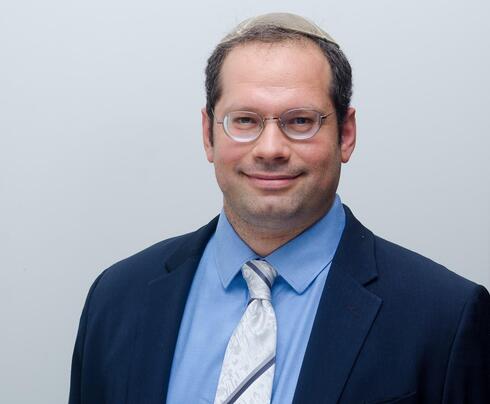
Dr. Ephraim Zachary Heiliczer is a Partner at the IL STEM Practice Group, Pearl Cohen.



