










Niv-AI raises $12 million Seed round to unlock stranded power in data centers
The Israeli startup aims to solve AI infrastructure bottlenecks by optimizing electricity use in real time.
Startup company Niv-AI has raised $12 million in a Seed round led by Glilot Capital Partners, with participation from Grove Ventures and U.S.-based funds Arc VC, Encoded VC, Leap Forward Ventures, and Aurora Capital Partners.
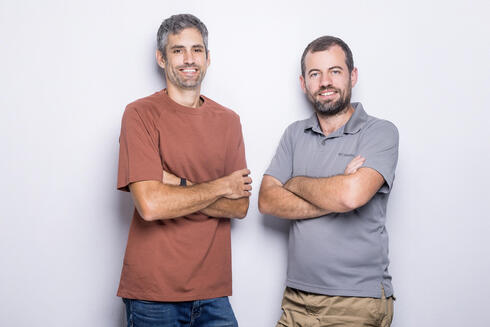
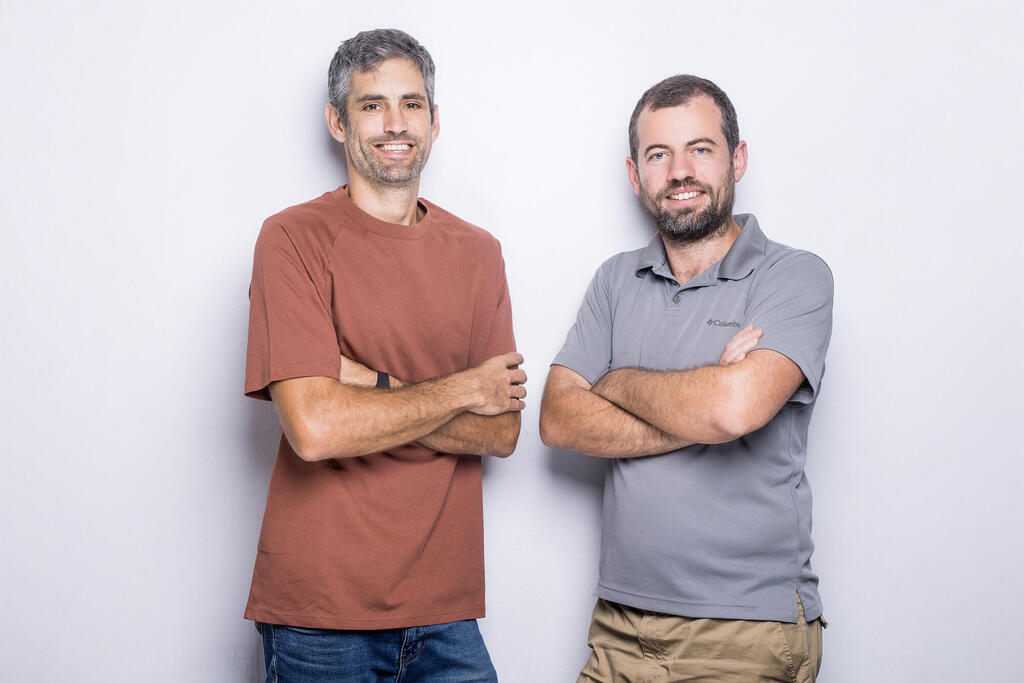
Founded less than a year ago, in May 2025, by CEO Tomer Timor and CTO Edward Kizis, the Tel Aviv-based company currently employs 10 people.
Niv-AI has developed an AI platform designed to bridge the gap between electricity consumption and computing workloads. Its system manages workloads in real time to unlock “trapped” electrical capacity in data centers, without reducing GPU utilization or requiring additional physical infrastructure.
Speaking to Calcalist, Timor said one of the core bottlenecks in AI infrastructure lies in the way processors consume power. “Each processor behaves like an electric kettle,” he said, “and thousands of them operate in tight synchronization.” This creates intense, sudden pressure on the power grid, resulting in sharp electricity spikes.
Historically, data center power consumption was relatively stable. But the rise of AI workloads has introduced rapid, unpredictable fluctuations. To mitigate this, operators maintain large safety margins, storing excess energy using batteries and capacitors, bulky hardware systems designed to smooth out power surges and prevent outages.
“We realized that the problem of power surges is fundamentally a data problem,” Timor said. “There isn’t enough visibility to truly understand it.”
To address this, Niv-AI developed high-frequency sensors that capture detailed power consumption data. This data is then fed into AI models that predict fluctuations and dynamically balance workloads against available power.
“Data centers don’t fully understand how AI workloads behave in terms of energy consumption,” Timor said. “To solve an energy problem, you need complete information. We provide that layer and use it to optimize power usage.”
According to the company, its approach eliminates the need for excessive energy storage by making better use of existing capacity. “We argue that the issue isn’t a lack of total energy,” Timor added, “but a lack of real-time optimization.”
The company says it is now scaling its team following the funding round. “We are accelerating hiring and building a dedicated lab environment that replicates a data center,” Timor said. “Within six months, we expect to deliver a product that integrates safely without disrupting operations.”
He added that the challenge of power management in AI infrastructure has only recently gained widespread attention, driven in part by advances led by Nvidia. “This is a broad, systemic problem,” he said. “Even the largest companies won’t be able to solve it with a single ‘magic’ solution.”
Niv-AI’s system captures what it describes as the “electrical fingerprint” of AI workloads, providing data center operators with high-resolution visibility into power usage. Its platform predicts millisecond-level fluctuations and adjusts workloads in real time, effectively smoothing demand before spikes occur.
The rapid growth of AI has created a tight interdependence between computing power and energy infrastructure. GPU-intensive workloads generate extreme and volatile consumption patterns, placing increasing strain on electrical systems.
Because conventional power meters cannot detect millisecond-level spikes, operators are forced to maintain large safety buffers-leaving up to 30% of power capacity unused. This inefficiency can cost data centers hundreds of millions of dollars annually per facility.
"We see Niv-AI as the foundational control plane for data center power," said Arik Kleinstein, Founding Partner at Glilot Capital. "While an incredibly high-resolution understanding of the AI factory's heartbeat is required, the true value lies in acting on it. Niv-AI doesn't just observe the data; they actively orchestrate the workloads to solve the industry's biggest bottleneck of Instantaneous capacity.



