










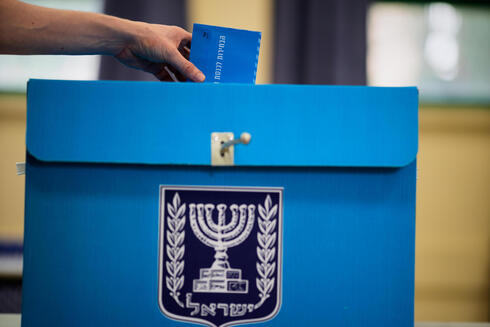
Israel records highest voter turnout since 1973 as spending surges on election day
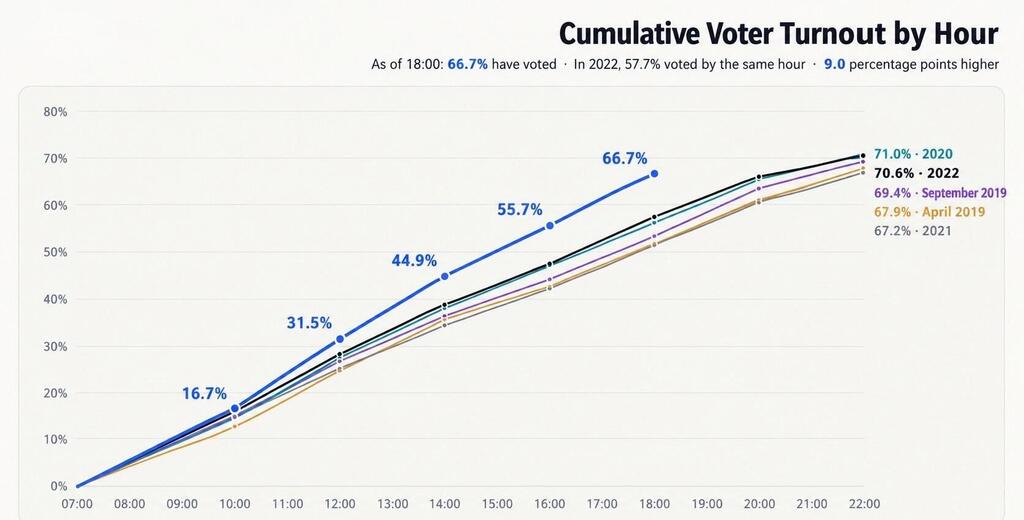
By 6 p.m., 66.7% of eligible voters had cast their ballots, compared with 57.7% at the same time in the previous general election. Payment-card spending also jumped 41.2% to NIS 1.14 billion, while the shekel strengthened against the dollar and euro.
With just a few hours remaining before polls close in Israel’s general election, voter turnout stood at 66.7% as of 6 p.m., up from 57.7% at the same point in the previous election. This is the highest turnout recorded since data collection began in 1973. More than 4.8 million citizens had cast their ballots by that time, out of 7,331,981 eligible voters who can vote until 10 p.m.
The election is widely viewed as critical to Israel’s future, following three years of war, the October 7, 2023, massacre, repeated rounds of conflict with Iran and deep political divisions, both between the coalition and opposition and across Israeli society.
Voter turnout was not the only figure to surge. The election-day holiday also coincided with increased shopping and leisure activity. According to Shva, the company that operates Israel’s national payment system, spending via payment cards between 8 a.m. and 5 p.m. on Tuesday totaled approximately NIS 1.14 billion. That was 41.2% higher than during the same hours in the November 2022 elections, when spending reached approximately NIS 808 million.
Compared with the local municipal elections in January 2024, when spending during the same hours reached about NIS 1 billion, the latest figure represents an increase of 12.9%.
The busiest period so far was recorded at 12:40 p.m., when more than 15,500 transactions took place, totaling approximately NIS 3.61 million. Shva said spending and transaction volumes throughout the day were similar to levels typically seen on the eve of a holiday or on Fridays.
The company’s figures cover all shekel-denominated transactions processed using Israeli payment cards.
Meanwhile, the shekel strengthened sharply against the dollar and the euro following reports of high voter turnout, a move that appeared to reflect optimism among foreign-exchange investors about the election outcome. The trend contrasted with global markets, where the dollar was posting moderate gains.
The dollar fell 1.8% against the shekel, trading slightly above NIS 3.02, while the euro declined 2.2% to NIS 3.37.
Trading activity in Israel’s foreign-exchange market was limited because of the election-day holiday and the closure of banks. Under Bank of Israel directives, publication of a representative exchange rate was also suspended for the day.



