










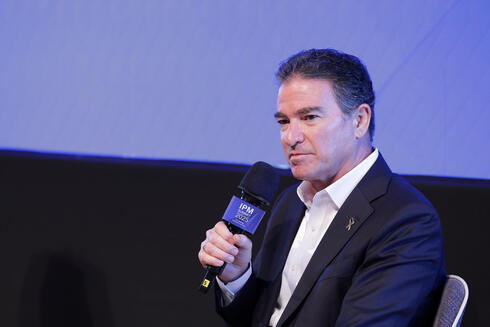
Yossi Cohen: “We’re doing everything to make sure that the State of Israel will exist forever”
Speaking at the Israel Private Markets Summit 2025 by Leader Private Capital, SoftBank Israel Head and former Mossad Director Yossi Cohen discussed the country’s economic resilience, cyber and defense innovation, the future of regional normalization, and the political crossroads ahead of its next election cycle.
“How come the shekel is getting stronger, along with the war? How come our stock exchange is doing, thank God, so beautifully? The only solution that I have is that there is something about this country,” said Yossi Cohen, Head of SoftBank Israel and former Director of the Mossad, during the Israel Private Markets Summit 2025 by Leader Private Capital. His fireside chat was moderated by Itay Elnatan, CEO and Managing Partner of Leader Private Capital.
“This is the Israeli spirit,” continued Cohen. “We are here to fight. We are here to survive. We’re here to exist.”
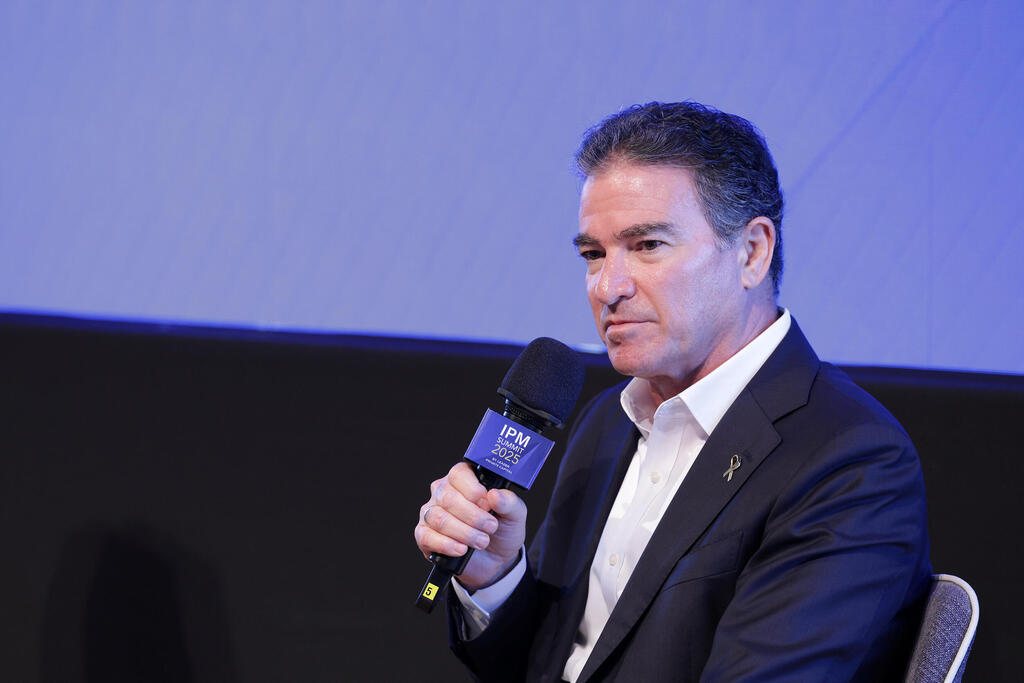
With a panoptic view shaped by his standing as a leading figure in both Israel’s security establishment and its financial sector, Cohen sees SoftBank’s ongoing investments in Israel as a measure of confidence in the country’s resilience and underlying economic strength.
“I’ve been touring around the USA in the beginning of the war, telling big investors, huge funds and investment banking too, do not abandon the State of Israel right now,” said Cohen. “Partially they did, partially they headed. SoftBank did all the way. We never stopped investing inside our own economy during the war.”
“We have invested in many companies in Israel, majorly in cybersecurity,” he continued. “I came from New York to negotiate another deal in Israel, a beautiful company that is doing cybersecurity for a certain element that is based on AI.”
Expanding on SoftBank’s current investment direction, Cohen noted the group’s growing focus on artificial intelligence. “Everything that SoftBank is currently doing in Israel, but globally, is investing in companies that are properly AI, like my boss, Masayoshi Son, did directly when he bought like 10% of OpenAI with a $35 billion check. And we do it here,” he said.
Further, Cohen acknowledged defense tech as a sector of growing confidence for investors, reflecting a broader shift in global priorities. He placed Israel among the nexus points driving this defense-oriented investment landscape. “You see that there is a kind of an absolute strong trend that companies, not only inside Israel but around the world, are investing much more in defense,” he said. “Fortunately, or unfortunately, because of the wars that have led [to] a kind of a different approach to defense.”
Even countries like Japan, he noted, had recently “declared a huge defense investment, I mean at the national level.” For investors interested in the sector, he added, “this is the right time to do that.”
Agnostic of sector trends, Cohen attributed Israel’s resilience and influence to qualities that continue to draw global capital and investor attention, even counterintuitively during times of prolonged war and instability.
“When we exist… when we eventually transmit all this passion to ourselves first and then to the region,” he said, “I would say people do get addict[ed] to our economy. From within the country, from within our own society, but from the international arena as well.”
He contrasted Israel’s performance with other regions, adding, “You see other war zones around the world. I mean, the first thing that crashes is their currency and then their stock exchange, and then everything comes down with it. It's not the case in our country.”
“How come the shekel is getting stronger, along with the war? How come our stock exchange is doing… beautifully?” he asked. “The only solution that I have is that there is something about this country… this is the Israeli spirit. Now we are here to fight. We are here to survive. We’re here to exist.”
In that same vein, Cohen reflected on his tenure as Head of the Mossad and the ongoing work the agency carries out to safeguard Israel. “We’re doing everything to make sure that the State of Israel will exist forever,” he said. “We have to do whatever it takes, literally whatever it takes, risking our freedom and lives, trolling behind enemy lines to make sure that we know what the enemy is planning for us and to disrupt these abilities.”
Looking at how Israel’s security posture has evolved since the devastating October 7 attacks, Cohen cited the Mossad’s operation to obtain Iran’s nuclear archive and the ensuing efforts to destroy its plans as an example. “Iran today is in an absolute different position… something that they cannot really rebuild.”
In terms of the next step in Israel’s regional evolution, Cohen said, “We are on the verge of some more peace treaties.” Part of that evolution, he said, is contingent on the “normalization of other countries that are expecting us to normalize relationships with them.”
“My guess it will be, maybe, according to our reports, Indonesia and most important would be Saudi Arabia.” Cohen added that business cooperation with the kingdom already takes place quietly. “If you are an Israeli businessman, you can travel to Saudi Arabia… it’s not an operation. It’s like an open relationship.”
Finally, as Israel eyes another election cycle in the not so distant future, Cohen reiterated that he would not be running for Prime Minister. “I don’t see the country is ready for that change yet,” he said. In recognizing the challenges of Israel’s current political crossroads, he advocated for a renewed sense of momentum and unity. “After so many years, each country needs a change, right?” he said. “We need leadership that will unify us again.”



