









The energy legacy of 9/11 was not higher oil prices. It was a new balance of power
The September 11 attacks helped transform U.S. oil dependence from an economic vulnerability into a national security issue. A quarter-century later, America has become the world's largest oil producer while the Gulf is using its energy wealth to diversify its economic and geopolitical influence.
In the days after the September 11 attacks, it was easy to assume that the geopolitical shock would send oil prices soaring. In practice, almost the opposite happened. After a brief rise, prices fell quickly. The slowdown already underway in the global economy worsened, air travel came to a halt, and demand for jet fuel dropped. The global price of oil fell from about $25 a barrel before the attacks to about $18 by the end of November 2001.
The price of oil was actually the least significant effect the attacks had on the energy market. The real impact was a deeper shift: for the United States, dependence on imported oil, especially from the Middle East, went from being an economic problem to a national security issue.
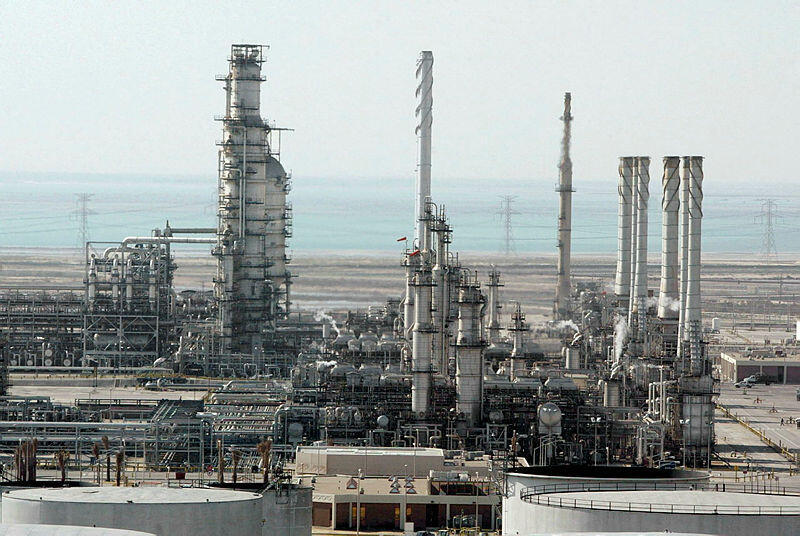
In 2001, the United States produced fewer than 6 million barrels of crude oil a day, while net imports stood at about 11 million barrels a day, roughly 2.7 million of them from the Gulf states. The arrangement was clear: the Gulf supplied a significant share of the energy powering the American economy, while the United States provided a security umbrella for the oil producers.
After September 11, that relationship became more complicated. The fact that 15 of the 19 hijackers were Saudi nationals fueled criticism in the United States of its ties with the kingdom. At the same time, the wars in Afghanistan and Iraq that followed the attacks showed just how closely the world's central oil-producing region was tied to political and security risks. Washington's conclusion was not that it should abandon the Gulf, but that it needed to reduce its exposure to it.
In 2006, President George W. Bush put the shift into words that stuck in the public memory: "America is addicted to oil." He set a target of replacing more than 75% of Middle East oil imports by 2025, explicitly linking energy dependence to national and economic security. The technologies he mentioned included ethanol, batteries, nuclear energy and renewable sources.
In practice, however, what changed the American oil balance most was the shale revolution: the combination of horizontal drilling and hydraulic fracturing that turned previously uneconomical oil and gas deposits into a massive source of production.
The September 11 attacks did not create the shale revolution. Still, the attacks and the wars that followed gave the idea of "energy independence" far greater political and security weight.
The result, some 25 years later, is dramatic. In 2025, the United States produced a record 13.6 million barrels of crude oil a day and was the world's largest oil producer. Net oil imports, which stood at nearly 11 million barrels a day in 2001, had reversed. Last year, the United States was a net exporter of oil and its products, with net exports of about 2.85 million barrels a day. Crude oil imports from the Gulf states fell to about 8% of total U.S. oil imports.
Even so, the Gulf's importance to the global market remains. The United States may buy less oil from the region, but oil prices are global. A crisis in the Strait of Hormuz or a sharp drop in Saudi production can still feed through to fuel prices in the United States. That also helps explain the American interest in maintaining the stability of shipping lanes in the region.
Change came on the other side, too. The Gulf states realized they could not base their future on the assumption that the world, and especially the United States, would need their oil to the same degree in the years ahead. Here, too, September 11 was only part of the backdrop, since efforts to diversify Gulf economies predated the attacks.
In 2016, Saudi Arabia launched Vision 2030, aimed at gradually reducing the kingdom's dependence on oil exports. The UAE had begun its diversification process even earlier, particularly in Dubai, while Qatar adopted its own National Vision 2030 as far back as 2008. The common thread is an attempt to turn oil and gas revenues into capital that can generate new sources of income: tourism, aviation, logistics, finance, industry, technology, real estate, sports and new forms of energy.
At the same time, the center of gravity of demand shifted eastward. According to the International Energy Agency, about 80% of the oil and oil products that passed through the Strait of Hormuz in 2025 were bound for Asia. China and India alone received 44% of the crude oil exports that passed through the strait.
For Riyadh, Abu Dhabi and Doha, that means their most important economic relationships are no longer limited to the American customer. Alongside their security relationships with Washington, they are building deeper energy, investment and trade ties with China, India and the rest of Asia.
This represents a major shift in the Gulf's economic identity. Twenty-five years ago, the region's countries were seen mainly as oil exporters. Today, they are also exporters of capital and global investors, with ambitions to become hubs for tourism, trade, transportation and technology. Their sovereign wealth funds have become central tools of economic and geopolitical policy, while oil revenues are increasingly being invested in building domestic growth engines.
There are already signs of progress. Saudi Arabia reported that the kingdom's real non-oil GDP grew 4.9% in 2025. Across the Gulf Cooperation Council, non-hydrocarbon activity has strengthened. But dependence has not disappeared. State revenues, exports and external balances are still heavily affected by the price of oil, and in countries such as Kuwait and Qatar, hydrocarbons still account for around 90% of exports.
So the economic legacy of September 11 in the energy arena goes beyond a reduction in U.S. dependence on the Middle East. The United States is still dependent on the global oil market, and the Gulf states have not separated themselves from oil. On the contrary, they continue to invest in oil and gas production.
What has changed is the balance of dependence.
In 2001, the United States feared that a shortage of Middle Eastern oil could badly damage its economy. In 2026, it is an energy superpower and the world's largest oil producer. At the same time, the countries that once held the advantage of controlling a hard-to-replace resource have begun building a future in which oil finances the transformation rather than defines it.



