









How 9/11 changed the way the world travels
A quarter century after the attacks, the security measures introduced in their aftermath have become part of everyday life. From CT scanners and biometric border controls to fortified airports and longer security lines, the technology and rules governing international travel have been transformed.
A quarter of a century after the September 11 attacks carried out by al-Qaeda on the World Trade Center and elsewhere in the United States, their global shockwaves are still keenly felt. From airports in the United States and Europe that have become fortified security zones, to the surveillance Western governments conduct of their citizens’ most routine activities, to upheavals in global energy markets, the attacks that killed 2,977 people reshaped daily life across the free world.
One of the most dramatic changes was to the freedom and ease of movement for travelers. In the world before the attacks, passengers in most countries, though notably not in Israel, were accustomed to arriving at the airport about an hour before their flight. Security screening often consisted of little more than walking through a metal detector, with no need to remove shoes, empty pockets or even present a boarding pass at the security checkpoint. Passengers’ companions could also accompany them almost all the way to the gate.
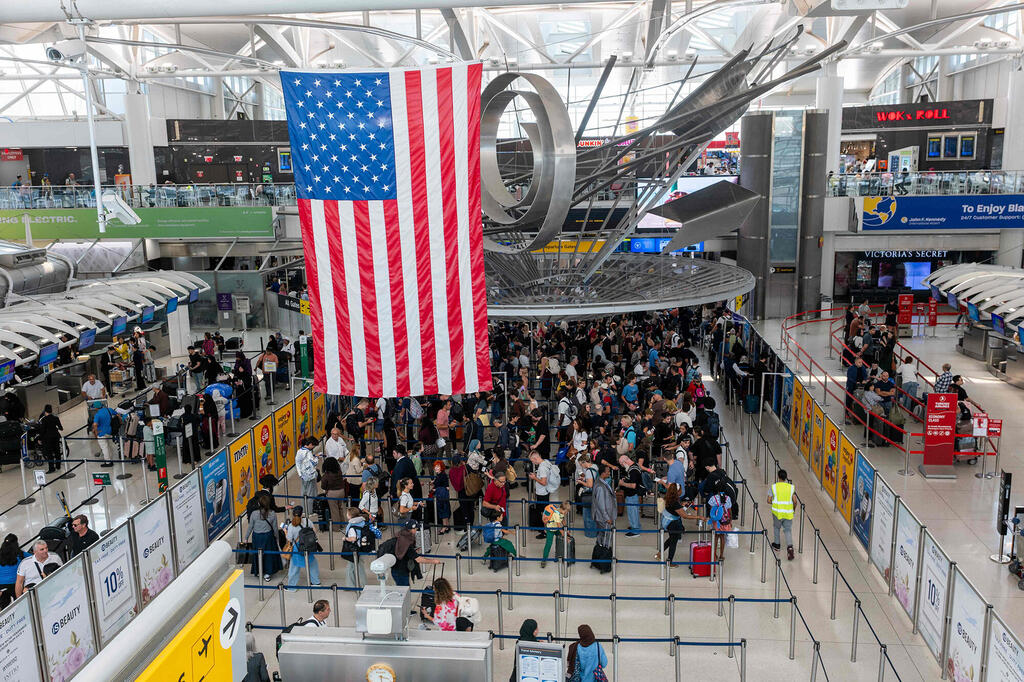
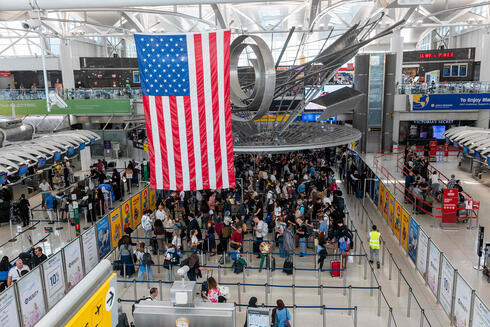
The ease with which the hijackers took control of four commercial aircraft changed that almost overnight. Airports embarked on an unprecedented expansion of security measures, transforming the experience of flying for hundreds of millions of people.
Before the attacks, airport security in the United States was largely handled by private contractors, typically whichever company had submitted the lowest bid. That era ended in November 2001, when President George W. Bush signed legislation that led to the creation of the Transportation Security Administration, or TSA, the agency now responsible for security across the U.S. transportation system, including airports and railways.
The legislation mandated measures that now seem almost mundane, including screening all checked baggage for explosives and reinforcing cockpit doors. What followed was a much broader transformation in airport security, driven by new technologies, new rules and a fundamental change in how governments viewed the threat of terrorism.
Monitoring upgraded
CT scanners instead of X-ray machines
Screening equipment has grown increasingly sophisticated over the past 25 years, and airports now operate CT scanners similar to those used in hospitals. The machines produce high-resolution, three-dimensional images of luggage, allowing screeners to examine its contents from multiple angles.
“The 3D images are so detailed that I can identify the brand of soap,” Deborah Scovel, a TSA inspector, said in statements cited by the agency.
As of July, the TSA had installed 1,162 CT scanners at 296 airports. Subject to available funding, the agency plans eventually to replace conventional X-ray machines with CT scanners across the system.
Ahead of its 25th anniversary, the TSA launched the Horizon 25 program in August, aimed at making security checkpoints more innovative, improving the passenger experience and strengthening security.
“In its first 25 years, the agency carried out its vital national security mission with commitment and excellence. Looking ahead to the next 25 years, we must work tirelessly to stay ahead of emerging threats,” said David Cummins, TSA administrator.
The evolution of airport screening illustrates one of the central legacies of 9/11: security has become increasingly dependent on technology. What once amounted largely to a metal detector and a visual inspection has evolved into a multilayered system combining imaging, databases, biometrics and increasingly automated screening.
Shared rules
Europe closes ranks
Airport security in Europe also underwent a major transformation following the attacks. Before 9/11, legal authority over aviation security rested primarily with individual European countries rather than EU institutions. In 2002, the European Commission began establishing common rules for airport security, requiring member states to make significant investments in infrastructure, technical equipment and personnel.
According to data from Airports Council International and the Association of European Airlines, security costs accounted for 5%-8% of European airports’ operating expenses on the eve of the attacks, compared with about 29% in 2011 and around 20% today.
As in the United States, Europe has more recently begun deploying CT scanners. At airports equipped with the technology, passengers can in some cases carry larger quantities of liquids through security, including bottles of up to 2 liters, and may no longer be required to remove their shoes.
The tightening of screening has increased the sense of security, but it has also produced longer and more tedious lines and added pressure on airports and passengers to keep to increasingly complex procedures and schedules. At the same time, the measures introduced to protect travelers have repeatedly raised questions about privacy and the limits of government surveillance.
The attacks, together with rapid technological advances, also accelerated the adoption of biometric identification at borders. Facial recognition and fingerprint scanning have made it possible for governments to identify and track travelers with a level of precision that was difficult to achieve before 9/11, but they have also intensified the debate over how much personal information governments should be allowed to collect.
The European Union launched a system in April to register fingerprints and facial images of non-EU entrants. The rollout has already drawn criticism and caused significant congestion at some borders. Despite those concerns, the intelligence committee of the U.S. Congress recommended in August that a similar screening system be adopted in the United States.
“Technological developments are making the collection of biometric data relatively easy,” Congress said in its recommendations.
A quarter century after the attacks, the legacy of 9/11 can therefore be seen not only in the fortified airports and longer security lines that travelers have come to accept as routine, but also in the expanding technological infrastructure used to determine who can cross a border, board a plane or enter a country.
The trade-off between security and freedom of movement has become one of the defining questions of the post-9/11 era. The technologies may have changed, but the basic question remains the same: how much inconvenience, scrutiny and loss of privacy are societies willing to accept in exchange for greater security?



