










Cisco in talks to buy Israeli cyber startup Zafran at steep discount
Exclusive: A deal valued at $150 million-$200 million would fall well below the company's last fundraising valuation despite backing from Sequoia, Menlo Ventures and Cyberstarts.
What is happening at Zafran Security, one of Israel's most closely watched cybersecurity startups?
Just four years after its founding, and following a series of high-profile funding rounds, the company is facing growing questions. One of its three founders has left, and according to multiple senior cybersecurity industry sources, Zafran has spent the past several months exploring a sale.
Sources told Calcalist that the company is currently in advanced talks with Cisco, which is willing to pay between $150 million and $200 million. If completed, the deal would represent a disappointing outcome for a startup that has raised more than $130 million and was valued at well above $200 million in its most recent funding round in December 2025.
1 View gallery
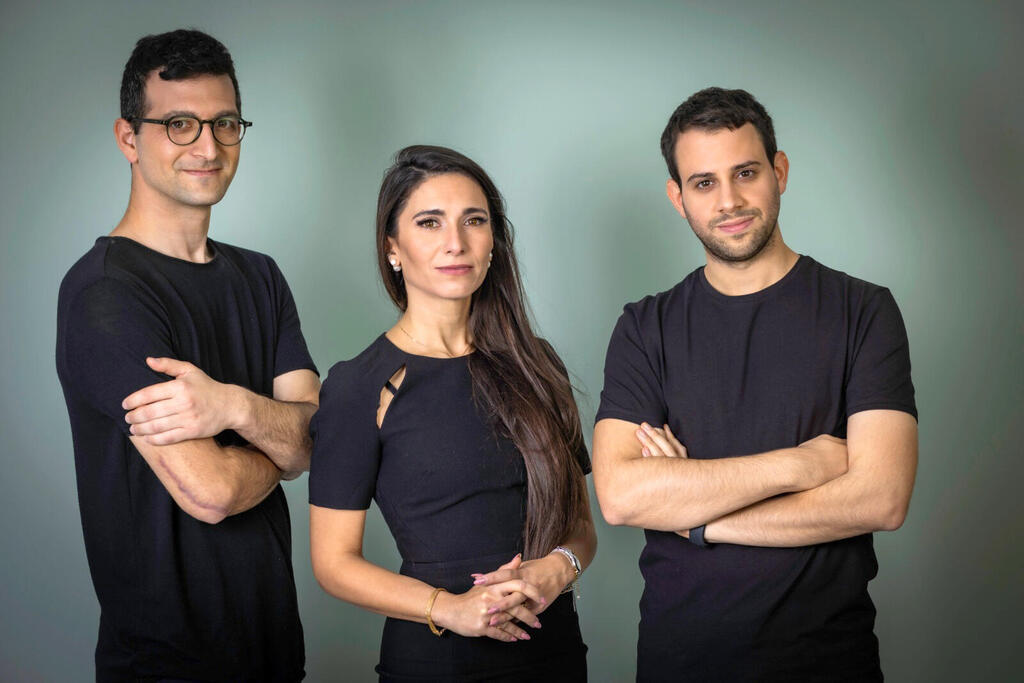
Zafran Security founders. Snir Havdala (right), recently left the company.
(Photo: Eric Sultan)
Zafran denies that it is negotiating a sale. The company says Cisco is making a strategic investment and that it plans to raise another large funding round.
The company's position has nevertheless raised eyebrows, particularly following the departure of co-founder and CPO Snir Havdala. Over the weekend, Havdala announced on LinkedIn that he had joined Nvidia as Director of Engineering, where he will lead the development of AI agents for Nvidia's infrastructure.
While the role is a senior one at one of the world's most valuable technology companies, the departure of a founder shortly after a major fundraising round inevitably raises questions about the company's trajectory.
Zafran, which frequently publicizes company milestones, did not announce Havdala's departure.
In his LinkedIn post, Havdala wrote: "I’ve always been drawn to the hardest technical challenges - and today, I’m incredibly excited to begin a new chapter. I’m thrilled to share that I’ve joined NVIDIA as Director of Engineering, building agentic capabilities for NVIDIA’s AI infrastructure."
Reflecting on his time at Zafran, he added: "My journey at Zafran Security was an extraordinary ride. Building a company from the ground up through Series C taught me invaluable lessons about technology, product, customers, leadership, and execution - lessons that will continue to guide me in this next chapter. Now, it is time to bring those lessons to an entirely new scale."
Notably, his farewell message did not mention his co-founders, Sanaz Yashar and Ben Seri.
According to several executives in Israel's cybersecurity industry, Zafran has struggled with a challenge that has become increasingly common in today's market: translating an exceptional founding team and strong fundraising momentum into sustained commercial growth.
The company develops software designed to identify and prioritize vulnerabilities across enterprise security environments, a market crowded with established competitors including Palo Alto Networks, CrowdStrike, Microsoft and Cisco, alongside dedicated exposure management specialists such as Tenable and Qualys.
According to industry estimates, Zafran initially grew rapidly but has spent the past year generating annual recurring revenue of roughly $20 million without achieving the acceleration investors expected.
Another cybersecurity executive said the company's product has struggled to demonstrate a meaningful competitive advantage over more established platforms, while its cash burn remains high.
"There is plenty of capital looking for investments," one senior cybersecurity executive said. "But the market has become saturated, even bubbly. Investors want companies growing at triple-digit rates. Annual growth of 20% is no longer exciting."
From the outset, Zafran sought to differentiate itself in a crowded market through two advantages: its independence from larger cybersecurity platforms and the reputation of its founders.
CEO Sanaz Yashar became internationally known for her personal story. Born in Tehran before immigrating to Israel, she served as an officer in Unit 8200 before becoming a leading cybersecurity researcher at FireEye-Mandiant, where she participated in several high-profile cyber investigations, including the investigation into the cyberattack on a major Israeli hospital alongside Havdala and Seri. The character Tamar Rabinyan, played by Niv Sultan in the television series Tehran, is partly based on Yashar's life story.
Havdala, a graduate of the Talpiot program, served for about a decade in Unit 8200, received both the Israel Defense Award and the IDF Chief of Staff's Technology Medal, and left the military with the rank of major. Colleagues from his military service describe him as the technological force behind the startup.
Ben Sari, Zafran's CTO, served in Unit 81 and is also a recipient of the Israel Defense Award.
The founders' credentials helped Zafran attract some of Silicon Valley's most prominent investors, including Sequoia Capital, Cyberstarts, Menlo Ventures and Penny Jar Capital, the venture fund backed by NBA star Steph Curry.
Since its launch, the company has raised more than $130 million. Its largest financing round, a $60 million Series C completed in late 2025, was led by Menlo Ventures. Earlier this year, American Express also invested through its venture capital arm.
At the time of the Series C, Yashar told Calcalist: "Since founding the company three years ago, we have received many acquisition offers, all of which we declined. We have no intention of selling the company. We still have a great deal to accomplish in the global market."
She added that customer interest had tripled over the previous two quarters as cybersecurity threats increased and awareness of Zafran's platform spread through customer referrals.
Industry executives say the company is now facing another challenge: the rapid emergence of AI-powered cybersecurity tools. Ironically, vulnerability management, Zafran's core market, has become one of the areas most disrupted by generative AI, particularly following the launch of new AI coding and security tools.
If a sale to Cisco materializes, Zafran would join a growing list of Israeli cybersecurity startups that generated considerable excitement but ultimately exited below expectations. The company's trajectory also illustrates how difficult it has become to replicate the success of companies such as Wiz, despite strong technology, elite founders and access to top-tier investors.
In response, Zafran said: "Cisco has made a strategic investment in Zafran, reinforcing its confidence in the company's platform and strong business momentum. Snir Havdala's transition to his next professional chapter was planned and coordinated with the company over several months. Itay Nachum, Zafran's Vice President of Product, based in New York, has assumed leadership of the product organization."



