










Olympus to buy Israel’s BioProtect for $270 million in cash
Japanese medtech group expands into prostate cancer treatment devices with all-cash deal.
Japanese medical device and optics giant Olympus is acquiring Israeli medtech company BioProtect for $270 million in cash.
The Israeli company has developed a biodegradable, balloon-shaped implant designed to protect healthy tissue during radiation therapy for prostate cancer patients.
2 View gallery
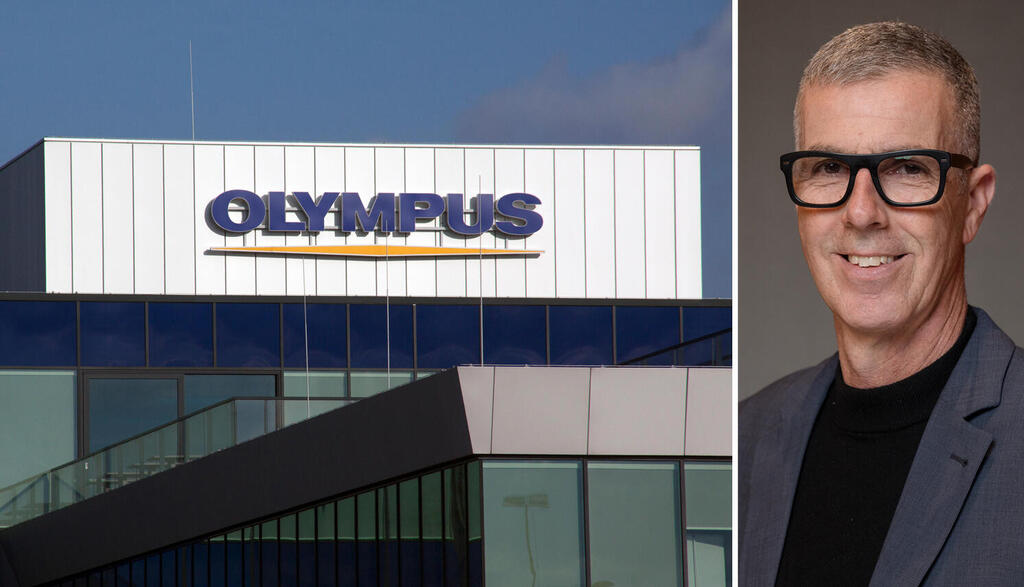
BioProtect CEO Itay Barnea.
(Photos: JPstock / Shutterstock.com , 2026 Dezember Photography)
BioProtect was founded in 2004 by Dr. Adrian Paz, Shaul Shohat, and Prof. Avi Domb. The company’s headquarters, as well as its development and manufacturing center, are based in Netanya. It also operates commercial activities in the United States, where its product was launched in 2024. At the end of 2023, BioProtect received FDA approval for its radiotherapy balloon and subsequently began commercial sales in the US and Europe. The company generated $8 million in revenue in 2024, rising to $14.5 million in 2025.
BioProtect employs 130 people, split evenly between Israel and the United States. Its operations are expected to remain in Israel following the acquisition. According to the company, 65% of its Israel-based workforce are women, many in senior roles. Since its inception, BioProtect has raised approximately $80 million. Its investors include Israeli venture capital fund Triventures, MVM Partners, Almeda Ventures, Consensus Biogroup and Peregrine.
Itay Barnea, CEO of BioProtect, told Calcalist: “We are selling the company in a $270 million all-cash transaction, with closing taking place at signing. Unlike other deals in the field, we are being acquired as a commercial company and integrated into a large organization.”
According to Barnea, “Combining forces with Olympus’ global marketing network is central to the acquisition, and it is expected to significantly accelerate sales.”
He added: “Radiation treatment for prostate cancer is relatively effective and generally well tolerated, but it can cause side effects. The BioProtect balloon creates a physical barrier between the irradiated prostate and the rectum, enabling greater precision and significantly reducing damage to healthy tissue. To date, more than 11,000 procedures have been performed. New clinical data with four years of follow-up show improved quality-of-life outcomes in sexual, bowel, and urinary function compared to control groups.”
Among BioProtect’s investors are also Triventures 4 Fund and the Triventures ARC Fund, in collaboration with Sheba Medical Center. Michal Geva, managing director at Triventures and one of the company’s early investors, said: “We knew BioProtect for many years before investing, from the time we invested in its sister company OrthoSpace. We entered after radiation treatment protocols changed, from 40-50 low-intensity sessions to a smaller number of high-intensity treatments. That shift increased the need for effective protection of healthy tissue and expanded the market opportunity.”
Geva added that “the product has clinical advantages over existing competitors due to its biodegradable properties, which provide protection throughout the course of treatment. After we joined, I recruited Itay Barnea, whom I worked with for years at OrthoSpace, later sold to Stryker in 2019, to lead the company to its next stage. He worked with a strong Israeli and US team and helped grow revenue to $8 million in the first year after launch.”
According to Geva, “Olympus did not previously have such a product, but it has a strong presence in urology. The main competitors are Boston Scientific and Teleflex, and Olympus is now gaining a foothold in the market. Most medtech deals include contingent payments that do not always materialize. This is a cash-only deal, which is relatively rare in the industry.”
BioProtect was founded within the Xenia Ventures incubator, with the goal of developing a biodegradable polymer platform to protect healthy tissue during medical procedures. The balloon is implanted between the prostate and rectum in patients undergoing radiation therapy. It is filled with saline solution, creating a barrier of more than 1.5 cm that displaces healthy tissue from the radiation field. After treatment, the implant naturally biodegrades and is absorbed by the body.
In 2009, BioProtect adapted its technology for orthopedics, leading to the creation of a spin-off company, OrthoSpace. In 2019, OrthoSpace was acquired by US orthopedics giant Stryker for $110 million in cash, with milestone payments bringing the potential deal value to up to $220 million. Barnea, who led OrthoSpace through its exit, later left Stryker and returned to BioProtect as CEO.



