









Opinion
Musk's next disruption is in the stars. Hollywood's stars
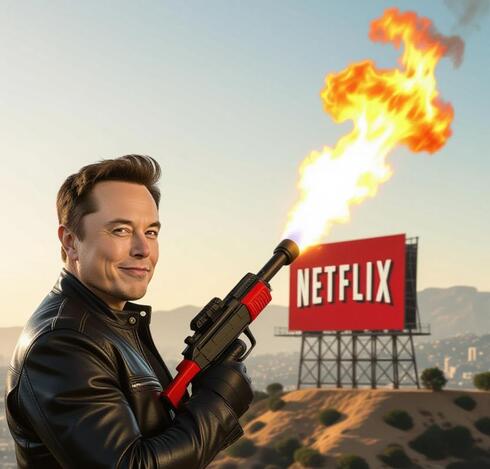
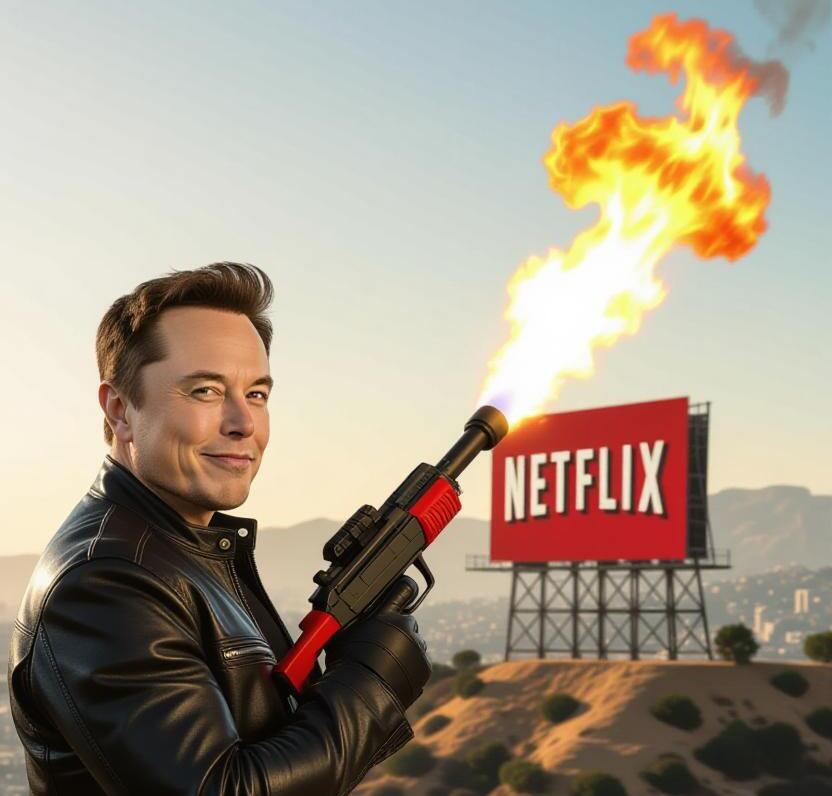
After calling on his followers to cancel Netflix for the health of their children, Elon Musk is aiming higher: to dismantle Hollywood and the streaming industry and rebuild them - with the help of artificial intelligence.
Elon Musk is once again stirring up controversy on social media - and this time not around government spending, antisemitism, or freedom of expression. In recent days, it seems that Musk is back to doing what he does best: disrupting established industries. Anyone following his posts on the X platform he owns could not have missed the aggressive campaign he launched a few days ago against the streaming giant Netflix, accusing the company of promoting a “transgender woke agenda” in its content, particularly in series aimed at children.
Musk, who has urged his followers to cancel their Netflix subscriptions, specifically targeted series such as Dead End: Paranormal Park, which features a transgender character, as well as The Baby-Sitters Club and Cocomelon, writing: “Cancel Netflix for the health of your kids.” He claimed that Netflix was suffering from the “woke mind virus,” a phrase he uses to describe what he views as the infiltration of progressive ideology into popular culture.
The call for a boycott reached its peak when Musk condemned Netflix for hiring an animator who had posted an inflammatory statement online about the assassination of conservative political activist Charlie Kirk. Musk tweeted that hiring a creator who celebrates the death of a political opponent crosses a red line. Within days, Musk’s posts had attracted hundreds of thousands of comments, and even triggered a slight drop in Netflix’s stock price.
Musk is known as an effective provocateur and ideological disruptor, but his campaign appears to be part of a broader, longer-term commercial project: dismantling the hegemony of Hollywood and the television content industry, and replacing them with a new entertainment model powered by artificial intelligence and user-generated content. At the center of this plan is Grok - X’s artificial intelligence platform.
Grok’s distinguishing feature compared to other popular AI models such as ChatGPT or Google’s Gemini is Grok Imagine - an xAI system that allows users to create films, series, and images directly from text prompts. In a series of posts and retweets, Musk announced that the platform will be able to produce films that are “at least watchable,” as he put it, before the end of next year - and “really good movies” by 2027. Indeed, Grok Imagine’s video generation capabilities (currently limited to just a few seconds) are improving rapidly.
Much like the impact of AI on text generation and software development, Musk promises a revolution in which anyone can create cinematic-quality films within minutes - without a production crew, budget, or equipment. The platform’s main advantages include the ability to create 8K-quality films at near-instant speed; full integration with X, which enables both production and distribution in one place; and “Spicy Mode,” which allows for less censored content. In other words - Musk isn’t just attacking Netflix; he’s building a replacement for it.
Musk’s ambitions extend beyond video. He has also promised to disrupt the gaming industry. According to him, xAI is currently recruiting experts to teach Grok the rules of gaming, with the goal of launching AI-generated games by the end of 2026. In the future, he says, Grok will be able to produce dynamic, evolving games in real time - so that each player experiences a unique world.
X already has a monetization model for popular creators, based primarily on ad revenue sharing from advertisements displayed in the comment threads of their posts. To qualify, creators must subscribe to X Premium and meet minimum follower and engagement thresholds. They can also earn money through subscriptions and direct tips. With this infrastructure already in place, expanding to video content creation is a natural next step. Under this model, every creator who releases a film generated through Grok would be paid based on views and engagement - creating a new, potentially lucrative content ecosystem. In Musk’s vision, every individual becomes an independent studio, and every viral film a possible source of real income.
The implications could be profound. Major studios would struggle to compete with the zero production costs of AI-generated films. The market could be flooded with billions of near-free productions competing for viewers’ attention, shifting the battleground from production budgets to artistic creativity and prompt-writing skill. Netflix, once the great disruptor of traditional television, could itself become the next victim of disruption - this time at the hands of the man calling for its abolition.
And not just Netflix, but Hollywood as a whole - an industry still recovering from the pandemic’s devastating blow to theater revenues. If anyone can create digital stars, voices, and faces, what becomes of the flesh-and-blood actors? Musk, it seems, does not merely want to boycott Hollywood. He wants to re-engineer it - using his artificial intelligence.



