









The unlikely path to a $497 million Israeli exit: “I want to be remembered as someone who positively affected many patients”
A chance encounter at university led Dr. Eyal Orion to the Zisapel brothers’ RAD Biomed incubator, setting him on a path to found five medical device companies, including one sold for $100 million. This month, he achieved a second exit with the $497 million sale of Vectorious, developer of a heart failure–detecting sensor.
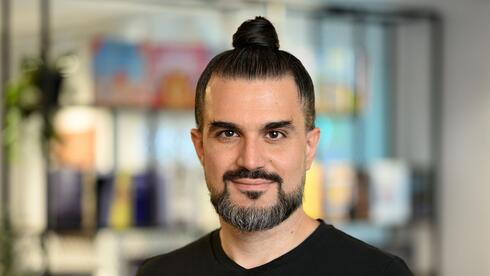
Dr. Eyal Orion did not dream of being an entrepreneur, certainly not a serial entrepreneur. He knew little about economics or entrepreneurship. By the age of 30, he had not yet decided what he truly wanted to do in life. Even while on a seemingly safe path at the Technion’s medical school, doubts about whether medicine was the right choice never gave him any rest. Today, nearly two decades later, he is one of the most prominent figures in Israel’s medical device industry.
He spent his childhood in Ramat Efal as one of four siblings. His parents still live in the same house, and he and his siblings stayed nearby. "It was a very good, fun childhood," he recalls. "A small town where the elementary school teachers were also your neighbors. A middle-class but very diverse socioeconomic environment, with childhood friends I’m still in touch with today."

In 1995, he enlisted in a pilot course but was dismissed after ten flights. "Quite rightly so," he says. "I had no talent whatsoever to be a pilot. I suppose the tests are much more advanced today." From there, he transferred to the paratroopers.
After his army service, Orion moved to Haifa to study medicine at the Technion. As his studies progressed, his doubts grew: “I began to ask myself if I really wanted to be a doctor. Medicine is a fascinating profession, but also very grueling. You need real passion to last.” In his fifth year, while still studying medicine, he enrolled in a master’s program in business administration at Tel Aviv University.
"I didn’t know much about economics or entrepreneurship," he says. "I could barely read an economics section. Little by little, I learned and acquired basic tools: micro, macro, finance, strategy." Then came the turning point that would reshape his entire life. As part of his MBA studies, Orion attended a lecture by Idan Tamir, then CEO of the RAD Biomed incubator run by brothers Yehuda and Zohar Zisapel. Tamir spoke about the incubator, and Orion was hooked.
"It really interested me. I approached him at the end of the lecture, with a bit of Israeli chutzpah, and asked if I could help in any way. After a few months, he started sending me work and ideas. While studying, I consulted with doctors on various projects to understand whether they were truly needed."
Orion completed his medical studies and did an internship at Ichilov Hospital. By then, it was clear that his path was about to change. "In the middle of my internship, I received an offer to work permanently at the incubator. I decided to leave medicine and enter entrepreneurship," he says. After finishing his internship, he joined RAD Biomed full-time, gaining his first exposure to the world of entrepreneurship.
University of Entrepreneurship
The RAD Biomed Incubator, founded in 1990 by the Zisapel brothers, is one of Israel’s most significant incubators in life sciences and medical devices. The incubator operates on a unique model of very early investments, usually at the concept or prototype stage, in relatively small amounts, typically hundreds of thousands of dollars per venture.
For three years, Orion was part of the incubator team. "It was a university for entrepreneurship. We saw dozens of ventures. Some were just ideas, some basic prototypes. The investments were small, around half a million dollars, but it was direct exposure to hardcore entrepreneurship from the very first stage. That’s where I learned the most."
After three years on the investor side, he changed sides. In 2009, Orion founded his first company, VGS, which develops implants to improve the success of heart bypass surgeries. Between 2009 and 2014, he co-founded four more companies, including Perflow Medical, which develops neurovascular devices to treat strokes and aneurysms. The company was sold to a Chinese fund in 2022 for approximately $100 million.
Other companies include Laminate Medical, which develops a device to improve blood flow for dialysis patients; Body Vision Medical, which develops an AI-based system to help doctors navigate health and diagnose lung cancer early; and Vectorious.
How is your relationship with the Zisapel family?
"A very special relationship. There are few people in life who truly influence you, who shape your worldview. It starts with your family, then maybe a good teacher in high school. In my case, there were figures in the army who shaped my moral worldview. In the business world, it’s harder to find such figures, but I was incredibly lucky to work with Yehuda and Zohar.
“In my opinion, they are not only the founding fathers of Israeli high-tech, but also highly significant figures in the country. They shaped much more than just media companies, exits, and IPOs. Yehuda and Zohar never saw themselves as just businessmen focused on exits and money. They were first and foremost committed to the State of Israel, and then to education, science, and technology. They never stopped working in this direction until their final days. For me, their influence profoundly shaped my worldview as a person working in this industry."

$497 million exit
Vectorious was founded in 2011 by Dr. Eyal Orion and Oren Goldstein with the aim of providing a solution for heart failure, a common and potentially fatal condition. Heart failure occurs when the heart cannot supply sufficient blood to the organs, sometimes following a heart attack, diabetes, or high blood pressure.
"In Israel, up to 40% of patients hospitalized in internal medicine departments are heart failure patients," says Orion. "They come in and out with edema in their legs or lungs, to the point of suffocation. The main treatment today is based on diuretics, but the problem is that we don't know when fluids start to accumulate. Like with blood pressure or diabetes, you don’t feel it until it’s too late."
Vectorious’ main product, V-LAP, is a small, battery-free sensor implanted via catheterization in the left atrium of the heart. It measures left heart pressure, an early indicator of worsening heart failure. The sensor transmits data wirelessly, making monitoring easy and unobtrusive for the patient.
Next to the implanted sensor is a portable external unit, resembling a belt, which patients activate for a minute each day to transmit the data. Rising pressure serves as an early warning of fluid congestion and, in some cases, a transition to worsening heart failure. This system allows doctors, or patients under supervision, to adjust treatment, such as modifying drug dosages, without waiting for hospitalization.
Earlier this month, Vectorious announced the completion of its sale to medical device giant Edwards at a valuation of $497 million. This was the second stage of the deal, executed in cash. The first stage occurred in 2023 when Edwards acquired about half of the company in a move kept strictly confidential. Investors, including the Zisapel family, Zohar Gillon, and Eri Steimatzky, realized a high return on a total investment of just $35 million.
"We have no pretensions to solve heart failure, but we can certainly improve its treatment dramatically," says Orion. "The goal is for the patient to manage themselves, as with diabetes. Not to wait for a semi-annual appointment, but to receive daily guidance tailored to the real situation in their body. The most accurate measure of fluid accumulation is the pressure in the left atrium. That’s why we developed the sensor, the only one in the world to sit inside the heart. The challenge was enormous: a tiny sensor that would last ten years without recalibrating, and still remain accurate."
What’s the clinical status of the implant?
“Since 2011, we have implanted the sensor in 73 patients across Israel, Europe, and the U.S., some for 4–5 years. We are now preparing for a pivotal trial, a large, decisive clinical study intended to provide the FDA with the final evidence of efficacy and safety required for marketing approval.
"Beyond the technological challenge, there was a product challenge: the average patient age is 75, and some are 90. If patients don’t use it twice a day, the system is ineffective. We invested heavily in simplicity, convenience, and clarity, and today compliance rates are almost 100%."
How did the partnership with Edwards begin?
"Startups, especially in our field, constantly engage with everyone in the ecosystem, investors, strategic partners, and potential competitors. Once you have a few years of activity, patents, and a proven technology, you start talking to everyone. Edwards was one of those companies. For years, they focused almost exclusively on structural heart diseases, such as valve problems, where they were undisputed leaders. Heart failure, our field, was not on their radar."
The shift occurred in 2019. "Suddenly, talks escalated. We began recruiting patients in Europe for our first clinical trials, and Edwards started taking the field seriously. That year, a senior delegation from Edwards visited Israel. By the end of the meeting, the conversation had already shifted to 'how we can work together.' That was the moment the relationship became real."
"A few months later, at the start of 2020, they made their first investment in the company, right at the outbreak of COVID-19 and during the first lockdown. For them, it was a way to evaluate us in depth, test the technology and the team, and assess real potential. For us, it was a turning point: suddenly, we had a global strategic partner walking with us.
"We have been partners since 2020, and the relationship has grown stronger over the years. We have experienced many ups and downs, both technological and global - the pandemic, October 7, and other upheavals - but we have overcome them together. Over time, we built deep trust. It’s not just that Edwards was impressed by the technology; they were equally impressed by the Israeli team."
When did the investment become an acquisition?
"In 2023, Edwards took another step, they acquired about half of the company. A year later, in 2024, the second phase was signed, which led to a full acquisition. The valuation, $497 million, had already been determined at that point. The agreements were ready; all that remained was to finalize the last phase."
Why was the first stage of the deal kept confidential?
"Both the person who leads business development at Edwards and I are discreet people and prefer to work quietly. He manages many deals and doesn’t want competitors to see the strategy, especially in a field Edwards hadn’t operated in at the time. It was convenient for everyone."
3 View gallery

The implant developed by Vectorius that warns of worsening heart failure
(Vectorious)
Was it the right time to sell?
"Yes, and not for financial reasons. You can always raise more capital. The main reason is different: in medicine, being first is especially difficult. It’s a conservative world, doctors are hesitant to change a practice that has worked for decades, and regulators are even more cautious. Imagine an entrepreneur from Tel Aviv telling the FDA, 'I want the patient to manage themselves.' It’s a market that struggles to digest this kind of innovation. Insurance and reimbursement systems are also highly complex.
"Being the first, as a small Israeli company without a developed medical ecosystem, is almost impossible to sustain until the end. My goal is for the product to become a global standard within 5–10 years. The best chance of achieving that is with a company like Edwards, they know how to work with regulators, hospitals, and medical communities. They have the power to make it a standard."
What’s Edwards’ connection to Israel?
"Edwards’ story with Israel began in 2006 when they acquired PVT, a small startup from Caesarea developing a catheter-based heart valve. This acquisition opened a new global market, TAVR, or Transcatheter Aortic Valve Replacement. Today, TAVR is a multi-billion-dollar market in which Edwards holds roughly 60% market share.
"In 2014, Edwards officially entered our field by acquiring a competitor and establishing a new division: Implantable Heart Failure Management. Today, we are part of this division, full partners in shaping its vision and future development.
"Edwards has maintained a development center in Caesarea since then, supporting all company divisions. They value Israeli innovation and understand that local expertise is an asset. This is also why they left Vectorious as an independent entity here, out of trust and appreciation for Israeli capabilities."
Enlisting himself in the reserves
On October 7, 2023, Orion watched the tragic events unfold on television, struggling to process the scenes. The tragedy also touched his family: his ex-wife’s partner lost his daughter, Hadar Prince, who was killed in the Nova disaster. Long days of uncertainty and anxiety followed until they learned her fate.
Amid personal grief and national shock, Orion felt compelled to act. The next day, upon learning that his brother had been drafted into the reserves, he drove to Beit Lid base, where he had served years earlier in the paratroopers. Without a formal call-up, simply out of a sense of responsibility, he joined a Nahal unit, received weapons and equipment, and served alongside young soldiers and veteran reservists. After about ten years without wearing a uniform, he spent three months in the field.
Did you enter Gaza?
"They didn’t let me, but I was behind the scenes with soldiers and officers, where I made new friends, both young soldiers just out of regular service and veteran reservists. We are still in a WhatsApp group. I stayed with them until January, then I didn’t continue."
What was that period like?
"It was a difficult time. The children were in shock, and so was I. I told them I was going to the reserves because staying at home was harder."
And the company?
"All I cared about then was the families and employees. I went to the team and told them, 'Leave the business for a moment. First, make sure families are okay, that everyone is okay.' In our field, everything is long-term, it won’t change because of a month or two. The people are the main thing."
How did the Americans react?
"In January, I flew to the U.S. to convey to our partners: yes, there is a huge mess, but we are moving on. This is the reality of Israel; every few years there’s a crisis. We needed to convey resilience and stability. I saw emotional reactions, many Americans, especially in California, had been politically correct and believed there were 'two sides' to everything. After the photos of October 7, they said, 'We realized that some things don’t have two sides.' They imagined what would happen to their children if this occurred in their home."
Two years have passed since and Israel is widely criticized across the world. Has their position changed as well?
"No."
"The entrepreneurial lifestyle has health costs"
Why doesn't the medical device sector enjoy the same investments and aura as cyber?
"That's an excellent and complex question. If you look at the raw data, the picture is actually very impressive. According to an HSBC report I received just a month ago, summarizing the first half of 2025 in the medical devices sector alone, three significant exits occurred worldwide—two of which were Israeli: the startup SoniVie, acquired by Boston Scientific, and EndoStream, acquired by the Japanese corporation Kaneka. That’s without including Vectorious, which was later added as a fourth.
"In previous years, especially in the cardiology sector, half and sometimes two-thirds of the exits were Israeli. In other words, Israel now ranks second in the world after the U.S., and in terms of groundbreaking innovation, we are even on par with the Americans."
Still, the field lacks the public exposure and investor appeal that characterize cyber.
"When I entered this industry in 2006, there were at least 15–20 funds focused on medical devices. Most have disappeared. Today, there are almost none, certainly none leading initial rounds. In contrast, cyber has over 100 active funds, about half of which are American, coming to Israel to invest. In our medical ecosystem, this simply didn’t happen."
Why?
"There are two main reasons. In cyber, you can develop a product in six months, reach several million in sales, and show a return. There’s no such thing in medicine. Here, it takes years just to reach the first clinical trial. For investors seeking quick returns, it simply isn’t suitable.
"The second reason is complexity. In medical devices, the technology is extremely deep. People come from Rafael or other technological units with extraordinary engineering skills, and that’s only half the challenge. The other half is biology, a world that doesn’t always follow predictable rules. You never know how the body will react to technology. Add regulation, insurance reimbursement, clinical studies, and working with doctors, this field has so many layers of complexity that only highly experienced investors can understand it."
Could the government have done more to promote the field?
"I think good work has been done. I served as a public representative at the Innovation Authority for six years, during Aharon Aharon’s tenure. I was very impressed by the expertise and understanding of the field. Contrary to popular belief, investing in is not easy. It’s a difficult profession.
"The Innovation Authority recognized a market failure in our field. They don’t intervene in cyber because the private market performs excellently there, but in medical devices, they understood that without support, progress would stall. Without the Innovation Authority, Vectorious wouldn’t exist. They invested millions in the early years, when the idea of a small sensor in the heart seemed almost imaginary. Later, they even helped us establish a production line in Israel, so we could manufacture and not just develop. It was a brave decision, with enormous impact."
After all these years, are you more of a doctor or an entrepreneur?
"I’m not a doctor. I studied medicine, but being a doctor is a sacred profession. For someone outside the system, it’s hard to grasp the sacrifice and mental burden. Even during my internship, it was very challenging. You spend six months in an internal medicine department, see the sickest patients, interact with them intimately, and it affects you."
Is the entrepreneurial lifestyle better?
"Of course there are very difficult moments. The entrepreneurial lifestyle has costs, including health costs. I’ve already had back surgery. Some of it may be from tens of thousands of miles flown; part is stress, which manifests differently for everyone. For me, it’s the desire to succeed, to be the best, that’s my motivation.
"I want to be remembered as someone who, with his colleagues, revolutionized this field and positively affected many patients. That drives me. But every morning brings uncertainty, sometimes we also unintentionally harm patients. Anyone working with deep technologies and first-of-their-kind implants must accept that not everything will go smoothly."
Does this stress affect your personal life?
“Definitely. At least for me, my mind is always active. It’s hard to focus on a conversation because I’m constantly thinking, calculating, anticipating the next problem. You almost never have mental or intellectual contact with others. Your adrenaline is always high. Every company I’ve been involved with nearly failed several times. Living in that world has costs."
How do you disconnect from stress?
"Sports and books, they’re my refuge. And of course, my kids. They’re my anchor. When everything falls apart, I can hug them, talk with them, and relax. Tomorrow is a new day."



