










Credo to acquire Israeli chip startup DustPhotonics for up to $1.3 billion
The Israeli company's photonic chip technology enables faster, lower-cost data transfer in next-generation AI clusters.
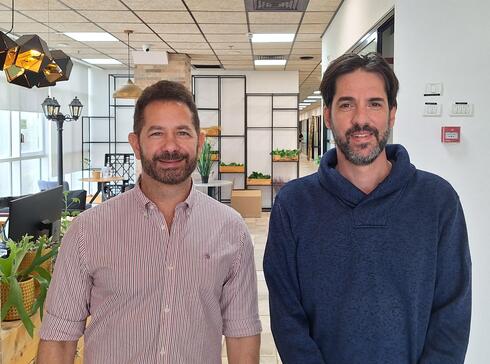
Israeli chip company DustPhotonics is being acquired by the U.S.-based Credo Technology Group for $750 million in cash and an additional $123 million in shares.
The deal also includes a potential earnout of up to 3.2 million additional Credo shares, which, based on the current share price, is valued at approximately $430 million.

Credo, which is traded on Nasdaq with a market capitalization of around $24 billion, specializes in connectivity solutions for data centers. The acquisition of DustPhotonics is expected to accelerate its expansion into the optical communications sector.
DustPhotonics Chairman Avigdor Willenz previously sold Habana Labs to Intel and Annapurna Labs to AWS. Since its founding, the company has raised over $100 million from investors including Willenz and funds such as Greenfield Partners, Sienna Venture Capital, Exor Ventures, and Atreides Management.
"Silicon photonics is becoming a critical building block for AI infrastructure, and DustPhotonics has built a truly differentiated technology platform in this space," said Willenz. "We have been disciplined in focusing on the right architecture and execution, and the results are evident in both the product and customer traction. Combining with Credo creates a powerful platform with the scale, integration, and customer access required to fully capture the opportunity ahead."
DustPhotonics specializes in silicon photonics, technology that integrates optical functions onto a single chip, enabling faster and more efficient data transmission. Its products are already deployed in optical transceivers used in large-scale AI clusters, with capabilities spanning 400G, 800G and 1.6T speeds, and a roadmap extending further.
By bringing that capability in-house, Credo is attempting to reduce its reliance on external suppliers while accelerating product development and lowering costs. The company said the acquisition would allow it to offer a fully integrated connectivity platform, spanning electrical and optical interconnects across AI systems.
DustPhotonics was founded in 2017 by a group of experts in optical communications and chip design: Ben Rubovitch, a former CEO who previously worked at Mellanox; Dr. Kobi Hasharoni and Amir Geron, both from Compass Networks; and Yoel Chetrit, Chief R&D Officer, formerly of Intel. In 2021, the company made a significant strategic pivot, shifting from manufacturing edge components (such as transceivers and cables) to focusing on chip development. As part of this transition, Ronnen Lovinger was appointed CEO.
The sector in which DustPhotonics operates has been heating up recently, as photonics technology becomes a critical component in data centers. At Nvidia’s annual GTC conference earlier this year, CEO Jensen Huang identified photonics as a core pillar of AI infrastructure. While there had previously been uncertainty about whether alternative technologies might replace copper-based connectivity in data centers, Huang’s remarks signaled that photonics will play an integral role in Nvidia’s future strategy.
Against this backdrop, shares of companies active in the photonics space have surged. Israeli chipmaker Tower has risen 67% since the beginning of 2026, reaching a valuation of $24 billion. According to estimates, Tower is not a likely buyer of DustPhotonics. Other major players include U.S.-based Lumentum, whose shares have risen 130% this year to a valuation of $64 billion, and Coherent, which is trading at a similar valuation after a 60% increase. These gains have been further fueled by Nvidia’s announcement of a $4 billion strategic investment split between Lumentum and Coherent.
Credo executives framed the deal as a turning point for the company’s optical business. The combined portfolio, including optical transceivers, digital signal processors, and silicon photonics products, is expected to generate more than $500 million in revenue by fiscal 2027.
"Joining Credo is the natural next step for DustPhotonics," said Lovinger. "We built this company with a clear conviction that Silicon Photonics would become the structural foundation of high-speed optical connectivity as AI infrastructure scales. Credo shares that conviction and brings the SerDes IP, the hyperscaler relationships, and the operational scale to turn that vision into reality far faster than we could independently. This is an exceptional outcome for our team, our customers, and the broader industry."



