










Opinion
The AI and shekel double whammy should terrify Israel. It may also save it.
The countries that benefit most from AI will be the ones reorganizing their economies around what humans still uniquely do better than machines. For Israel, that means a national transition from “code writers” to “systems builders.”
For two decades, Israel benefited from one of the best economic equations in the world: elite engineering talent at a discount to Silicon Valley.
That equation is breaking.
The shekel has become dramatically stronger, making Israeli engineers far more expensive in dollar terms. At the exact same time, AI is beginning to commoditize large portions of software development itself. Code generation, once the core output of the global tech workforce, is increasingly automated.
These are not cyclical trends. They are structural.
And together, they represent a direct challenge to the economic engine behind the “Startup Nation.”

The United States is also increasingly signaling a long-term desire for a weaker dollar and stronger industrial competitiveness. Whether through tariffs, industrial policy, fiscal expansion, or monetary pressure, the direction is clear: America wants to produce more and export more.
For Israel, this creates a difficult reality.
A structurally stronger shekel combined with structurally cheaper software creation undermines the traditional Israeli software model. And Israel is too small as an economy to solve this primarily through short-term interest-rate adjustments.
Which means the response cannot be tactical. It must also be structural.
Because the next era of engineering will not belong to code writers. It will belong to system architects, builders, operators, and scientists - and in relative terms, Israel has an advantage that it can turn into an upper hand.
Israelis are among the best people in the world when it comes to flexibility, adaptability, and responding to forcing functions. The double whammy of AI and shekel strength could ultimately become a blessing in disguise.
One of the clearest signals comes from AI adoption itself. According to Anthropic’s Economic Index, Israel leads the world in per-capita Claude usage. Israelis are not resisting AI; they are among the fastest populations on earth to integrate it into engineering workflows and daily productivity.
The countries that benefit most from AI will not simply be the ones using AI tools. They will be the ones reorganizing their economies around what humans still uniquely do better than machines.
For Israel, that means a national transition from “code writers” to “systems builders.”
And even more importantly, it means aggressively doubling down on the hard sciences: physics, chemistry, materials science, robotics, energy systems, and semiconductors.
Related articles:
- “If productivity and abundance reach sufficient scale, society will gradually redefine why we work, what work means, and how value is created”
- Deep33 launches with $100 million first close, aiming to shape the infrastructure of AI
- “Via Dolorosa” - Via Transportation’s IPO: A decade-long ride of grit, resilience, and execution
In these fields, AI acts primarily as an amplifier, not a replacement.
Israel should respond accordingly by creating true national laboratories, dramatically expanding elite technical military programs like Talpiot, increasing physics, mathematics, and engineering intensity across universities, creating stronger hard-science tracks in high schools, and continuing to deepen the links between academia, defense, and industry.
The goal should no longer simply be more startups. It should be to create the world’s highest density of systems engineers and deep-tech talent.
At the same time, Israel should begin creating long-term structural pressure toward a weaker shekel.
That means encouraging greater outbound investment by Israeli institutions and pension funds, increasing sovereign debt issuance in dollars, and aggressively investing in national infrastructure.
Infrastructure spending has a unique dual effect for Israel.
In the short term, building power systems, transportation, AI infrastructure, semiconductor capacity, and industrial projects require importing enormous quantities of steel, chips, machinery, turbines, cooling systems, and energy equipment - almost all purchased in dollars. That naturally increases shekel selling.
But the long-term effect matters even more.
The AI era is not only about software. It is increasingly about physical systems: energy, compute, semiconductors, manufacturing, logistics, and infrastructure.
Atoms matter again.
For Israel, investing heavily in infrastructure therefore creates a double benefit. It helps reduce upward pressure on the shekel during a difficult transition period while simultaneously strengthening Israel’s long-term position in the industries that will define the next generation of global power.
Israel has the opportunity to evolve from a software-heavy startup ecosystem into something far more important: A deep-tech and systems-engineering superpower.
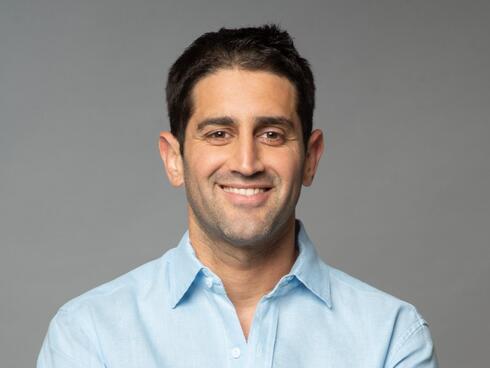
Lior Prosor is a general partner at Deep33.



