










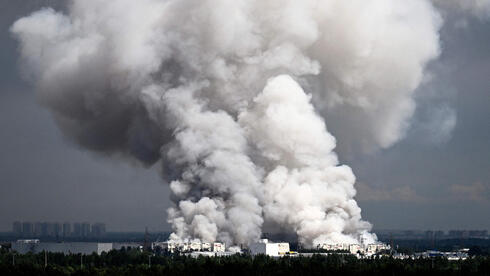
Ukraine is attacking Wildberries, Russia’s Amazon, to bring the war into everyday life
Another Wildberries facility was hit by Ukrainian drones today, deepening a campaign against Russia’s biggest online marketplace and its vast logistics network. The attacks are part of a broader strategy to disrupt the commercial arteries of the Russian economy and shatter the Kremlin’s promise that ordinary Russians can keep living normally despite the war.
On July 18, residents of Moscow woke to a huge black mushroom cloud spreading across the city's sky. They had become accustomed to Ukrainian drones striking targets in and around the capital almost every night, and only two weeks earlier, a drone attack had sparked a huge fire at the city's major refinery. But this time, the target was unusual: for the first time in the war, Ukraine had attacked a major logistics complex belonging to a retail company. And not just any company, but Wildberries, the online commerce giant often described as the "Russian Amazon."
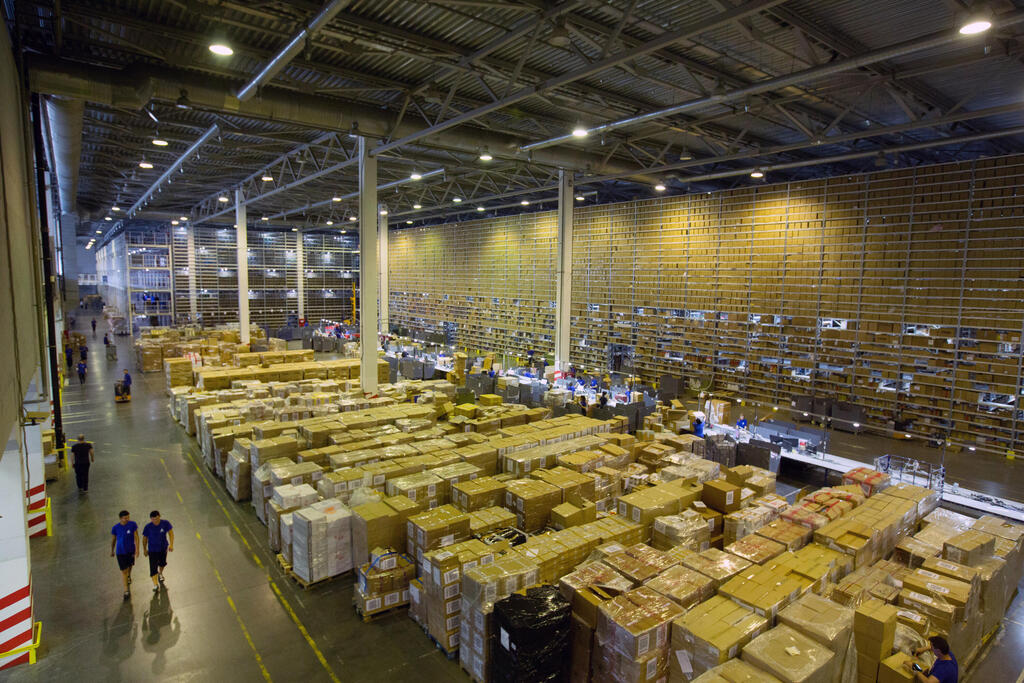
The damaged facility, located in Elektrostal in the Moscow region, was Russia's second-largest Wildberries logistics complex, covering 230,000 square meters. And it was only the opening blow.
The attacks have continued throughout the past month. Ukrainian drones have struck at least 23 of Wildberries' 30 logistics facilities across Russia, in the Moscow region, St. Petersburg, Tula, Volgograd, Perm, Krasnodar, Samara and elsewhere. At least 20 facilities have been severely damaged, with some completely destroyed. Nine workers have been killed, dozens injured and millions of items have gone up in flames.
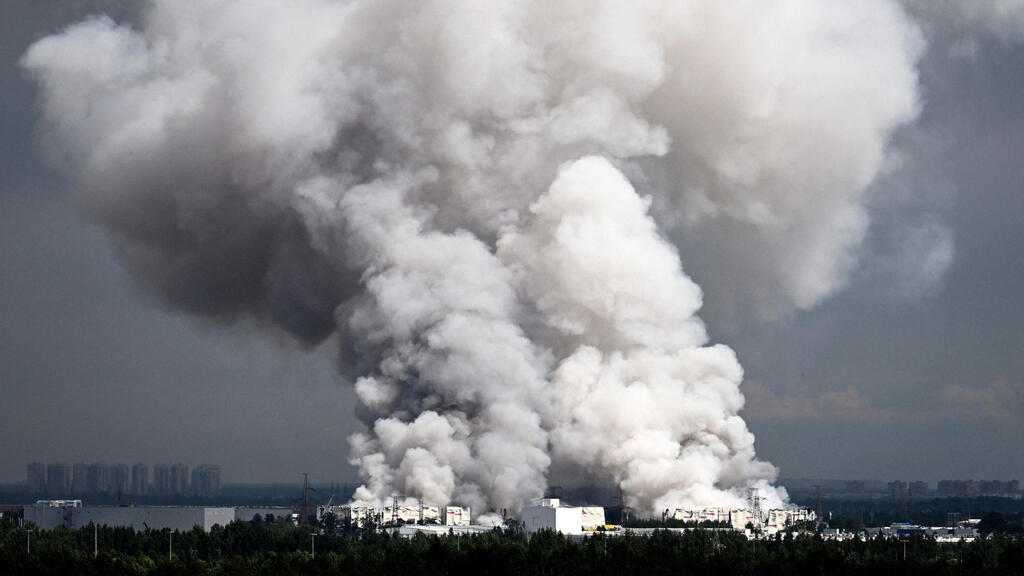
The targets appear to have been chosen deliberately. Ukraine's officials say Russian soldiers purchase equipment through Wildberries, but they have also made clear that the attacks are intended to "shatter the illusion of a peaceful life in a second," as Robert Brovdi, commander of Ukraine's drone forces, has put it.
Wildberries plays a critical role in Russian daily life, particularly since the invasion of Ukraine triggered a mass exodus of Western companies from Russia, including Amazon, IKEA and Adidas, amid sweeping sanctions. As the ruble weakened, inflation rose and the traditional retail market contracted, Wildberries increasingly became a substitute for products that Western companies had stopped supplying.
Clothing, cosmetics, electronics, auto parts and countless other products flow through the company. Wildberries controls roughly 45% of Russia's online commerce market, handles millions of orders a day and offers tens of millions of products. Some 79 million customers, roughly half of Russia's population, visit its platform each month, while its annual sales have been estimated at $68 billion.
For the average Russian consumer, Wildberries has become deeply embedded in everyday life.
The company is also a major employer and economic intermediary, providing livelihoods for hundreds of thousands of people. It has roughly 95,000 pickup points across the country, from affluent districts of St. Petersburg to remote Siberian mining towns and villages in the Caucasus. Most are operated by small local franchisees that employ workers, pay rent and generate economic activity in their communities.
The platform also serves roughly 100,000 small businesses, including local designers and manufacturers, giving them access to consumers across Russia without having to go through the country's major retail chains.
That is why the destruction of Wildberries' logistics centers has consequences far beyond the company's balance sheet. Each warehouse that goes up in flames threatens inventories, incomes, deliveries and the daily routines of millions of Russian households. And that may be precisely what makes the attacks so uncomfortable for the Kremlin.

Ugly divorces, shootings at company headquarters and one clear winner
Wildberries was not always this large or important. It is headed by its founder and CEO, Tatyana Kim, 50, who is now Russia's richest woman, with an estimated fortune of $8 billion, according to Forbes.
Her beginnings were considerably more modest. Born in Grozny, the capital of the Chechen Republic, to a family of Korean descent, Kim worked as an English teacher at the beginning of the millennium. She lived in a one-room Moscow apartment with her then-husband, Vladislav Bakalchuk, an engineer. In 2004, while on her first maternity leave - the couple eventually had seven children - she began a small business ordering clothes from German catalogs and selling them online in Russia. Kim handled the orders herself, answered customers and collected the packages.
These were the early years of Vladimir Putin's presidency, when online commerce in Russia was still in its infancy and online shopping seemed like science fiction to most consumers.
The Russian economy was booming, helped by high energy prices that filled state coffers and fueled the emergence of a growing middle class with money to spend. Wildberries entered that market at precisely the right moment.
Over time, Kim built an enormous network connecting manufacturers and consumers across the world's largest country, from Kaliningrad on the border with Lithuania to Vladivostok in the Far East. By 2017, Wildberries had become Russia's largest online retailer. In 2020, it expanded into the European Union, and a year later it opened an online store for the U.S. market.
Then came 2022. Russia expanded its invasion of Ukraine, Western companies shut their Russian operations and sanctions transformed the country's economy. Wildberries lost access to its international ambitions, but its importance inside Russia grew dramatically. The company became an essential artery for Russian consumerism.
In 2024, while the war was raging outside, another battle was unfolding inside Wildberries.
Kim launched a dramatic strategic move to merge the company with Russ, Russia's largest outdoor advertising company. The plan was designed to transform Wildberries into a technology and financial giant capable of competing with companies such as Amazon and Alibaba.
Bakalchuk, whose influence over Wildberries had diminished as a result of the deal, opposed the move and recruited powerful allies to fight it, including associates of Chechen leader Ramzan Kadyrov and figures close to the Kremlin.
The dispute spilled onto social media. In July, Kadyrov said on Telegram that Bakalchuk had approached him about "serious problems within the family and in the family business," and published a video of Bakalchuk discussing the dispute. Kadyrov described the merger as a "hostile takeover" by Kim.
Kim rejected that characterization.
"This is not a hostile takeover, but a divorce," she wrote on Telegram, arguing that Bakalchuk had been present when the new company structure was presented to senior management.
The dispute eventually turned violent.
In September 2024, two months after the merger was approved, Bakalchuk arrived with armed men and attempted to enter the company's management offices in central Moscow, a short walk from the Kremlin. A gunfight followed, leaving two people dead and seven injured.
Kim nevertheless pushed ahead. She completed the merger, stripped her husband of his ownership stake and eventually divorced him.
She had survived one of the most extraordinary corporate battles in modern Russian business.
But before she had time to fully stabilize the merged company and consolidate her control, a new and far more unpredictable threat emerged: Ukrainian drones.
First Wildberries, then the banks, then the Russian economy
Ukraine has long searched for ways to put pressure on the Kremlin and force it either to end the war or accept a freeze along the current front lines.
Russia still controls roughly a fifth of Ukraine's territory, including Crimea, while Ukraine faces a significant numerical disadvantage in manpower and military resources. That has made a major ground offensive to retake occupied territory extremely difficult.
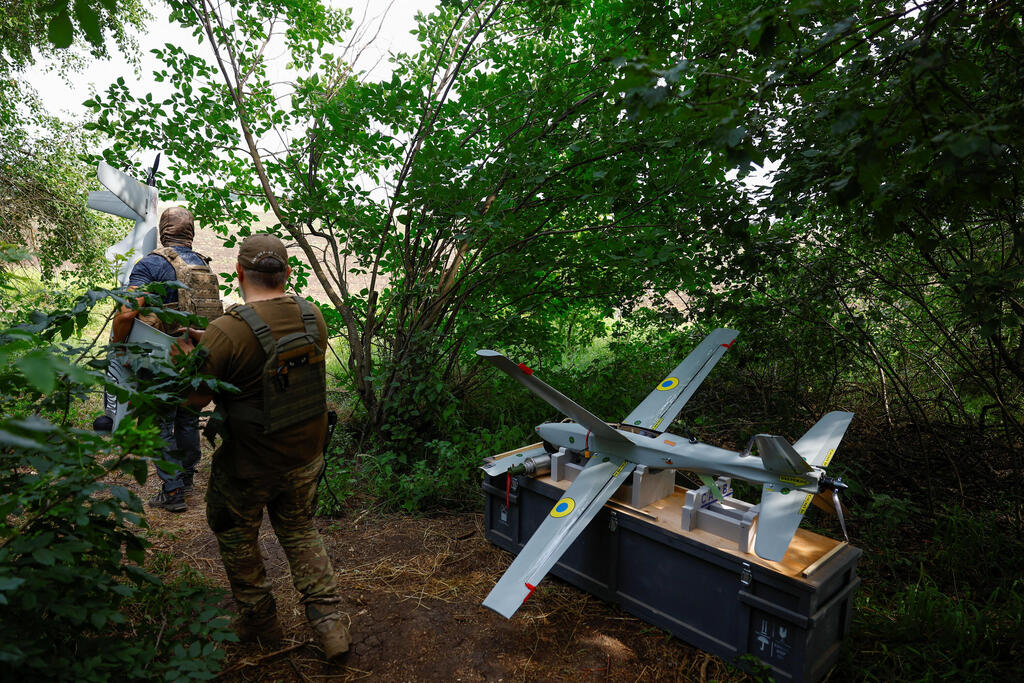
As the war has dragged on, Kyiv has therefore sought to reduce its dependence on the United States and other Western allies by developing its own long-range strike capabilities, particularly attack drones, ballistic missiles and cruise missiles.
Once those capabilities became operational, Ukraine gained the ability to strike deep inside Russia, targeting military bases, defense-industrial facilities and major oil refineries, infrastructure directly connected to Moscow's ability to wage war.
The strategy has inflicted significant damage. Russia's oil and gas production and refining capacity, for example, has been repeatedly disrupted by Ukrainian attacks. But such strikes have not been enough to force an end to the war.
So Ukraine appears to be broadening its target set.
Instead of focusing exclusively on infrastructure directly connected to Russia's military machine, Ukrainian drones have increasingly struck civilian industrial and logistical infrastructure, with Wildberries' enormous distribution network emerging as a particularly conspicuous target.
The logic is straightforward: these facilities are large, concentrated and relatively easy to identify, while their destruction can produce economic and psychological consequences far beyond the immediate physical damage.
By August 5, at least 11 Wildberries logistics complexes, covering a combined area of roughly 1.4 million square meters, had been permanently closed. At least nine more had suffered significant damage.
Rebuilding them could take months, assuming the company can even operate such facilities safely in the current security environment.
The consequences are already being felt. Consumers in Moscow and other major cities have reported unusually long delivery delays, wholesale order cancellations and increases in the prices of some basic goods. Hundreds of thousands of small and medium-sized businesses that stored their inventories in Wildberries warehouses have also been exposed to potentially devastating losses.
And Wildberries may not be the end of the story.
On July 31, Ukrainian drones struck a logistics facility in Zelenodolsk, in Russia's Republic of Tatarstan, near facilities belonging to Ozon, Wildberries' main rival. Ozon controls roughly 32% of Russia's online retail market.
If the attacks are indeed part of a broader campaign against Russia's commercial logistics infrastructure, Ozon could eventually find itself in the crosshairs as well.
The ultimate objective may be to push Wildberries toward financial distress. If that were to happen, the consequences could extend to the Russian banking system. The company has borrowed heavily from major Russian banks, meaning a severe deterioration in its finances could create problems for lenders as well, potentially forcing the state to intervene at a time when Russia's economy is already under pressure.
For the Kremlin, this creates a particularly difficult problem.
Putin's political system rests partly on an implicit social contract: Russians can continue going to work, shopping and living relatively normal lives while the state fights the war somewhere else.
The repeated drone attacks are beginning to undermine that bargain.
They expose the limitations of Russia's air defenses and demonstrate that Ukrainian drones can reach deep into the country and disrupt infrastructure that ordinary Russians depend on.
Putin therefore faces a difficult question: If the state cannot protect strategically important commercial infrastructure and the war begins to threaten the economy and daily life, how long can the Kremlin continue convincing Russians that the costs of the war can be kept at a distance?
The big question is whether Wildberries can survive the campaign or whether it is approaching a point of no return.
So far, the company has demonstrated the resilience and ability to reroute operations that are typical of large technology and logistics businesses. But if Ukrainian attacks continue, the hole could become increasingly difficult to fill.
Kim's public response has been restrained and calculated. In messages to employees and the media, she has emphasized the company's resilience and said that backup systems and supply-chain rerouting are operating around the clock to minimize the impact on consumers.
"The attack on Wildberries' infrastructure is an attack on civilians," she said in a video posted online. "Not only Russians, but also tens of thousands of people from Kyrgyzstan, Belarus, Kazakhstan, Armenia, Uzbekistan and China do business on our platform. Entrepreneurs from these countries suffered losses in the billions."
But the company had already provoked an angry reaction from its sellers before the latest wave of attacks.
Shortly before the attacks on its facilities began, Wildberries updated its terms of use and added "drone attacks," "shelling" and "explosions" to its list of force majeure events.
The change potentially has major legal implications. It could allow the company to limit its liability for losses suffered by sellers and suppliers whose goods were destroyed in warehouse fires, particularly where those inventories were not insured against such events.
Sellers reacted angrily, flooding social media with complaints, videos and accusations against the company.
Kim subsequently sought to soften the blow, announcing aid measures and partial compensation for some of the smallest and most vulnerable sellers. The company has also said it paid approximately $500,000 in compensation to the families of workers killed or injured at its facilities.
The fate of Wildberries is therefore becoming about more than one Russian retailer.
If Ukraine can systematically disrupt a company that sits at the center of Russia's consumer economy, it would demonstrate how a relatively small country can use inexpensive, long-range drones to attack the economic infrastructure of a much larger power.
That is the broader lesson, and one that should resonate in Israel.
The war in Ukraine has already demonstrated how quickly battlefield innovations can migrate to other conflicts. Israel has seen the growing use of drones against infrastructure and the emergence of fiber-optic drones on its borders. Hezbollah and other adversaries will inevitably study what has worked for Ukraine and look for ways to adapt it.
For Israel, the lesson is not simply that vital infrastructure needs better air defenses. It is that the definition of "vital infrastructure" may have to become much broader.
Protecting military bases, power plants and strategic facilities is no longer enough. Logistics hubs, warehouses, distribution networks and other commercial arteries can also become strategic targets in a modern war.
The Wildberries campaign is an extreme example of that shift. But if Ukraine has demonstrated anything, it is that a military underdog does not necessarily need to destroy an enemy's army to inflict enormous economic and psychological damage.
It may only need to find the arteries through which normal life flows, and learn how to cut them.



