











VC Survey 2026
“The Israeli tech story in 2026 isn’t a rebrand, it’s a re-pricing”
StageOne Ventures founder and managing partner Yuval Cohen joins CTech to share his investor's outlook for Startup Nation, from the "re-pricing" of the asset class to why sovereignty has become a competitive advantage, as part of CTech's VC Survey 2026: The Next Leap.
“The Israeli tech story in 2026 isn’t a rebrand, it’s a re-pricing,” says Yuval Cohen, founder and managing partner of StageOne Ventures. Following a year of record-breaking M&A activity for Israel's startup sector, Cohen argues that the "combination of liquidity and resilience" has restored confidence, proving that "ecosystems surviving prolonged uncertainty produce stronger founders and more durable companies."
Following the turbulence of recent years and the stabilization of 2025, the Israeli tech ecosystem is entering a new era: The Next Leap. Cohen joined CTech to share insights for its VC Survey 2026, which invites prominent investors to discuss the topics, trends, and “leaps” expected in the year ahead.
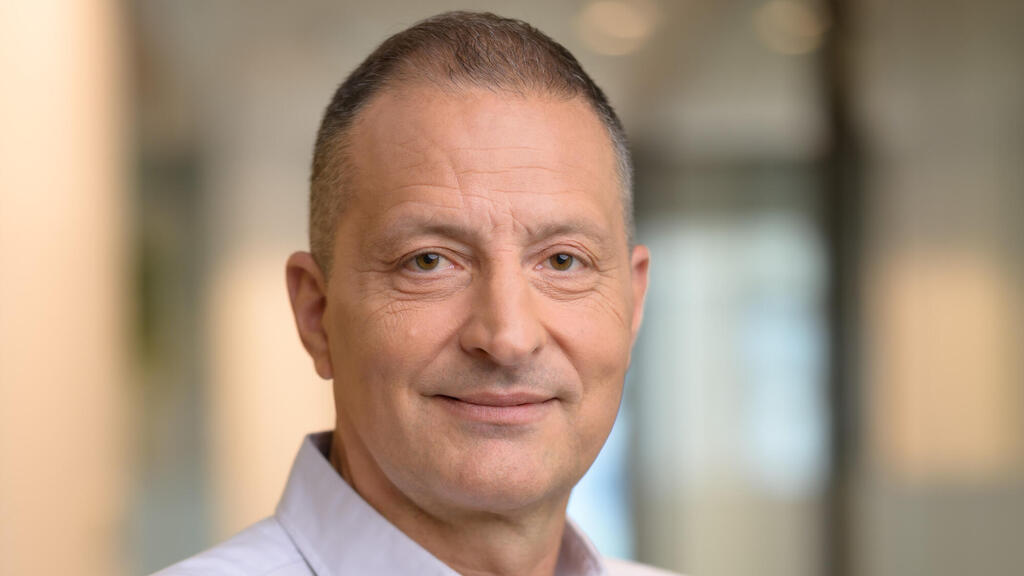
According to Cohen, “the Israeli VC model thrives when Deep Tech is paired with venture-scale thinking.” He contends that while the complexity and long sale cycles of Deep Tech rendered the sector largely unfavorable among VCs over the last 15 years compared to SaaS, "the current market shift has validated these domains." Further, while he believes cybersecurity will remain foundational to Israel’s high-tech sector, he notes it “has become a crowded market entering a maturity phase,” listing Startup Nation's next export engine to be “AI-native enterprise infrastructure.”
You can read the entire interview below:
Fund ID
Name of Fund: StageOne Ventures
Total Assets Under Management (AUM): $500M
Partners/Managers: Yuval Cohen (founder & managing partner), Tal Slobodkin (managing partner), Netanel Meir (partner)
Notable Portfolio Companies (Active): 29 active companies including Coralogix, Silverfort, vHive, BeamUp, Quantum Art, Backslash, Second Nature, and Sedric
Notable Exits: Successfully sold 23 companies with notable exits including Qwak (acquired by JFrog), Cyberint (acquired by Check Point), Epsagon (acquired by Cisco), Avanan (acquired by Check Point), Traffix (acquired by F5 Networks), and Guardium (acquired by IBM)
The Global Leap: How is the 'Israeli Tech' asset class being rebranded to global LPs in 2026? Are we shifting the narrative from 'Innovation' to 'Extreme Resilience'?
The Israeli tech story in 2026 isn’t a rebrand, it’s a re-pricing. Over the last few years, the ecosystem operated under sustained geopolitical and macro uncertainty. What global LPs observed was not hesitation, but adaptation: Israeli founders continued building, selling, and exiting even when conditions were far from stable. Following a strong 2024, the full year of 2025 set records with over $65B in announced M&A activity, proving that liquidity remains robust despite external pressures. This combination of liquidity and resilience has restored confidence, proving that ecosystems surviving prolonged uncertainty produce stronger founders and more durable companies
The Deep Tech Leap: With the rising focus on hardware-heavy sectors (Defense, Climate, Quantum), is the Israeli VC model adapted to fund high-CAPEX ventures?
The Israeli VC model thrives when Deep Tech is paired with venture-scale thinking. At StageOne, our focus remains on deep technologies driven by AI, advanced software, and frontier computation rather than capital-intensive hardware. While Deep Tech sectors were perceived as less favorable for VCs over the past 15 years due to their complexity and long sale cycles (unlike SaaS companies), the current market shift has validated these domains. Israeli founders have always possessed the technical expertise and know-how in deep-tech initiatives; now that global markets are actively backing these "frontier" ventures, the ecosystem is proving it can fund and scale Deep Tech effectively.
Quantum Art, one of StageOne’s portfolio companies, is a perfect example. While quantum requires technical depth and patience, their 2025 over $100M Series A reflects a shift toward commercial milestones. Israel’s strength lies in its ability to take complex science and apply disciplined execution, allowing the VC model to remain effective in "frontier" sectors without fundamentally changing its DNA.
The Sovereign Leap: Have the geopolitical lessons of recent years pushed Israeli startups to build independent, 'sovereign' tech stacks to reduce reliance on global platforms?
Yes, and sovereignty has evolved from a defensive concept into a competitive advantage. Israeli founders are increasingly designing systems that are cloud-agnostic and portable by default. This isn’t about isolation; it’s about compliance and control. Enterprises in regulated and mission-critical sectors now demand this level of independence to ensure operational continuity. Israeli startups are ahead of this curve because building for constraints has always been part of the ecosystem's DNA. Today, those local constraints align perfectly with global enterprise needs for "sovereign" infrastructure.
The Dual-Use Leap: Which civilian industry will see the biggest disruption from adapting battle-tested technologies?
The largest disruption will occur in logistics and industrial operations. Technologies developed for defense, such as real-time sensing, autonomous decision-making in edge environments, and coordination across distributed systems translate directly to the "resilience" challenges facing global supply chains. These industries are no longer optimizing for efficiency alone; they are optimizing for continuity in a permanently volatile world.
The Next Engine: Cybersecurity has been Israel's primary export engine for a decade. Which domain is best positioned to take the lead by 2030?
Cybersecurity remains foundational but has become a crowded market entering a maturity phase. The next export engine is AI-native enterprise infrastructure. By 2030, the most valuable companies won’t just "add AI"; they will be built from the ground up around autonomous workflows and intelligent data foundations. This includes observability (like Coralogix with their AI agent, Olly) and the disruption of legacy markets like ITSM (where Siit is taking an AI-first approach). These categories are defined by system-level complexity, an area where Israeli founders historically excel.
Finally, what are 2-3 startups that, in your opinion, are likely to make a leap forward in 2026?
1. Quantum Art (StageOne portfolio company): Following their $100M Series A in late 2025, they are transitioning quantum computing from research to commercial reality. Quantum Art is building the world’s first scalable, redundant, and modular quantum computer based on trapped-ion technology, solving the scalability bottlenecks that previously held the industry back.
2. Silverfort (StageOne portfolio company): As identity becomes the primary attack surface, Silverfort’s agentless platform has become the gold standard for "Unified Identity Protection". They enable enterprises to extend Multi-Factor Authentication (MFA) and automated security policies to all sensitive assets, including legacy systems and service accounts, without requiring agents or proxies.
3. Upwind: A standout in the cloud security space that achieved unicorn status in early 2026. Their rapid growth demonstrates the market's insatiable appetite for AI-driven, real-time infrastructure protection.



