











“Quantum is no longer a far future thing”
As quantum computing moves from theory to reality, Israel’s capital environment is shaping which ideas mature, reflected in the rise of Quantum Art. Most recently, the Israeli startup’s work with Ayalon Highways exemplifies what real-world quantum could look like.
Across high-tech categories, and especially in frontier fields like quantum, Ran Achituv warns that “when you have too much money, you take unbaked ideas and try to start working… And it’s not always reversible.”
One such “unbaked” company Achituv initially turned down was Israeli quantum computing startup Quantum Art. “If they would have been in another country… they would have taken the architecture they thought about in 2018 and opened a company,” he says. “That company would have been stuck.”
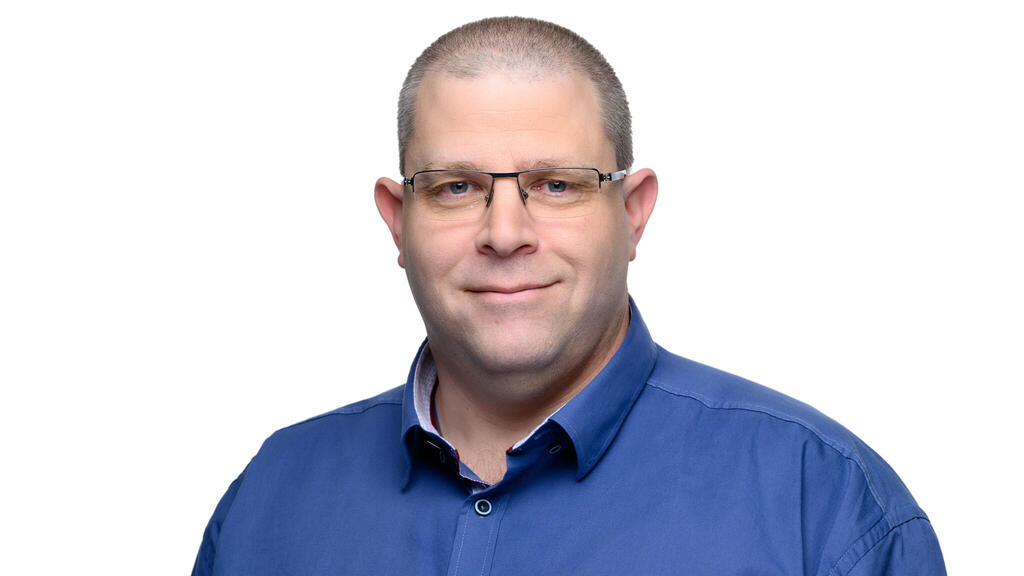
Achituv is a quantum and deep tech investor at Entrée Capital, through which he has eventually become an investor in Quantum Art, and arguably one of the more active backers of quantum globally.
Speaking to CTech, Achituv argues that “there is no capital problem in Israel.” Investors in Israel, he contends, are prepared to take big swings, but “we don’t have capital to do… spend on ideas that are not big enough.”
Compared with capital-heavy markets such as the U.S. and Europe, Achituv sees Israel’s smaller size as an advantage rather than a limitation. Abundance, he suggests, can blur judgment, allowing capital to compensate for immaturity and sustain ideas that have not yet earned it, bypassing the discipline that constraints impose.
“I met [Quantum Art] in 2018 and I told them, I’m not going to invest because they didn’t have the scalable architecture I was looking for,” he reflects. “They said, ‘We’ll build the state of the art, best machine in the world.’ … I said, ‘Amazing, but that’s not usable. Come back when you have thousands of qubits.’”
Fast forward to December 2025, when Quantum Art announced a $100 million Series A funding round, bringing its total capital raised to $124 million. The round was led by Bedford Ridge Capital, alongside Battery Ventures, Destra Investments, Lumir Growth Partners, Disruptive AI, Harel Insurance, Karen W. Davidson, GTV, Yasmin Lukatz, Corner Capital, and Qbeat Ventures. Existing investors, including Amiti Ventures, which led the seed round, StageOne Ventures, Vertex Ventures, the Weizmann Institute of Science, and Achituv’s Entrée Capital, also participated.
3 View gallery
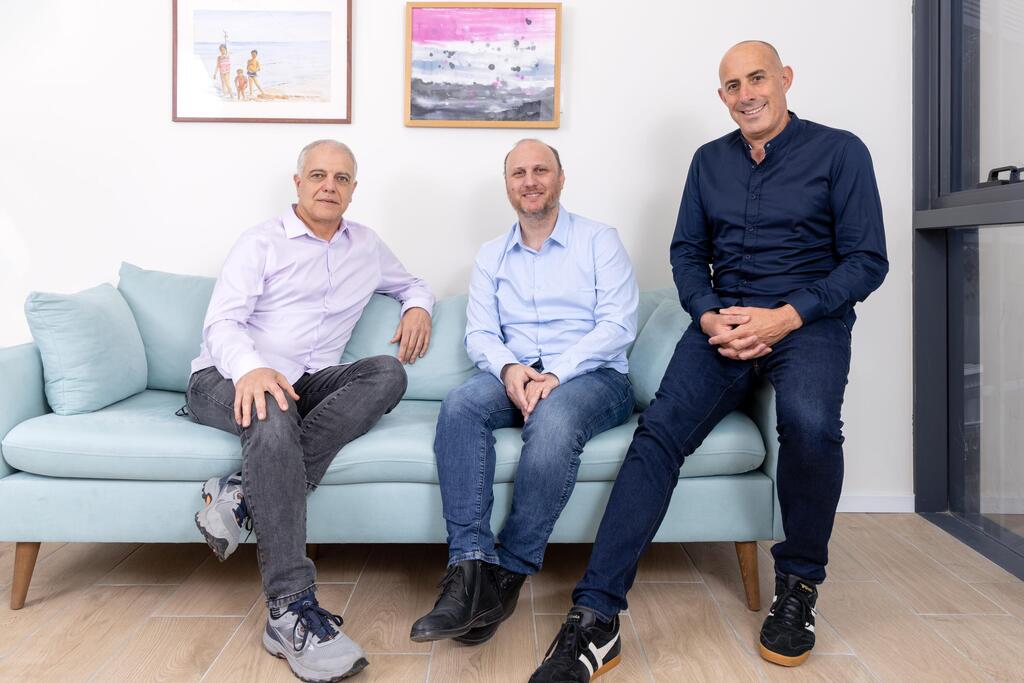
Quantum Art Founders Prof. Roee Ozeri, Dr. Tal David, Dr. Amit Ben Kish
(Photo: Rami Levy)
“Quantum is no longer a far future thing,” says Quantum Art CEO and co-founder Dr. Tal David. “It’s within sight now, and organizations need to start preparing for that era, even if full deployment comes later.”
As quantum computing crosses toward the physical-world threshold, David explains how the sector’s impact is likely to be felt in practice. “What we see today is not quantum instead of classical, but quantum working together with classical systems… hybrid approaches are the way real-world applications will emerge.”
In parallel, even before full-fledged quantum computers arrive, David says Quantum Art is focused on answering two questions. “The first one is… if we move from whatever they’re doing today in regular classical algorithms to quantum algorithms… what would be the added value? Is it substantial or not?”
The second, he continues: “What are the requirements from a quantum computer in order to realize that added value?”
Well before the funding announcement, Quantum Art was already beginning to demonstrate what viable, real-world quantum applications delivering that added value could look like, through its collaboration with Ayalon Highways, Israel’s government-owned transport infrastructure company.
The project sees quantum computing applied to a use case where the impact of computational complexity is likely obvious, even to those outside the sector: traffic management. Essentially, the collaboration centers on the joint development of quantum-accelerated solutions aimed at reducing travel time through smarter, near real-time traffic light management.
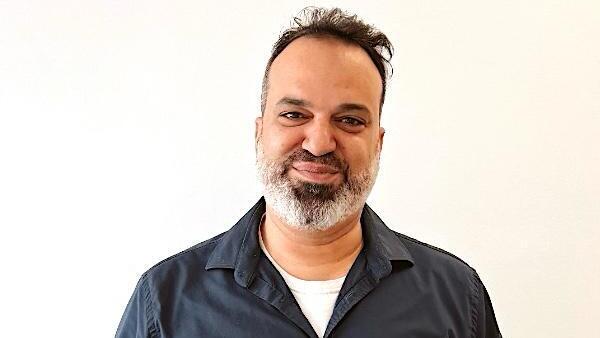
“One of the biggest advantages that quantum computing can do is that it can solve problems very, very quickly,” says Tal Elimelech, Director of Experimental Transportation Systems and Innovative Mobility Solutions at Ayalon Highways. “And we are aiming for near real-time calculation.”
For Elimelech, the prospect of quantum, now nearing feasibility, presented a natural fit for traffic management as a way of addressing the complexity of traffic systems, which, he explains, compounds quickly. “From a local problem that one junction with traffic lights to many junctions… so the problem is quite heavy to calculate and optimize.”
By comparison, using classical computing, “if we do a simulation model of traffic… it can take hours, days, a week,” Elimelech says. The promise of quantum, he explains, lies in “very, very fast” optimization that could make these “near real-time calculations” plausible.
The project offers a concrete illustration of what “practical” quantum can honestly mean for large institutions as the technology continues to mature. For Ayalon Highways, the project goal is assessment rather than deployment, with hopes for a pilot slated for late 2026.
“We want to see how many junctions we can optimize at the same time,” Elimelech says. “And we want to see how many junctions we can optimize in a real-time situation.”
More broadly, when it comes to the benefits of quantum computing, David says the sector is often marred by misunderstanding, or that its benefits are simply ill-framed. “The speed of operation is the byproduct,” he states. “The main thing is that quantum computing is here, first and foremost, to tackle big compute complexity problems, things that we don’t have enough compute power now to solve, or don’t have enough compute power to solve in a reasonable amount of time.”
“Now, if you have an advanced computing power, a byproduct for that is that you may tackle smaller problems faster, but it's a byproduct. It's not the main thing. The main thing is complexity of the computation.”
Indeed, the project is just one of an array of milestones that are likely to categorize quantum’s next phase as it breaks into the world around us. As outlined in Entrée Capital’s survey of real-world use cases, enterprises across finance, transportation, healthcare, energy, and manufacturing are already running quantum proofs of concept.
Even so, as interest in the conversation around quantum builds, and with it expectations and speculation, David is quick to ground it with a careful curb of enthusiasm. “Not every problem needs quantum computing. In many cases, classical algorithms are great,” he resolves. “The question is whether the structure of the problem fits quantum, and whether the added value is meaningful.”



