










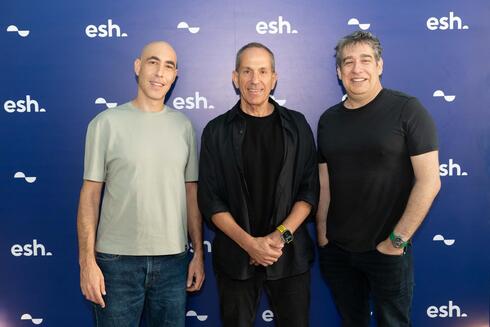
Palo Alto founder Nir Zuk sells digital bank Esh to Isracard at $130 million valuation
The deal includes an immediate $32 million payout, future share allocations tied to performance targets, and a 25% stake in Esh’s technology arm valued at $40 million.
Yitzhak Tshuva is moving to acquire Esh Bank at a valuation of NIS 400 million ($130 million), in a deal that will link the bank to Isracard.
Under the agreement, Isracard will acquire 100% of Esh’s shares through a combination of an immediate allocation of Isracard shares and additional shares to be held in trust and transferred to Esh’s controlling shareholders subject to performance targets. In addition, Isracard will pay NIS 100 million ($32 million) in cash to the controlling shareholders.
Esh Bank, owned by Palo Alto Networks founder Nir Zuk (13%), Yuval Aloni (18%), and Clal Insurance (11%), has yet to begin operations.
As part of the broader transaction, Isracard will also acquire a 25% stake in Esh’s separate technology company for $40 million, implying a valuation of $160 million for the tech arm.
Isracard’s announcement further noted that up to 5% of its shares may be allocated to Delek Group, controlled by Tshuva, in order to meet regulatory requirements related to minimum holdings for a bank control permit.
Discussions around a potential transaction date back to May last year, when Calcalist first reported talks between Tshuva and Zuk. In August 2025, Delek completed its acquisition of Isracard, a move that accelerated the decision to proceed with the Esh deal.
Esh announced last September that it would share half of its interest income with customers, promising fee-free current accounts and a model it says will upend the traditional banking system.
According to the model, 50% of the bank’s income from customers’ current accounts will be returned to them, in what the bank calls “Equal Sharing”, the principle from which its name, Esh, is derived. The bank argues this will eliminate the inherent conflict of interest between banks, which seek to minimize interest payments, and customers.
The account will be offered free of charge, without commissions (as in traditional banks) and without subscription fees (as in the digital bank One Zero). It will also be available to small businesses and the self-employed. However, it is a relatively “thin” account, focusing on basic banking services: current account management, deposits (with 50%-80% of related income distributed back to customers), and credit. The bank will not offer mortgages, securities trading, or, at least initially, foreign exchange services.
The bank, licensed by the Bank of Israel in December 2022, becomes the second new Israeli bank in 45 years, following the digital bank One Zero, which began operations in August 2022.



