










Roadshow+
“There’s more capital flowing into the market, but it is being concentrated among fewer companies”
Ahead of the RoadShow+ event hosted by Calcalist and Poalim Tech, four senior venture capital figures explain why proving demand, possessing deep expertise, and achieving rapid time-to-market have become critical, and identify the sectors poised to lead Israeli high-tech.
It has never been easier to turn an idea into a product, and perhaps never been harder to turn that product into a large company. AI tools allow small teams to develop and distribute products faster than ever, but the same accessibility is available to their competitors. Products can be replicated quickly, while investors are demanding that young companies demonstrate differentiation, customer demand and growth earlier in their development.
The 2026 Roadshow+ event will take place on November 17 in Tel Aviv, by invitation only. The event connects companies from the pre-seed to Series A stages with investors in Israel, giving selected entrepreneurs the opportunity to hold a concentrated series of one-on-one meetings with partners at some of the country’s leading venture capital funds.
“In the age of AI, focus and speed of response are of paramount importance,” said Arik Kleinstein, founding partner at Glilot Capital Partners, in an interview ahead of the event. “Development times for new products have been significantly shortened, so the companies that will win are those that know how to respond quickly to new needs and opportunities, test hypotheses rapidly and reach users in a short time. This means entrepreneurs need to develop the ability to make decisions quickly rather than becoming stuck in long development processes that were considered legitimate in the old world.”
1 View gallery
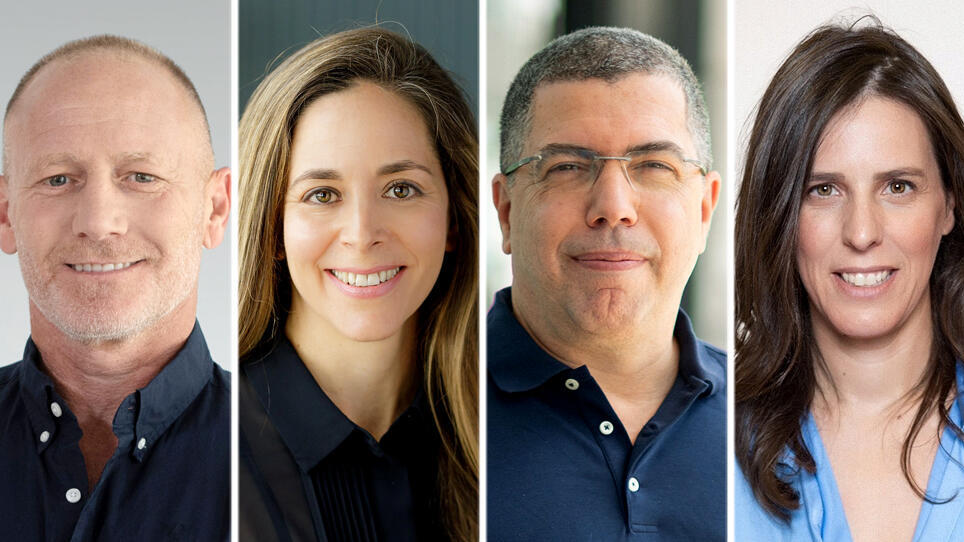
From Left: Jonathan Saacks (F2 Venture Capital), Tami Bronner (Vertex Ventures), Arik Kleinstein (Gillot Capital Partners), Dr. Adi Hoorvitch Lavi (Poalim Tech)
Jonathan Saacks, founder and managing partner at F2 Venture Capital, also pointed to the acceleration in the pace expected of startups.
“The big challenge today is understanding reality, the ‘map,’” he said. “To be a world champion today, the scale and growth rate you need to demonstrate are not similar to what they were in the past. You have to move quickly at every level: building the product, demonstrating value to customers and developing the ability to sell to them. The pace expected of an AI company is significantly higher than what was acceptable for a SaaS company. An entrepreneur who stands out today is one who understands this and has a plan accordingly.”
The pressure to demonstrate early proof is intensifying as the capital market changes. According to Dr. Adi Hoorvitch Lavi, SVP of Growth and Investments at Poalim Tech, early-stage entrepreneurs are facing a paradox.
“There is more money in the market, but fewer companies are succeeding in reaching it,” she said. “Investors are more selective and are looking for experience, market proof and early signs of a working business model. Those who are starting a company for the first time feel this especially.”
She added that in the first half of 2026, the volume of fundraising increased by 45% compared with the same period last year, while the number of funding rounds fell by approximately 35%. In other words, more capital is flowing into the market, but it is being concentrated among fewer companies.
The strengthening shekel is adding another layer of pressure. “Companies raise money in dollars and spend a significant portion of their budgets in shekels, especially in the early stages, so the same amount of money buys them less time,” Hoorvitch Lavi said.
Three years of uncertainty have also pushed many companies to rely on existing investors and raise SAFE rounds, a form of financing in which investors receive the right to obtain shares in the future, to reach their next milestone.
“Therefore, the question today is not just how much money you raised, but how long it allows you to operate,” she said. “It requires tighter management of cash flow and currency, connecting with the right investors and demonstrating demand early on.”
Tami Bronner, a partner at Vertex, also cautioned startups against assuming that their next funding round will arrive quickly.
“The round needs to support both product building and an aggressive go-to-market strategy, with a margin of safety,” she said. According to Bronner, the median time between a Seed and Series A round is already more than two years.
“It’s important to define what the round needs to prove and build a path that allows you to get there even when the journey is less linear than planned,” she said.
A force multiplier, not a replacement
As building products becomes easier, getting them into the hands of customers is becoming a more important test.
“It’s easy today to build an initial product that looks great, but the real job of entrepreneurs is to quickly understand what truly sets the company apart, how it will stand out over time and why they are the right team to solve the problem they have chosen to address,” Bronner said.
“Just because you can build something amazing doesn’t mean it is needed. It’s important to understand who actually has the problem and how much they are willing to pay to solve it, whether it is an impressive nice-to-have or a product that customers will not want to work without.”
“AI is a force multiplier, not a substitute for capability,” Bronner added. “It greatly increases the output of excellent entrepreneurs, but does not replace customer understanding, market selection, judgment or the ability to sell. The barrier to entry has gone down, but the bar for building a significant company has actually gone up.”
Kleinstein similarly cautioned against viewing AI as a substitute for expertise or management.
“Companies today can do much more with the same resources, which accelerates the rate of growth in the early stages,” he said. “However, it is important to emphasize that AI cannot replace deep expertise in the company’s field of activity, nor can it replace management skills.”
The ability to build and manage an organization, he added, remains critical.
Saacks agreed that the fundamentals of building a company have not disappeared.
“You still need to find product-market fit, and knowledge and a deep understanding of the target market are required to build a go-to-market strategy correctly,” he said. “These remain the milestones of a winning company. If anything, they have become more important differentiators. When everyone can build a product quickly, the difference is who knows the problem in depth, knows how to bring the product to the right customers and can sell it at scale.”
Investors are seeing opportunities across the AI value chain, rather than only in companies developing foundation models.
“AI infrastructure and cyber continue to be at the core of investments,” Kleinstein said. “At the same time, we are seeing significant development of software products designed to help application engineers in organizations implement AI capabilities in practice, not just the AI models themselves, but the infrastructure and tools that allow organizations to adopt and operate them at scale.”
Saacks sees opportunities in applied AI, companies using AI to solve specific, practical problems, as well as cybersecurity, defense, quantum computing and semiconductors.
Bronner also points to computing infrastructure, robotics, healthcare and security for AI agents. She said Israel’s advantage lies in “the connection between deep technology, understanding complex problems and the ability to act quickly.”
Hoorvitch Lavi argues that cybersecurity itself is becoming increasingly intertwined with AI.
“Cyber is the trust layer of the AI era, a cross-cutting capability required to protect infrastructure, the cloud, models, data and applications,” she said. “The connection between Israeli capabilities in AI and cyber could become a particularly significant growth engine.”
But she cautioned that Israel’s challenge is not simply to create successful companies, but to ensure that knowledge and economic activity remain in the country after acquisitions.
“The AI race is no longer just a race between companies. It is a race between countries for talent, capital, knowledge and infrastructure,” she said.
If Israel continues investing in research and the next generation of talent, she added, “it will not only be the place where AI companies are built, it will be the place that global AI companies cannot afford to give up.”



