











El Al remains undervalued even as foreign airlines prepare to return, Jefferies says
The bank expects increased flight capacity to put pressure on ticket prices and profitability, but believes El Al's improved balance sheet and expanding long-haul network provide a cushion. It sets a NIS 27 price target, 33% above the November 12 closing price.
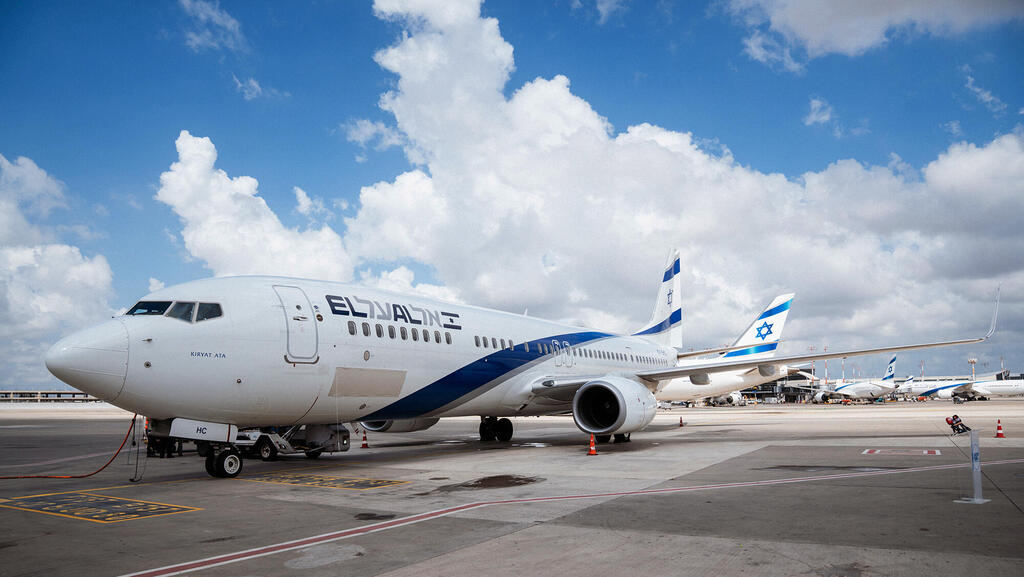
Three years of war, during which El Al benefited from limited competition and high ticket prices, have left the airline in a strong position as foreign carriers prepare to return to Israel. That is the assessment of U.S. investment bank Jefferies, which has issued a "buy" recommendation on El Al shares and set a 12-month price target of NIS 27, implying 33% upside from the November 12 closing price.
According to the analysts, El Al is emerging from the wartime period with lower debt, larger cash reserves and an expanding fleet. They believe the stock remains undervalued even after accounting for an expected decline in ticket prices and profitability as competition intensifies.
Jefferies also outlined two alternative scenarios for the share price. In its bear case, which assumes a sharp increase in competition and falling ticket prices, the stock could decline to NIS 14, or 31% below its November 12 closing price. In the bull case, which assumes continued disruption to foreign airlines' operations and persistently high ticket prices, the shares could climb to NIS 36, representing a 77% gain.
The analysts argue that El Al now has several advantages it lacked in the past. The airline has increased capacity on long-haul routes and strengthened its network centered on Ben Gurion Airport, while its frequent flyer program provides an additional competitive edge. Its financial position has also improved substantially. Since 2019, El Al has cut its gross debt by nearly half, to approximately $1.1 billion, while increasing its liquidity to about $2 billion. This leaves the airline with an estimated net cash position of roughly $900 million, providing a substantial financial cushion as it faces aircraft purchase commitments totaling approximately $3.6 billion.
Fleet expansion is another key growth driver in Jefferies' analysis. The bank forecasts that seat capacity on El Al's wide-body aircraft, which are primarily used for long-haul routes, will increase by 11% by 2027 and 29% by 2030. From 2028, the airline is also expected to begin receiving 20 new Boeing 737 MAX aircraft.
Jefferies believes demand for flights to and from Israel remains well below its potential. The analysts argue that air traffic at Ben Gurion Airport has been constrained in recent years mainly by a shortage of flights and available seats, rather than by weak demand. They estimate that total seat capacity offered by airlines operating in Israel will not return to, and exceed, pre-pandemic levels until 2027. Meanwhile, the number of trips taken per capita remains below its pre-COVID peak.
The return of foreign carriers and intensifying competition at Ben Gurion Airport nevertheless pose a significant challenge for El Al. Jefferies expects the increase in flight supply to put downward pressure on ticket prices and load factors, weighing on the airline's revenue. Under the bank's base-case forecast, revenue per available seat kilometer (RASK) is expected to fall from approximately 11.4 cents in 2026 to 10.4 cents in 2028. Even after that decline, however, the figure would remain roughly 50% above its 2019 level.
Jefferies consequently forecasts that El Al's EBITDA will decline from approximately $848 million in 2025 to about $684 million in 2028, equivalent to an EBITDA margin of 18%. Despite the expected reduction in earnings, the bank believes El Al shares remain inexpensive compared with those of European airlines.
The analysis puts El Al's enterprise value at 3.8 times its projected 2027 EBITDA, below the European airline average of 4.2 times, despite El Al's higher profitability and net cash position. To calculate its NIS 27 price target, Jefferies applies a multiple of six to its forecast for El Al's 2028 EBITDA. The bank notes that this valuation remains below the multiples commanded by carriers such as Ryanair, reflecting the geopolitical risks facing El Al and its heavy dependence on the Israeli market.