










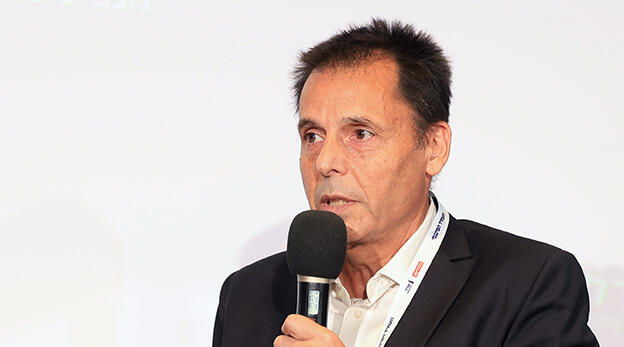
Migdal CEO: "We manage assets worth over 600 billion shekels and have significant plans to expand this further"
At the Calcalist and Migdal Financial Future Conference, Ronen Agassi said that the company, founded in 1934, has built a profit pool of almost 15 billion shekels and aims to become the largest asset manager in Israel, relying solely on organic growth. His tip for the average Israeli saver: "Start saving at a young age."
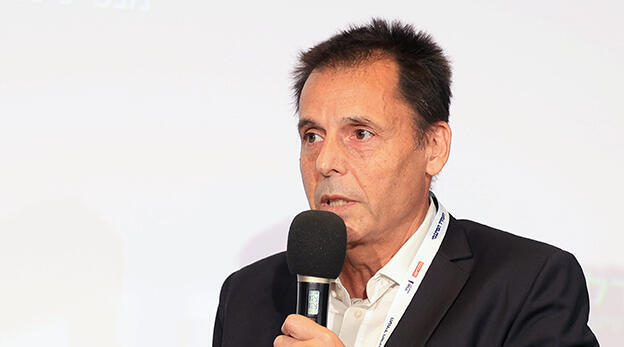
At the Calcalist and Migdal Financial Future Conference, Migdal CEO Ronen Agassi spoke with Yarden Rozanski of Calcalist about Migdal’s growth plans.
In recent years, insurance companies have been one of the clear success stories on the Tel Aviv Stock Exchange. Over the past three years, the insurance index has jumped by about 440%, and for some time now we have been asking how much further it can go and whether this rally is justified. From your perspective, how much upside is still left, and what is it based on?
“My view has never been opportunistic or driven by timing, but rather by an assessment of the country’s economic fundamentals: growth, rising income per capita, and increasing savings rates. We are a young country that brings a culture of savings from home (Holocaust survivors), and this continues to shape us. That is why I remain optimistic. What we have been through in the past three years has been difficult, but looking ahead, there is optimism driven by internal resilience and, especially, strong economic resilience. We see an economy that can carry a war and still maintain solid economic indicators and positive growth. To this we must add what our industry has undergone in recent years: new reporting standards that make us more transparent and accurate for investors, allowing a clearer view of future profitability. At Migdal, the cumulative profit cushion has reached nearly 15 billion shekels.”
Isn’t this profit essentially created out of nothing?
“Definitely not. Migdal was founded in 1934, and since then we have been profitable for the past 90 years. The combination of the financial strength of the public and a deep-rooted savings culture creates needs that are highly relevant to our industry, so I remain optimistic.”
One of the assumptions behind the common investment thesis in insurance companies is that a decline in the risk premium will lift the entire market, and that insurers act as a kind of proxy for the Israeli economy. This week we saw investors react with some panic to the agreement between the US and Iran. There is clearly a link between geopolitical stability and economic growth. Does this agreement change anything for you?
“We are institutions that invest money, and aside from discussions about investing abroad, most of our funds, at least half, are still invested in Israel, which is a significant amount. I believe it is important to have an agreement. In my view, more important than what happens domestically is the existence of stability, and I hope and expect that we will see positive developments in the future. This agreement, one way or another, will not be decisive. I personally never had illusions that we would suddenly enter a European reality with open borders and continuous regional trade. We are a strong country, as we also demonstrate militarily. So of course there is an impact, but it does not change the overall direction.”
In recent years, we have seen insurance companies shift and increasingly become asset managers. This is also a process taking place at Migdal. What is the rationale behind it?
“In industry terminology, large insurance companies are often referred to as settlement managers. These are entities that provide guidance on pension structuring. We started in the world of savings, and the development we are seeing today reflects three generations since the founding of the state: my grandparents were pioneers who arrived with nothing, my parents became civil servants, and my children will begin life in a better position. Despite the difficulties and cost of living, I believe we are still progressing from generation to generation, and the savings rate is increasing.
“From the outset, as settlement managers, we served the needs of the time. Today, we are addressing an existing need: the management and growth of household wealth. Most households have some level of savings, so we are fundamentally a savings institution, that is our identity. That is where we began, and the natural evolution of the market is the management of savings capital.”
You presented a new strategic plan about three months ago, after achieving the previous plan’s targets ahead of schedule, and you also indicated a goal of becoming the largest company in terms of assets under management. How do you plan to get there?
“We began this journey three years ago with a strategic plan. Fortunately, we met our 2027 targets already in 2025 and set new goals. I strongly believe in growth, it brings value in many dimensions. As an asset manager, this is our mission. We manage assets worth over 600 billion shekels and collect annual premiums of about 40 billion shekels. We have significant plans to expand this further, and we are aiming for that direction. There is clear value in growing and reaching the targets we set. There are also regulatory limits related to concentration and capital management, including a cap of 15% of savings and pension funds, and we are already close to that limit, so most of our growth will be organic.”
The theme of this event is financial futures. If you had to give one “tip” to the State of Israel and one to the average Israeli saver, what would it be?
“I will quote Albert Einstein, who said that compound interest is the eighth wonder of the world: those who understand it earn it, and those who don’t pay for it. Saving is not something that can be left for the last minute. Life expectancy is increasing, and the retirement period is now often as long as working life. Savings that begin at age 25 are not comparable to those that begin at age 50. Many of the difficult events we fear, such as nursing care or medical issues, are financial events, so it is better to have funds available.
“My advice is: start saving at a young age. And in the context of the country, I would say to leadership: invest in long-term resilience.”



