










Opinion
The next generation of Israeli unicorns will be built on factory floors, not just in the cloud
The economic and strategic potential of fusing Israeli engineering and algorithmic expertise with breakthrough physical manufacturing capabilities is immense.
For decades, Israel cultivated its reputation as the "Startup Nation," leading the global market in software solutions, cyber warfare, and sophisticated algorithms. But while we focused heavily on bits, we neglected atoms - a miscalculation with dangerous implications in the reality of 2026.
In recent decades, technological innovation operated under the assumption that it had detached itself from physical matter. Software-as-a-Service (SaaS) and mobile applications promised hyper-scalability with near-zero marginal costs. However, recent years have marked a structural paradigm shift—the exact moment the market realized that the world is constructed from atoms, not just bits.

Consequently, software can no longer single-handedly solve humanity's most pressing crises. The next generation of industrial giants—the sustainable unicorns of the coming decade—will emerge from the realm of deep-tech: advanced materials, robotics, defense-tech, and intelligent hardware. For years, deep-tech innovation was bottlenecked by the immense time and capital required to scale physical prototypes. Today, the integration of digital agility into physical matter is fundamentally shifting the economics of these sectors, driving a long-awaited revolution in advanced manufacturing.
The economic thesis that production could be seamlessly outsourced anywhere and shipped everywhere has collapsed under intense geopolitical realities. We are living in an era of structural deglobalization and fractured supply chains. Sovereign states and enterprise organizations now recognize that national resilience is not measured merely by the ability to code a brilliant algorithm, but by the operational capacity to manufacture a physical product locally, on demand.
In the volatile landscape of 2026, this dependency has manifested as a "silent embargo." This occurs when allied nations do not halt shipments through dramatic declarations, but instead delay them through bureaucratic friction, export restrictions, and the slow regulation of critical components. When a high-performance structural component for an aerospace platform, a complex armored element, or a UAV body is urgently required, lines of code cannot fill the void.
The historical neglect of manufacturing within the tech ecosystem was both a budgetary and a structural decision. Traditional industry relied on rigid production lines, massive capital expenditures (CapEx), and long lead times, creating a misconception that manufacturing lacked the agility for rapid innovation.
Today, the convergence of software-driven automation, smart robotics, and agile fabrication methods introduces an agility that previously belonged only to the software world. By shifting the financial model of hardware from heavy, upfront CapEx to flexible, on-demand operational expenses (OpEx), these software-integrated factories eliminate the need for costly, traditional tooling. When complex structural components can be fabricated within hours directly from a digital CAD file, the manufacturing floor becomes a dynamic, responsive environment. For Israeli defense-tech and aerospace firms, this means the ability to iterate hardware designs in days, completely bypassing months of waiting for foreign export licenses and regulatory clearance.
In the strategic realities of 2026, production time has become a resource as critical as development time. Israel has thoroughly established its position as a software powerhouse, but to secure its long-term resilience, our ecosystem must execute its next evolutionary leap: transforming into an advanced manufacturing hub. The economic and strategic potential of fusing Israeli engineering and algorithmic expertise with breakthrough physical manufacturing capabilities is immense.
The next generation of Israeli unicorns will not live exclusively in the cloud. They will grow where digital files are converted into tangible assets—in smart factories, materials laboratories, and rapid production lines. The power has returned to physical matter, but it is smarter, faster, and more digitally integrated than ever before.
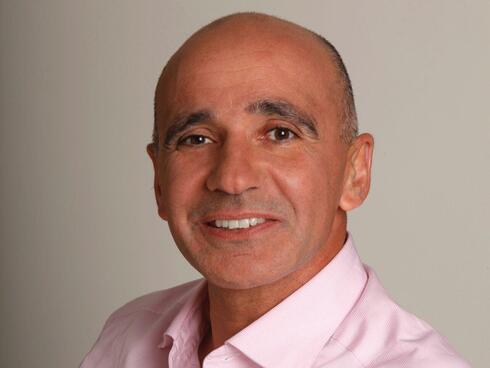
Yossi Azarzar is the CEO of Massivit.



