










Analysis
Israel faces political deadlock as Netanyahu and opposition set to struggle to form a government
Exit polls point to no clear majority, leaving both blocs dependent on parties they have pledged not to join forces with. President Isaac Herzog could seek to broker a unity government, but deep divisions over Netanyahu, Arab parties and military exemptions for the ultra-Orthodox threaten to derail negotiations.
The practical implication of the television exit polls, which show no clear winner between the political blocs, is that Israel is heading into a period of political stagnation and instability. At this stage, neither bloc appears likely to secure a Knesset majority without winning the support of a party from the opposing camp.
The “Change Bloc,” led by Gadi Eisenkot, could potentially replace Knesset Speaker Amir Ohana with the support of Arab lawmakers. However, Yisrael Beiteinu chairman Avigdor Liberman has already said he would not support any coalition in which Arab parties participate, even if they merely abstain in a confidence vote. Eisenkot could also try to court the ultra-Orthodox (Haredi) parties, but they have made clear that they will not join a coalition unless legislation is enacted to exempt their constituency from military service. Liberman, Naftali Bennett, Yair Lapid and Yair Golan would find it difficult to join a government that enshrines such exemptions.
1 View gallery
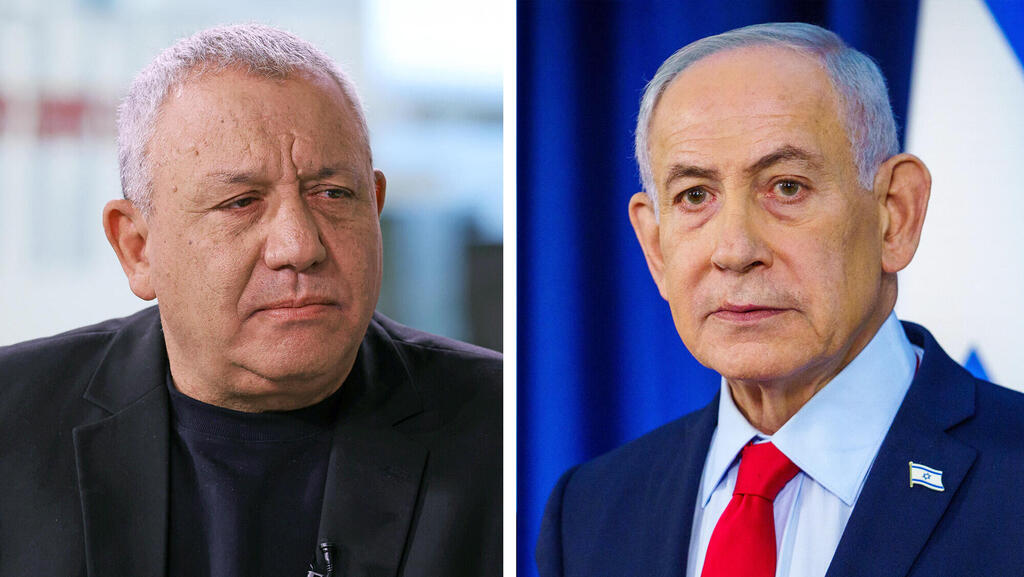
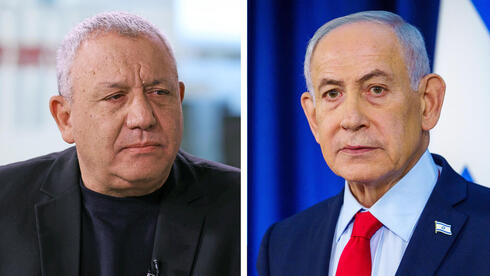
From right: Prime Minister Benjamin Netanyahu and Yashar Chairman Gadi Eisenkot
(Shalev Shalom, Shaul Golan)
Prime Minister Benjamin Netanyahu, meanwhile, will also face significant obstacles in forming a coalition. Eisenkot has declared that he has no intention of serving in a government led by Netanyahu and would resign immediately if he found himself in one. Conversely, Netanyahu is unlikely to accept a government led by Eisenkot. Furthermore, because of his ongoing criminal trial, Netanyahu is legally barred from serving as a government minister, even if legislation restoring the position of alternate prime minister were to be reinstated. Even under such an arrangement, it is difficult to imagine Netanyahu relinquishing the premiership to serve as his successor’s alternate. In any case, as the leader of the largest party, Netanyahu is likely to demand the first opportunity to form a government.
This is where President Isaac Herzog enters the picture. He has already said he will work toward forming a broad and stable government to avoid another round of elections. Herzog is expected to explore the possibility of a unity government led by Netanyahu, under an arrangement in which Netanyahu would step aside after two years in favor of Eisenkot.
Under this scenario, Netanyahu could be asked to resign from the Knesset and retire from politics after receiving a pardon. He might then seek the presidency, which is due to become vacant in July 2028. The main obstacle, however, is that Eisenkot has already declared that he will not serve under Netanyahu.
Against this backdrop, government formation is likely to be a lengthy and difficult process. For either side to cross the political divide and assemble a coalition, at least some parties would have to break their campaign promises, including pledges not to sit with Arab or ultra-Orthodox parties, or not to serve under Netanyahu.
If no decisive outcome emerges from the negotiations, Israel could head to another election as early as March 2027. For now, the path to a stable government remains unclear.



