











Why Alphabet’s CapitalG is still betting on Israel
CapitalG general partner James Luo points to AI and talent as enduring advantages.
“Israel will remain a cyber powerhouse for the next decade,” says James Luo, a general partner at CapitalG, the growth investment arm of Alphabet.
CapitalG has invested in several Israeli cybersecurity companies, including Armis Security, Salt Security, and Orca Security. Luo says that, following the major acquisitions of Wiz, CyberArk and Armis in the sector, more Israeli companies are likely to pursue public listings in the United States.

Founded a decade ago, CapitalG aims to connect entrepreneurs with Alphabet’s expertise in scaling technology companies.
Israel is currently facing a period of heightened geopolitical tension, including attacks from Iran and Lebanon. Asked whether this affects the fund’s strategy, Luo is unequivocal.
“Israel has always punched above its weight in technology, and especially in cybersecurity,” he says. “The ecosystem here is unique. I’m not a prophet, but I’m convinced that the global cyber industry will continue to be shaped by what comes out of Israel over the next decade. We will continue to invest here aggressively.
“We meet Israeli entrepreneurs all the time, and our feeling is that there is a huge opportunity here. The amount of innovation relative to the size of the country is simply phenomenal.”
Luo argues that companies established before the current wave of artificial intelligence may, in some cases, be better positioned than so-called “AI-native” startups.
“The concept of ‘AI-native’ is often just a matter of timing, essentially, companies founded after November 2022,” he says. “In practice, many of our portfolio companies have integrated AI deeply into their operations. That, to me, is what really defines an AI-native company.”
He describes the current environment as one of “creative competition,” where startups benefit from speed and agility, while more established companies retain advantages in customer relationships, data, and market understanding.
“Companies like Salt or Armis aren’t burdened by heavy bureaucracy, but they do have the benefit of scale and experience. That combination is powerful.”
One of CapitalG’s most notable successes is its investment in Armis, which was acquired by ServiceNow for $7.75 billion.
“We invested in Armis back in 2019, and the team has executed an incredible journey,” Luo says.
Luo highlights the resilience of Israeli founders operating under challenging conditions.
“Entrepreneurs in Silicon Valley work in relatively comfortable environments,” he says. “In Israel, founders are building global companies under security threats and air-raid sirens. It’s remarkable, and inspiring.”
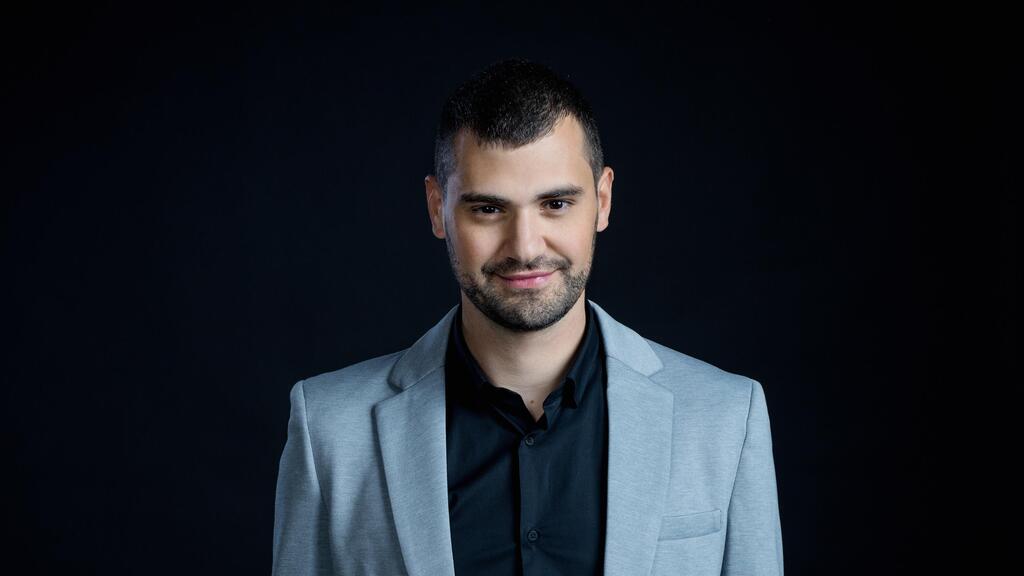
Also joining the conversation is Roey Eliyahu, co-founder and CEO of Salt Security, which was founded in 2016 and has raised funding at a valuation of $1.4 billion. The company focuses on securing APIs, the interfaces that allow software systems to communicate, against attacks, data leaks, and misuse.
“The advantage of an established company like Salt is its customer base,” Eliyahu says. “Early-stage startups are often guessing what customers need. We have real-world data from large enterprises. When we introduce AI-driven solutions, customers prefer to buy them from a trusted provider.”
Among the companies in CapitalG’s portfolio are ventures it has supported through their expansion and scale-up stages, including Stripe, Airbnb, CrowdStrike, Databricks, and Zscaler. Alphabet is the fund’s sole limited partner, providing long-term capital along with a patient approach to returns.
For Luo, cybersecurity is one of the sectors most profoundly reshaped by artificial intelligence.
“AI is automating what used to be manual processes, for example, in security operations centers,” he says. “At the same time, it expands the attack surface. There are more vulnerabilities, but also more opportunities to defend.”
He points to the rise of autonomous software agents as a fundamental shift.
“In a world of agents, there’s no human interface, just an audit trail of actions. These agents operate through API calls, which makes API security even more critical. The risk is no longer just human users; it’s machines acting independently.”
Following several major exits in Israeli tech, Luo expects more to come.
“Absolutely,” he says. “We wouldn’t be investing at this level if we didn’t believe in the pipeline. Beyond acquisitions, I expect to see significant IPOs by Israeli companies.”
The venture capital model itself, Luo argues, is evolving.
“The fundamentals haven’t changed, we still invest in great teams,” he says. “But the pace has accelerated dramatically. AI is enabling companies to grow faster than ever.”
Milestones that once took a year to reach are now being achieved in months, he notes, forcing investors to move more quickly and commit capital earlier, often at higher valuations.
“In some cases, we have just days or weeks to make a decision. In the case of Salt, it took about a week and a half. You don’t need six months to understand a strong team and a compelling market.”
Eliyahu agrees, noting that top-tier funds like CapitalG arrive with a clear investment thesis.
“They know exactly what they’re looking for,” he says. “Other investors try to form a thesis during the process, and that can take months.”
Salt, he adds, received multiple offers, including some at higher valuations. But CapitalG stood out.
“I heard strong recommendations about James from the founders of Armis, Yevgeny Dibrov and Nadir Izrael,” he says. “For me, choosing the right partners is just as important as the valuation.”



