











“With Armis, ServiceNow is positioned to build the largest cyber business in the world”
John Aisien, Senior Vice President at ServiceNow, and Armis CEO Yevgeny Dibrov frame the $7.75 billion deal as a step toward creating a “control tower” for enterprise security in the AI era.
The American software giant ServiceNow, currently valued at about $94 billion, has surprised the market over the past year with a sharp strategic shift. Long known for its conservative approach and reluctance to pursue large acquisitions, the company has embarked on an aggressive, multibillion-dollar buying spree.
That shift began with the roughly $1 billion acquisition of Veza and culminated in the $7.75 billion purchase of Israeli cybersecurity firm Armis, one of the largest deals in the history of Israeli high-tech, completed last week. The market response has been mixed. While the strategy signals ambition, investors have been unsettled by the sudden change in direction, sending the stock into periods of sharp volatility after it had previously peaked at a valuation of around $150 billion.
1 View gallery
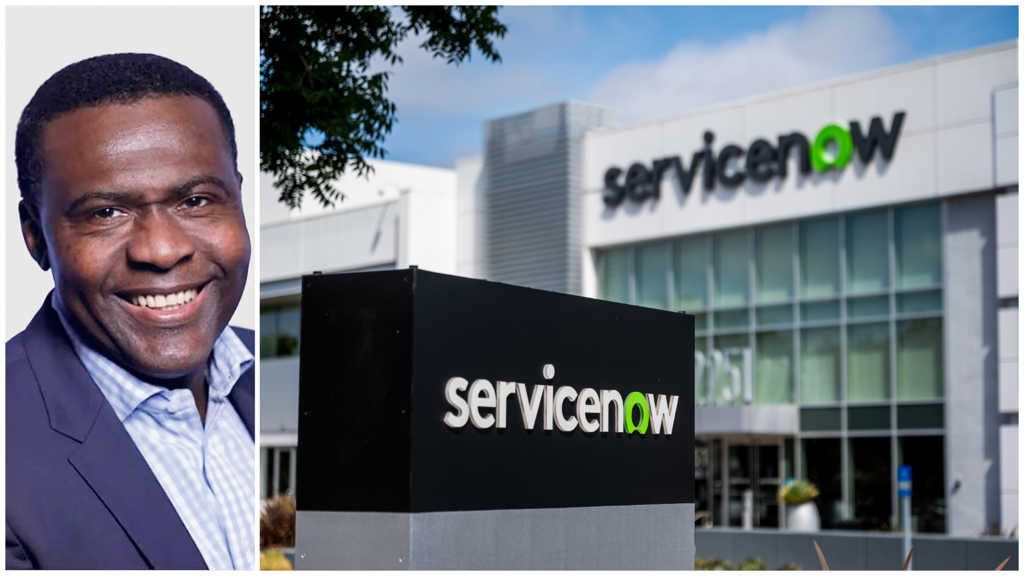
John Aisien, Senior Vice President at ServiceNow.
(Photo: David Paul Morris/Bloomberg)
“The stock price is a momentary reflection of sentiment, not of true value,” said John Aisien, ServiceNow’s Senior Vice President, when asked about investor concerns. “We have full confidence in our assets and in Armis’ ability to solve fundamental problems for governments and organizations. We are building a multibillion-dollar business here for the long term, and the value will eventually align with business reality.”
Founded in 2016 by CEO Yevgeny Dibrov and CTO Nadir Izrael, Armis has built a global customer base that includes the United States Postal Service, United Airlines, Colgate-Palmolive, and Mondelez International. Its platform enables organizations to gain real-time visibility and control over critical assets across IT systems, operational technology, medical devices, cloud environments, and software.
The acquisition is closely tied to the rise of so-called “agentic AI,” in which autonomous systems operate within enterprise environments. Armis’ ability to monitor roughly 7 billion devices in real time is expected to serve as a foundational layer for deploying such systems at scale while maintaining oversight and control.
“This is a moment of immense pride for the entire Armis team,” Dibrov said. “When we founded the company in 2016, we wanted to protect every connected asset. Today, in the age of cloud and AI, this mission finds its natural home. Together with ServiceNow, we are creating the world’s first end-to-end unified security exposure management system. For years, organizations have seen the threats, but they haven’t had the ability to fix them, we are closing that gap.”
For ServiceNow, the broader vision extends beyond a single acquisition. Aisien argues that artificial intelligence represents a fundamental shift comparable to the transitions from desktop computing to the web and from the web to mobile, but ultimately more transformative.
“In an agentic world, everything changes,” he said. “We are moving to a reality without fixed privilege, there is no longer a static login, only identity granted in real time as needed. Armis sees all the devices, and Veza manages identities. Together, we become the ‘control tower’ of AI.”
He added that the nature of cybersecurity itself is evolving, driven in part by greater coordination among attackers. “Attackers on the dark web cooperate and share tools. Defenders, until now, have been more fragmented. AI is changing that. There is a growing willingness among companies to connect signals and build joint defenses.”
Despite the scale of the deal, ServiceNow insists the acquisition is about expansion, not cost-cutting. “We acquired a differentiating technology here, but most of all we acquired an incredible team. Armis is a source of investment for ServiceNow, not a source of efficiency. We are going to use this skilled workforce to build a multibillion-dollar cyber business within the company. If people are not fit for their purpose in the role, obviously we will execute on performance management as we ordinarily would.
“Israel is an impressive example of a nation that builds human capital and value out of imagination. Our cyber center of excellence in Israel is a strategic anchor. We acquired Israeli startups like Traceloop and Pyramid Analytics, and Armis is the jewel in the crown. I’m just afraid to meet Yevgeny and Nadir’s families, because the two of them are going to fly around the world to implement this vision in all the major organizations.”
The company now sees itself competing at the highest level of the cybersecurity market.
“If you take Armis out, we already exceeded $1 billion in revenue in the third quarter. Today we are in the top 10 alongside Microsoft, Palo Alto Networks, and CrowdStrike. We hear from customers that they want to buy more from us and replace companies like Tenable, Rapid7, and Snyk because they are no longer suited for the new era. We are best positioned to build the largest cyber business in the world.”
Where will you be in two years?
Dibrov: “We will own a new category. Not just ‘cybersecurity,’ but autonomous risk management. Israel will continue to be the beating heart of this innovation for ServiceNow.”



