










“It’s not a market that is easily penetrated”: Inside the quiet boom of Israel–Australia innovation ties
Despite distance and strict regulation, Startup Nation is leaving a strong mark on Australia’s economy and tech sector. From cyber to pharma, the relationship between the two nations might surprise many, forged as much by the logistical challenges that divide them as by the opportunities and cultural commonalities that bridge them.
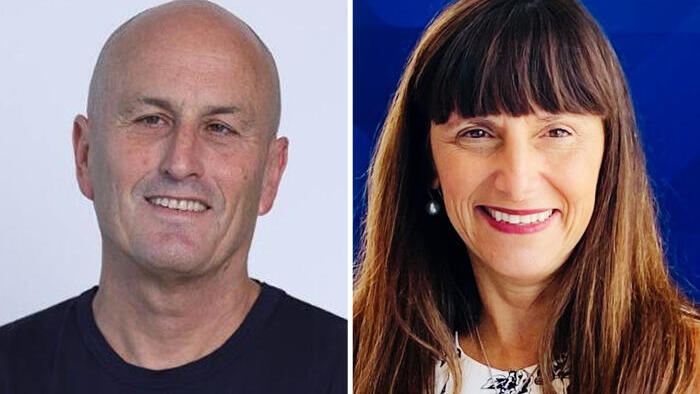
“Australia leads the world in detection of scams and we do have part in that,” says Gadi Mazor, CEO of Israeli AI-driven behavioral biometrics company BioCatch.
BioCatch is one of the success stories that captures the deepening bilateral business ties between Israel and Australia. Since entering the market in 2018, the company’s behavioral fraud-detection technology has been adopted by all four of Australia’s major banks, representing roughly 85% of the national banking market, according to Mazor.
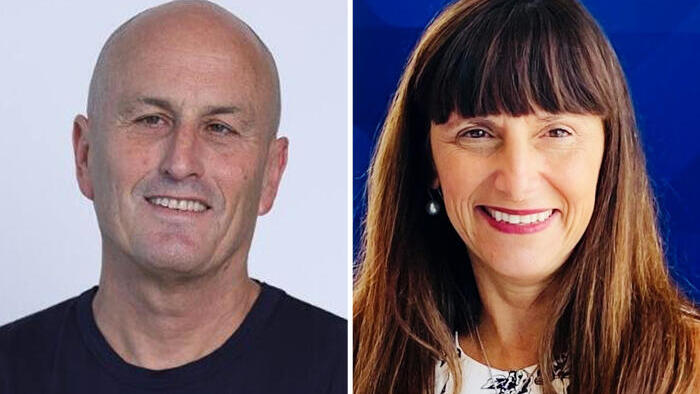
“Australia is the only country, I think in the world, that in the last two years, scams are going down every year… and we do want to take some credit for that,” he adds.
Despite outward headlines of rising antisemitism and campus tension in Australia, when it comes to the bottom line, the story appears notably different. Beneath the noise, Israel’s tech footprint and the broader relationship between the two nations continue to strengthen across tech sectors including finance, cyber, agriculture and digital health.
Israeli firms such as BioCatch and CyberArk are among those that demonstrate an established foothold in the Australian market. And many may be surprised to find out that Israeli pharmaceutical company Teva, meanwhile, ranks among the biggest multinationals based in Australia and is one of the country’s leading investors in R&D.
According to Michelle Blum, CEO of the Australia-Israel Chamber of Commerce (AICC), there are around 150 Israeli companies operating in Australia through a local office or a representative. Since the beginning of 2025 there has been a 20% growth in goods trade between Israel and Australia, most of it from 30% export growth from Israel to Australia, she adds.
Blum has led the 55-year-old non-profit for nearly a decade, guiding its efforts to expand collaboration between Israel and Australia through business, technology, and innovation. “We're an Australian organization trying to support other Australian organizations,” she says. “Through Israeli innovation is one important way that we do that… because innovation is a driver of growth and productivity, which is obviously a big piece of what all businesses need to do.” She notes that the AICC has seen higher growth over the last two years in areas like cyber, AI and agritech.
While Blum acknowledges a brief slowdown following the October 7 Hamas attacks, with some companies having “withdrawn from the market as not a priority,” she maintains that “there are certain sectors which have flourished, regardless of anything else.”
AICC’s work to advance this cross-market conversation continues this week, with its flagship Australia-Israel Innovation Summit returning to Sydney. Now in its sixth year, the conference convenes Australian business leaders with Israeli entrepreneurs and thought leaders to explore how innovations from Startup Nation are transforming, and can continue to transform, Australian business.
“It’s an opportunity to bring Israel and tech and innovation here… so that people can still have that deeper exposure,” says Blum. “Each year, we try to really understand what are the big issues that Australian business leaders are thinking about, what the big challenges and big topics are for them.”
2 View gallery
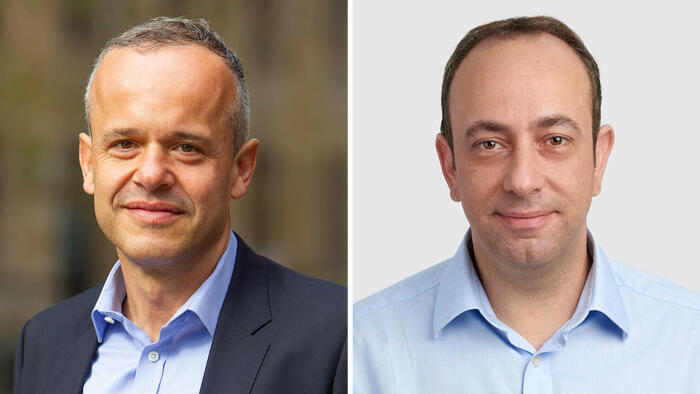
Thomas Fikentscher (CyberArk), Lior Handelsman (Grove Ventures),
(Credit CyberArk, David Garb)
Among those voices is Lior Handelsman, General Partner at Grove Ventures and co-founder of SolarEdge, the summit’s keynote speaker, focusing on the rise of physical AI. In conversation with CTech, he explains this as the next generation of artificial intelligence that will add reasoning to robotics and ultimately transform the physical world, from manufacturing and logistics to global trade. “A real fourth industrial revolution, in my view,” he says.
Based in Israel, Handelsman’s “past-life” experience as SolarEdge’s founder and VP, a company with its own footprint in Australia, affords him a perspective that bridges both ecosystems.
He cautions that Australia poses unique challenges for startups considering expansion abroad, especially compared with the usual ports of call in the U.S. and Europe that Israeli companies tend to pursue. “It’s not a market I would recommend Israeli startups to start with… It’s not a market that is easily penetrated,” he says.
“Regulation in Australia is different… you have to certify specifically for Australia, which is expensive and hard… and it is far away, and a very large country… It’s not something I would recommend startups to start with before they know what they’re doing in Europe and U.S., at least.”
Still, in his view as a goal for more mature startups with the right partnerships on the ground, Handelsman calls it “a great market, with excellent people and excellent local talent,” adding that Australians “value quality and technology.”
That being said, while some, like Mazor, may not see Australia as an ideal first launch pad for early-stage startups, others view it as a valuable and idiosyncratic testing ground within the Asia-Pacific region. So says Thomas Fikentscher, Area Vice President (Australia and New Zealand) of Israeli cybersecurity giant CyberArk. Under Fikentscher, CyberArk has grown from a small local presence to offices nationwide, employing around 80 people and serving sectors from finance to critical infrastructure.
Originally from Germany and now based in Australia, Fikentscher, who is hosting the 'Next Generations Cyber Risks' panel at the summit, says the country’s innovation culture makes it a strong partner for Israel. “It’s actually always been a very attractive test market for English speaking or predominantly English driven companies. It’s easier to align with that business mentality here than in Japan or some other countries, because they’re run differently compared to how Australia operates.”
He adds that “Australia has always been a society in the business landscape that embraces innovation. So it’s always been a good test market, I think, not just for Israeli businesses, but also some American businesses like to start in Australia when they go into Asia-Pacific.”
From Blum’s point of view, the cultural common denominators between Israel and Australia are a defining part of the connection between the two countries within the wider English-speaking world. The “laid back” attitude of Australians, she says, “goes well with people-to-people contact.” Though she notes the challenge that “Israelis like to move very fast on everything. Decision making here can be slower.”
Mazor agrees Australia’s openness to new tech and its cultural familiarity have been instrumental to BioCatch’s success there: “Every Israeli entrepreneur going there would find that it is very friendly and open, and a culture that we know how to deal with,” he says. “Even a sense of humor [that] is somewhat similar.”
“People are down to earth, but very straight and direct in communication styles, which is appreciated,” adds Fikentscher. “You’ve got a very strong community orientation in Israel… but also in Australia the principle of ‘mateship’ exists very strongly and I think that connects those countries at a cultural level as well.”
As Australia works to further modernize its economy in the lead-up to the 2032 Brisbane Olympics, Blum says Israeli technology has vast potential to play a part in that transformation. “There's a lot of opportunity for Israel to play a role in things like smart city technologies, cyber security, disaster planning, health [and] digital health,” she says.
Likewise, reflecting on the next phase of growth for the Israel–Australia relationship, Fikentscher highlights the growing importance of AI security and infrastructure innovation, particularly with the burgeoning field of agentic AI – a topic he says is “pretty close to my heart.”
“With AI deployment comes a lot of infrastructure investment,” he adds, “and I believe that will also keep us very busy in that relationship.”



