










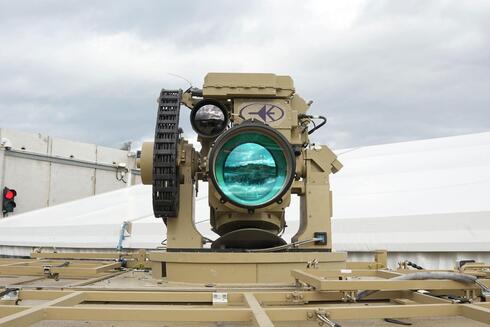
“We delivered the Air Force the most advanced defense system in the world, but it does not become operational in one day”
As Rafael reports record 2025 revenue and profit, CEO Yoav Turgeman emphasizes that Israel’s Iron Beam laser system will require a phased activation process.
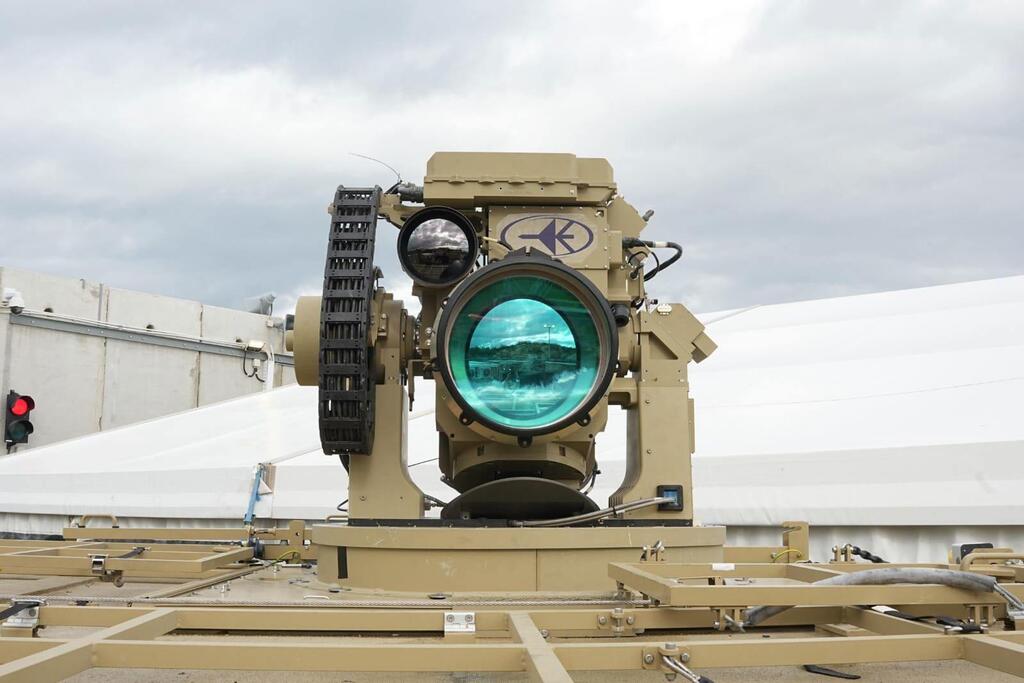
Around four months ago, Rafael delivered to the IDF's Air Force the Iron Beam laser-based air defense system, designed to counter short-range rockets and UAVs. Despite the delivery, the system has not yet been activated in the current conflict with Iran, even as Hezbollah in Lebanon has joined the campaign with heavy attacks on northern towns.
“We delivered the Air Force the most advanced defense system in the world, and like any complex system, it does not become operational in one day,” Rafael CEO Yoav Turgeman told Calcalist. “Even when the Air Force received F-35 aircraft and trained pilots in the U.S., they did not enter operational activity immediately. The Air Force manages processes professionally, and this has nothing to do with our supply, which proceeds according to schedule.”
Beyond the laser system, Rafael is the developer and manufacturer of the Iron Dome and David’s Sling air defense systems used by the IDF during the ongoing regional conflict, which will mark one month by the end of the week. “We prepared in advance. There is a constant learning race between us and the enemy, which is part of the campaign. They surprise us, and we surprise them. A high percentage of the weapons used by the Air Force in its attacks on Iran are developed by Rafael,” Turgeman added.
Rafael announced on Thursday that it received during 2025 new orders worth approximately NIS 33 billion ($10.6 billion), and its backlog stabilized at a record NIS 74 billion ($23.7 billion) by the end of the year. The fourth quarter was the strongest in Rafael’s recent history: sales exceeded NIS 7 billion ($2.2 billion), an increase of more than 30% compared to the fourth quarter of 2024. In the same quarter, Rafael received new orders totaling NIS 10 billion ($3.2 billion), and net profit amounted to nearly NIS 430 million ($138 million), up 7.5% from NIS 400 million ($128 million) in the same quarter of 2024. For the full year, net profit reached NIS 1.3 billion ($417 million), a 36.8% increase compared to NIS 950 million ($305 million) in 2024.
The figures indicate that the gap between Rafael and Israel’s other major defense companies, Israel Aerospace Industries (IAI) and Elbit Systems, is continuing to narrow. Both have published record results for 2025, with IAI reporting an unprecedented backlog of more than $30 billion (NIS 93 billion) and Elbit presenting a backlog of approximately $28 billion (NIS 88 billion). About 54% of Rafael’s sales last year were domestic, with the remainder abroad.
Amid the war and the pressure on defense production lines, the government has accelerated steps toward the partial privatization of Rafael. Calcalist has learned that Dudi Amsalem, Minister for Regional Cooperation in Charge of Government Companies, has asked the Government Secretariat to convene the Ministerial Committee for Privatization Affairs to discuss the sale of the defense company. Earlier this week, the Government Companies Authority, led by Roi Kahlon, submitted to the Defense Ministry a draft resolution under which Rafael would sell 49% of its shares to institutional investors in a fast-track process outside the stock exchange.
According to the Authority’s assessment, Rafael could be issued at a value of NIS 60-70 billion ($19.2-22.4 billion). The acceleration of the issuance, bypassing Securities Authority regulations and a formal prospectus, was explained as necessary to align with IAI’s ongoing bond issuance. While both Turgeman and Rafael Chairman Yuval Steinitz are strong proponents of the move, Turgeman declined to comment on developments: “As long as there is no decision, it is just talk. Everyone has their own assessments and thoughts on the subject,” he said.



