










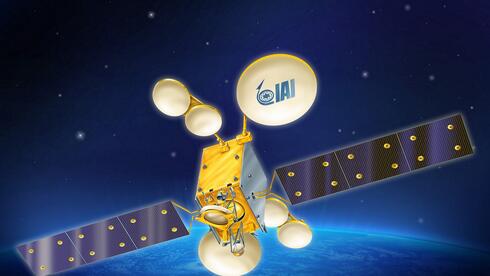
Israel’s IAI and Thales to build Nigeria’s next comm satellites in a $2 billion deal
The deal would mark a significant milestone for IAI’s Space Division, strengthening its position in the communications satellite market following a period of business uncertainty.
Nigeria’s national satellite operator, NIGCOMSAT, is expected to purchase two communications satellites from Israel Aerospace Industries (IAI) and French-Italian group Thales in two deals whose combined value is estimated at around $2 billion.
IAI will manufacture the NigComSat-2A satellite, scheduled for launch in 2028, as part of an effort to replace Nigeria’s current communications satellite as it approaches the end of its operational life.
The emerging deal with IAI, which is taking shape in Africa, was disclosed by Jane Egerton-Idehen, managing director of Nigeria’s satellite company, in a post on her LinkedIn profile. According to Egerton-Idehen, the procurement and deployment of the satellites were approved by Nigeria’s Federal Executive Council, as part of the country’s investment in “our digital sovereignty.”
The deal would mark a significant milestone for IAI’s Space Division, strengthening its position in the communications satellite market following a period of business uncertainty.
Nigeria’s primary satellite operator, NIGCOMSAT, is set to purchase two communications satellites from Israel Aerospace Industries (IAI) and the French-Italian group Thales under two separate agreements that, according to estimates, could have a combined value of approximately $2 billion.
Nigeria has not disclosed the value of the agreements. Each of the two companies is expected to supply Nigeria with an advanced communications satellite in the coming years, with each satellite costing several hundred million dollars. According to reports in Nigeria, IAI will manufacture the NigComSat-2A satellite, scheduled for launch in 2028, while Thales will supply the NigComSat-2B satellite, scheduled for launch in 2029. The satellite supplied by IAI is expected to replace Nigeria’s existing NigComSat-1R communications satellite, which is approaching the end of its operational lifespan.
NIGCOMSAT is based in Abuja and has been responsible for managing Nigeria’s communications satellite program for the past two decades. According to the company’s managing director, “the approval we have received is a milestone, and delivery is the mission.” She added that “the planned deployment of the satellites will increase our capacity to expand broadband connectivity, support critical sectors of our economy, unlock new opportunities, and position Nigeria as a more significant player in the digital economy and Africa’s emerging space economy.”
IAI did not comment on reports in Nigeria regarding the prospective deal. IAI manufactured the Amos series of communications satellites at its space facility and successfully launched the “Dror 1” communications satellite last summer, after developing it for use by Israeli government ministries. The need for the order increased following the crisis that has affected IAI’s communications satellite business in recent years. The background included the explosion of the Amos-6 satellite before its launch in the United States and the decision by Israeli satellite operator Spacecom to purchase its next satellite from a U.S. manufacturer rather than from IAI.
The prospective deal could significantly improve the level of certainty for IAI executives CEO Guy Bar-Lev and Chairman Boaz Levy regarding the future of the company’s communications satellite business. In parallel, IAI is conducting negotiations with Azerbaijan over a possible deal to supply a new communications satellite, potentially worth nearly $1 billion.
The emerging deal could also be unusual from a geographic perspective. Africa is not a major consumer of Israeli defense equipment, particularly advanced systems. In 2025, Israeli defense exports reached an all-time high of more than $19 billion, while countries in sub-Saharan Africa accounted for approximately 2% of the total, representing deals worth around $400 million.



