










Secretive defense startup Covenant emerges from stealth with $250 million at over $1 billion valuation
The startup, founded in 2024, has spent two years operating in near-total secrecy as it develops Anthem, a long-range heavy-payload weapon designed to be produced at a fraction of the cost of comparable legacy systems, with serial production expected to begin in 2027.
After two years of almost obsessive secrecy, the cruise missile startup founded by Israeli-American entrepreneur Michael Kaufman and Ofir Dayan is emerging from the shadows.
Covenant, which has developed a long-range, heavy-payload weapon system designed to cost a fraction of comparable legacy systems, was founded in 2024 and has raised more than $250 million. Among the investors disclosed by the company are some of the most prominent names in the defense technology sector: Andreessen Horowitz, which launched its American Dynamism fund several years ago to invest in companies focused on national security; Peter Thiel’s Founders Fund; 8VC; Josh Wolfe’s Lux Capital, which specializes in defense and deep technology; as well as Lightspeed and Israeli venture capital firm Aleph, founded by Michael Eisenberg.
According to Covenant, the more than $250 million was raised across three rounds led by Andreessen Horowitz, Founders Fund, Lux, 8VC, Aleph and Lightspeed. The latest round, according to estimates, valued the company at more than $1 billion.
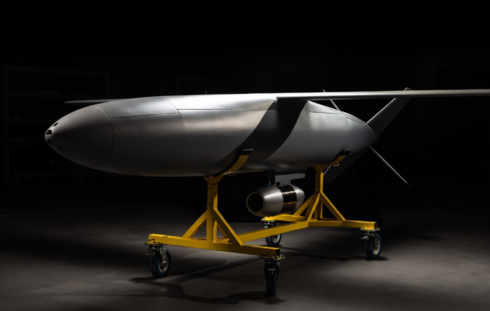
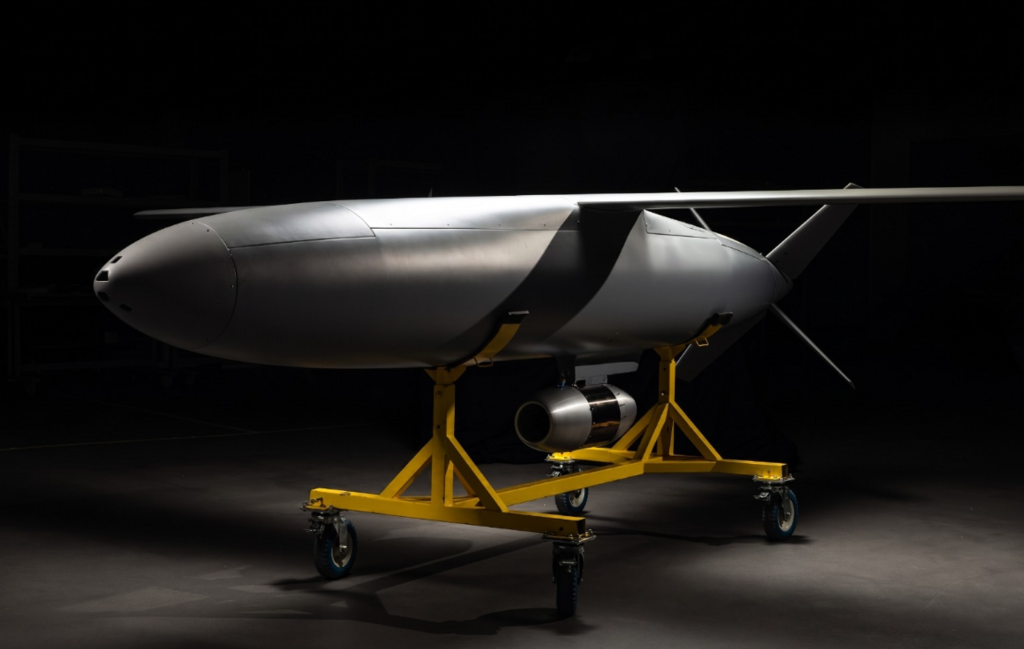
Alongside the funding announcement, Covenant is lifting the veil on its main development, the Anthem system, which the company describes as a “heavy-payload, long-range weapon system” designed to be produced in the thousands. As Politico reported several months ago, Anthem is a cruise missile designed to be produced quickly and at dramatically lower cost than comparable legacy systems.
According to Politico, the missiles were tested in Israel in June, with representatives from defense ministries in several countries, including Germany, invited to observe the test.
Covenant said it has booked approximately $150 million in orders to date, including qualification, research and development, and multiple production contracts, with additional awards expected before the end of the year. The company is also operating under an Other Transaction Agreement with the U.S. Army for an accelerated testing and qualification program.
It has also signed a contract with the U.S. Navy’s Rapid Capabilities Office to develop a naval version of Anthem. The program, valued at roughly $70 million with a cost-share component, will adapt the ground-launched system into a “Maritime Anthem” variant and incorporate Defense Exportability Features designed to accelerate exports to U.S. allies and partners.
U.S. production of Anthem will take place at a new 105,000-square-foot facility in Dallas, Texas, which opened on Wednesday and is scheduled to begin serial production in the first quarter of 2027. Covenant plans to ramp production toward 5,000 units per year.
Covenant was founded by Kaufman, an American-Israeli entrepreneur who previously worked at Peter Thiel’s foundation and recently moved to Israel to develop the company’s activities. He serves as CEO and co-founder.
The company is headquartered in Washington, D.C., with production facilities in Dallas and Saxony, Germany. Its German facility covers 110,000 square feet and is supported by a European supply chain. In Northern Israel, Covenant operates a 32,000-square-foot facility that combines research, development and manufacturing.
The company does not disclose its employee count, although estimates put its Israeli workforce at several dozen people. Covenant said it is currently recruiting in the U.S., Germany and Israel as it expands its engineering, manufacturing and program-management teams across the three countries.
According to Covenant, Anthem was developed against the backdrop of the rapid depletion of long-range precision missiles in recent conflicts, with such weapons being consumed faster than defense industries can replenish them. The company says large-scale production is intended to allow militaries to maintain sufficient stockpiles even during prolonged conflicts.
Anthem is designed to combine long range and a heavy payload with production volumes intended to reach thousands of systems. Covenant says the system was designed from the outset as an end-to-end solution, including storage, transportation, launch and reloading, as well as its own mission-planning and command-and-control software for coordinated mass launches.
The company says this approach reduces the infrastructure, manpower and costs required to operate the system. Most of Anthem’s components are commercial off-the-shelf parts, while Covenant has secured long-term strategic agreements for other key components.
Its production model draws on supply chains across allied countries, which Covenant says is intended to ensure that the system remains available to customers during wartime and can be manufactured continuously at high volumes.
Since Covenant’s maiden flight in August 2025, the company says its team has conducted more than 200 Anthem flights, including multiple flight tests with the U.S. Army both in the U.S. and abroad. The company says the tests have been used to stress-test every element of Anthem’s design.
“When you look at our adversaries, you see thousands of hardened targets, beyond the range of current capabilities,” said Michael Kaufman, Co-Founder and CEO of Covenant. “Anthem was built to credibly hold those targets at risk in a prolonged conflict. If our stockpiles run thin, so does our deterrence."
The company’s push for mass production is part of a broader debate in the U.S. defense establishment over whether the West can replenish precision weapons quickly enough during a major conflict.
“American Dynamism is about backing founders taking on the missions that matter most to America’s national security, and rebuilding the West’s long-range strike arsenal is at the top of that list,” said David Ulevitch, general partner at Andreessen Horowitz. “Covenant has the technical depth and the urgency the mission requires, and the company has already proven it in the air, not on paper.”



