










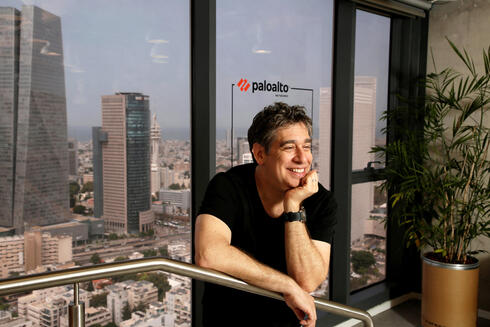
“I can retire… with peace”: Nir Zuk says Palo Alto Networks finally achieved his 20-year vision with $25B CyberArk acquisition
Zuk said on Sequoia’s Crucible Moments podcast that he can retire confidently as the company enters the AI era with its architecture finally whole.
“I recently announced that I’m going to retire from Palo Alto Networks. And the reason for that is that I think that Palo Alto Networks has finally achieved the vision that I set 20 years ago,” founder Nir Zuk recently told Sequoia Capital’s Crucible Moments podcast.
Zuk said he could step away because the original blueprint he drew 20 years earlier of a single, unified cybersecurity platform spanning every major defensive category an enterprise might need, was finally complete.
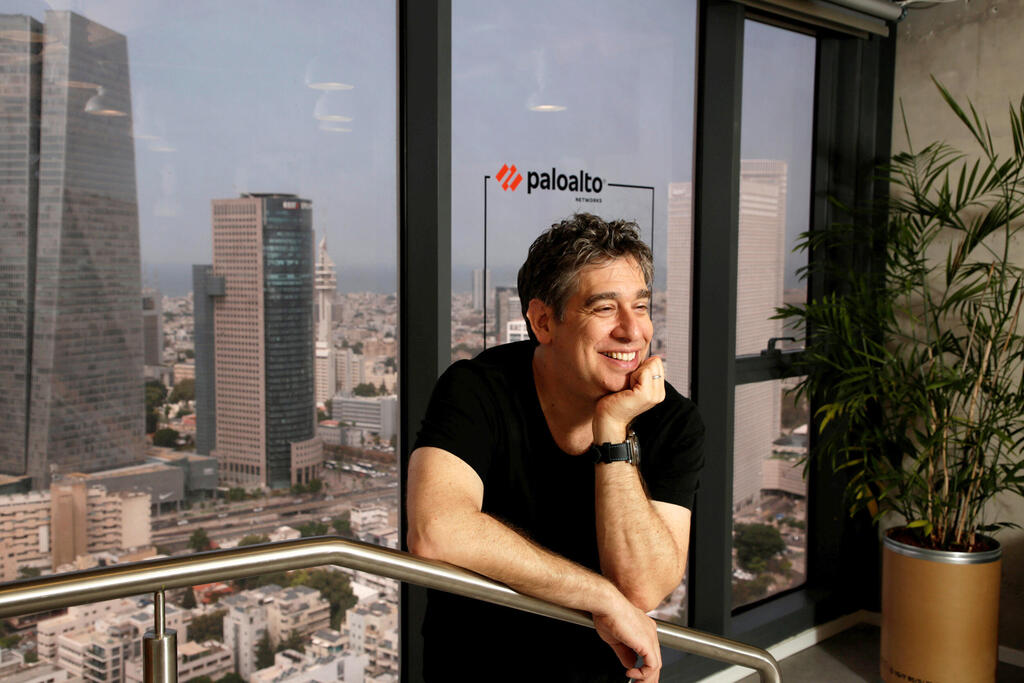
“Recently we announced the 25 or so billion dollar acquisition of a company called CyberArk, which is in the identity space… And that to me completes the platform,” he said. Palo Alto Networks, he argued, now delivers “network security, endpoint security, security operation center, automation and control and cloud security, identity and access management.”
He continued, almost catalog-style, to emphasize what had been accumulated across two decades: “We went into AI security… into email security… into vulnerability assessment and vulnerability management. We have all the major components… that an organization would need in order to achieve their cybersecurity goals, which is what I set to do 20 years ago.”
Then came the line that captured the moment’s emotional weight.
“And now I can retire from Palo Alto Networks with peace,” Zuk said. He added that he was confident he was leaving behind “a company with all the products and all the technology that it needs with a great management team led by Nikesh and the company in a great financial state.”
Zuk explained what he sees as the only viable survival strategy in an industry where yesterday’s advantage can evaporate overnight.
“My advice to startups that are being disrupted… or you’re being disrupted by a shift in market dynamics like the cloud, like AI… my advice to you is embrace the disruption,” he said. “If you don’t embrace the disruption, you will end up like companies that didn’t embrace the disruption.”
He cited examples with characteristic bluntness: “In our case, if you end up like Check Point… in the case of cell phones, you end up like Nokia that was disrupted by Apple and later Google. You will get killed by a disruption.”
The principle, he insisted, was both painful and necessary: “Always embrace a disruption despite that disruption… hurting your business for the short term. If you do it right, you will get out of it on the other side much stronger.”
Ironically, or perhaps fittingly, that philosophy is the same one that shaped Palo Alto’s most turbulent period under CEO Nikesh Arora.
Arora himself recounted what it was like to enter Zuk’s world as an outsider.
He recalled joining the company as “the black sheep candidate,” admitting on the podcast: “I had no idea about cybersecurity. I thought there were two different words, ‘cyber’ and ‘security.’”
But Arora soon realized the company’s architecture, built for a pre-cloud era, was structurally unprepared for what was coming.
“We didn’t know how to talk cloud security,” he said. “We didn’t know how to sell cloud security because we didn’t have a product… we have to think as if we were born in the cloud. ‘If you were born in the cloud, how would you do a firewall?’”
His answer was the now-famous “speedboats” strategy: empower the acquired companies that had beaten Palo Alto in emerging categories, and let them run.
The purchase of CyberArk added to a long list of acquisitions in Israel, joining the likes of Talon Cyber Security and Dig Security, which were acquired for a combined $1 billion in 2023.
“The acquired company… beat us in the market with less resources,” he said. “So maybe those people should be part of Palo Alto driving that strategy, not people who’ve been trying and failed at Palo Alto.”
It was expensive. “We did take our operating margins down… for the first two or three years,” he acknowledged. But the shift created the cloud, operations, and automation platforms that Zuk now cites as foundational elements of the “complete platform.”
Looking back, Arora called 2018 “a crucible moment,” a point where the company deliberately abandoned stability to pursue long-term scale. The goal, he said, was to become “the first at-scale evergreen cybersecurity company in the world.”



