










AI security startup Glow emerges from stealth with $180 million at $1.2 billion valuation
Founded by former Meta, Snowflake and Claroty executives, the company is betting AI can transform endpoint security from reactive defense to prevention.
Cybersecurity startup Glow has emerged from stealth with $180 million in funding at a $1.2 billion valuation, aiming to build a new approach to endpoint security designed for an era in which employees and autonomous AI systems increasingly operate inside enterprise networks.
The company, founded in 2025 by former executives from Meta, Snowflake and Claroty, said its latest financing round was led by Sequoia Capital, Cyberstarts, Greenoaks and Redpoint Ventures, with participation from Index Ventures, Swish Ventures, Lux Capital and Holly Ventures.
Glow has raised $180 million across three rounds in roughly one year, including a $20 million Seed round led by Sequoia and Cyberstarts, a $60 million Series A led by Index Ventures with participation from Greenoaks at a $400 million valuation, and the current $100 million Series B.
The company plans to use the funding to expand its go-to-market operations in the United States and grow Glow Labs, its research arm.
Glow currently employs approximately 100 people, including around 65 in Israel, and operates from Israel and the United States. The company said it has signed enterprise customers across industries including healthcare, retail and financial services.
Glow is targeting the endpoint security market, where companies have traditionally relied on multiple specialized products to protect employee devices, applications and corporate data.
CEO and co-founder Roi Tiger said existing solutions were not designed for the security challenges created by artificial intelligence.
“If you look at endpoints, there are a lot of point solutions. Each company solves something small there and does not offer a comprehensive solution,” Tiger told Calcalist. “We offer a broad solution for the entire endpoint market, not just AI. It is a $40 billion market with giant companies like CrowdStrike and SentinelOne.”
Glow’s core argument is that AI has fundamentally changed the endpoint. Corporate devices have become the place where employees introduce new AI tools, connect AI agents and integrate new software into daily workflows, often faster than security teams can evaluate them.
According to data cited by Glow, regular usage of AI tools on corporate devices, whether authorized or unauthorized, has increased from 15% to 45% in one year.
The company argues that AI has not only created new security risks but has also accelerated existing ones. Attackers now have access to increasingly advanced AI capabilities, allowing threats that organizations previously tolerated to be exploited much faster.
“Prevention was always the right answer in security. It just never worked at enterprise scale without blocking the business,” Tiger said. “AI solves that. The moment we saw what AI made possible, we knew the endpoint could finally be protected the way it always should have been.”
Glow’s platform uses specialized AI agents to continuously map an organization’s endpoint environment, analyze risks and automatically enforce security policies.
The company says its technology can determine which software should be allowed to run and which should be removed, reducing the attack surface without slowing business operations.
Tiger said the shift toward AI-based security represents a fundamental change in how companies should approach cyber defense.
“With all the investment in cyber, attackers find new entry routes, and everything eventually ends up at the endpoint,” he said. “If you understand how to use AI to deal with it before it happens and work proactively, you can provide a solution where prevention also reaches the endpoints.”
Emily Heath, Glow’s chief operating officer, said existing security tools were not built for the current environment.
“I sat in the CISO seat for a long time, and I can tell you the tools available to us were never built for what enterprises face today,” Heath said. “Every enterprise wants to move faster with AI. The question isn't whether they'll adopt it, it's whether security can keep up.”
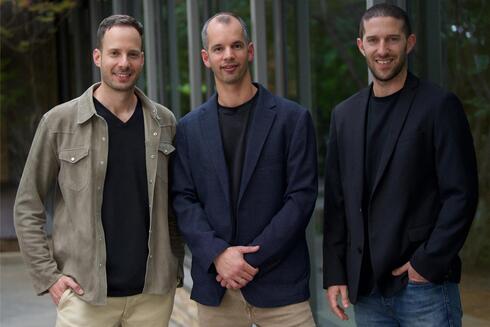
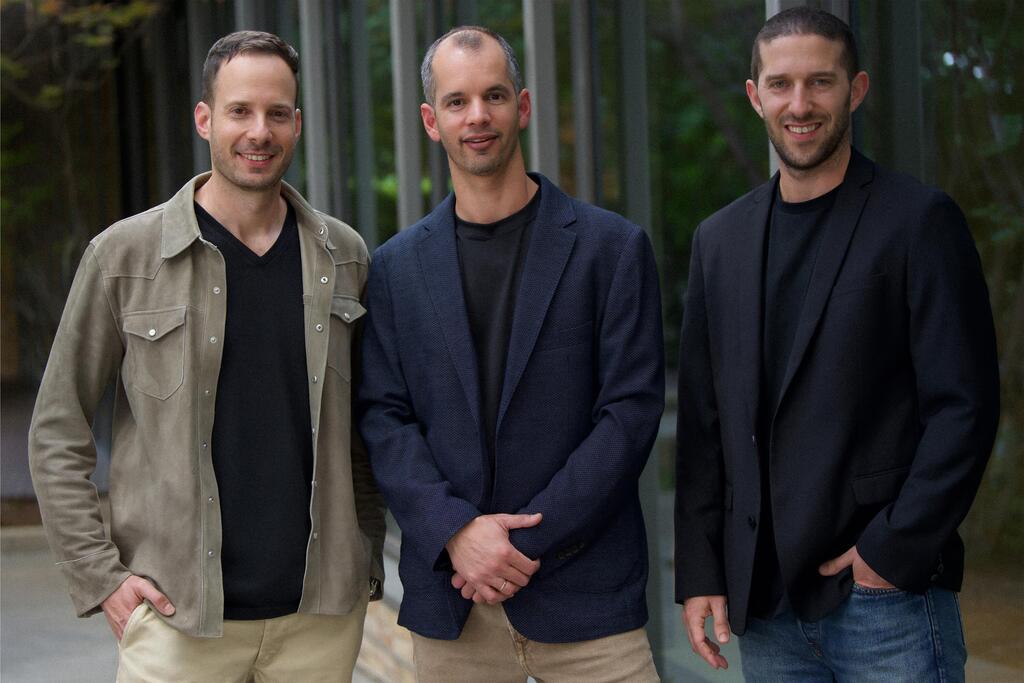
Glow was founded by Tiger, Omer Singer and Ophir Arie.
Tiger previously spent nine years at Meta, most recently as vice president of engineering, after Meta acquired Onavo, the company he founded.
Singer, Glow’s CTO and co-founder, previously served as head of cybersecurity strategy at Snowflake and earlier worked in Unit 8200.
Arie, vice president of R&D and co-founder, previously served as vice president of R&D at Claroty and is a graduate of the Talpiot program and Unit 8200.
The leadership team also includes Arnon Joseph, chief product officer, who spent eight years at Meta as senior director of product and led Meta Israel’s product group, and Heath, who previously served as CISO at United Airlines and DocuSign, a board member at Wiz through its $32 billion acquisition by Google, and a partner at Cyberstarts.
Tiger said his ambition is to build one of the world’s leading endpoint security companies.
“Entrepreneurship comes from a personal place,” he said. “I saw at Onavo how this thing created a foundation for a giant like Meta, and that I can build something from scratch and bring it to something new that can reach other heights.”
“The market today is different, the capabilities needed are different and the competition for talent is different,” he added. “We want to reach significant sales quickly.”
Cyberstarts founder Gili Raanan said the company’s team was central to the investment decision.
“Great companies are ultimately defined by the people who build them,” Raanan said. “Roi, Omer, Ophir, Arnon and Emily have assembled an extraordinary group of builders with the talent and determination to create something enduring.”



