










Lemonade CEO: "Our gross profit has grown by more than 100% annually while our cost structure has only increased by 3%"
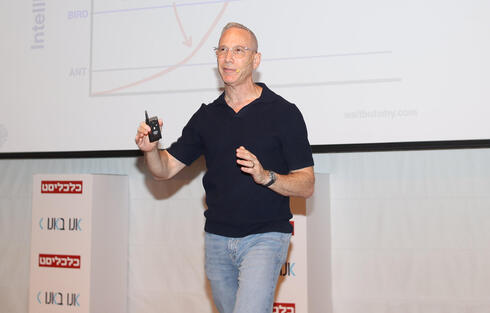
Daniel Schrieber, speaking at the Israel 2.0 conference by Calcalist and the Anu Banu organization, said that artificial intelligence will replace a large part of existing jobs, but does not have to lead to an economic crisis.
"Will artificial intelligence replace work as we know it today? Three years ago, we first met ChatGPT, and since then, Lemonade has grown rapidly, adding more and more customers without adding a single employee," said Daniel Schreiber, co-founder and CEO of Lemonade, on Monday at the Israel 2.0 conference organized by Calcalist and the Anu Banu organization.
According to Schreiber, "Our cost structure has only increased by 3% over these years, while our gross profit has grown by more than 100% annually. As a CEO, I’m thrilled by this and pushing it forward, but as a citizen, father, and grandfather, it makes me reflect on what the right policies should be for the AI era."
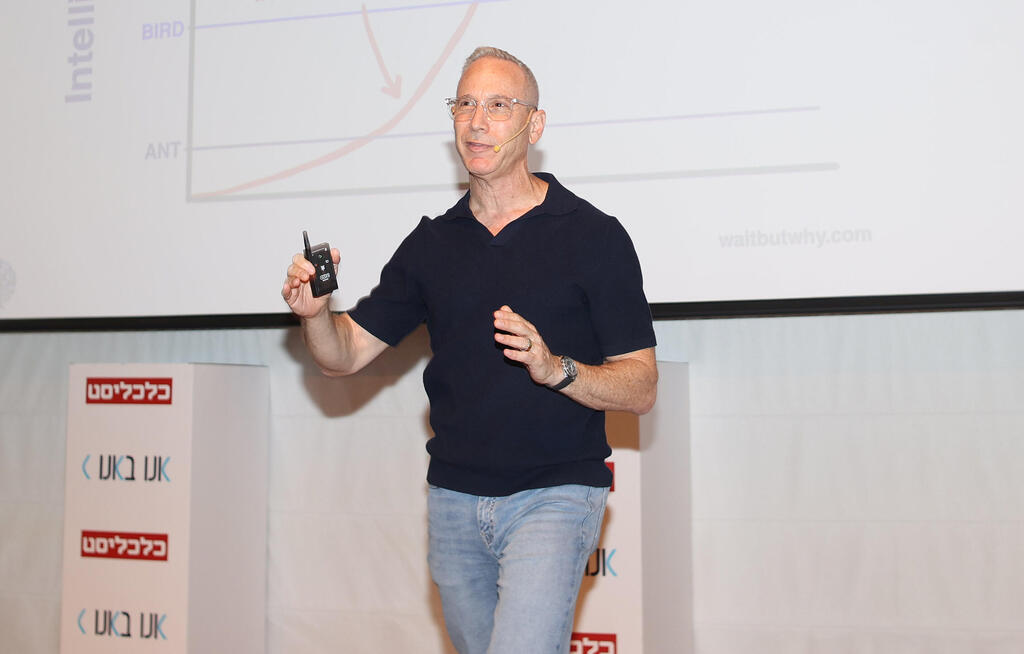
"We are living in a time when the dumbest person is already close, in terms of capabilities, to Albert Einstein," Schreiber joked. He continued: "In the coming decade, a large portion of work will be done by AI. Everyone at the forefront of this revolution says the same thing, some pretend it will all be for the better, but everyone understands that some jobs will disappear, period. Bill Gates said that within ten years, humans won’t be needed for most tasks. Amazon plans to replace half a million jobs with robots. It will take a few years, but it will happen."
"It’s customary to take comfort in the idea that this might be another case of ‘the boy who cried wolf,’ and that new jobs will always appear, as happened in past industrial revolutions. But in those revolutions, machines replaced muscles, not minds. The computing revolution brought tools that aided the brain but didn’t replace it. The key difference in this new revolution is that artificial intelligence can replace the brain. Robots are already better than the human body, so where will the human advantage lie? Seemingly, this points to high and lasting unemployment, but it doesn’t necessarily have to be a pessimistic scenario."
Schreiber outlined how artificial intelligence could be harnessed without triggering a deep economic crisis: "AI has two forces, it boosts production and abundance, but at the same time it can collapse demand by causing unemployment and loss of income. Therefore, a balance must be found. We could consider a form of taxation designed to preserve private consumption, which would in turn lower the prices of goods and services, since supply would rise and disposable income would increase. With proper planning, there could be enough money in the system to ensure that all the unemployed receive a salary, and a relatively high one, in the upper quartile of national wages.
"But as the sages said, ‘A person only dies from sheer idleness.’ What will we do with our free time? That’s another question we must confront. At present, the state’s framework is inadequate. There’s an urgent need to think ahead, to design a plan so that by Israel’s centennial year, there will be prosperity for everyone, whether they have traditional work or not."



