








"There are people who aren't sleeping right now because of the cancellation of American aid"
Major General (Res.) Amikam Norkin, former Commander of the Israeli Air Force, warned at "RoadShow+", hosted by Calcalist and Poalim Tech, about the potential impact on Israel's defense procurement commitments. Regarding the defense budget, he noted: "The system operates inefficiently." On Anduril, he stated: "They want to enter the Israeli market, but nothing has been finalized yet." As for opportunities for startups in the 'defense-tech' sector, he remarked: "We are two generations ahead of European militaries."
"In terms of short-term strategy, there are people who aren't sleeping right now because they have to address defense procurement commitments for the coming years. Furthermore, the final word has not yet been spoken in discussions with the U.S. administration. There are various potential models for phasing out aid to Israel. The focus must be on ensuring that this happens gradually, so that the Israeli economy can cope with the transition in a healthier manner."
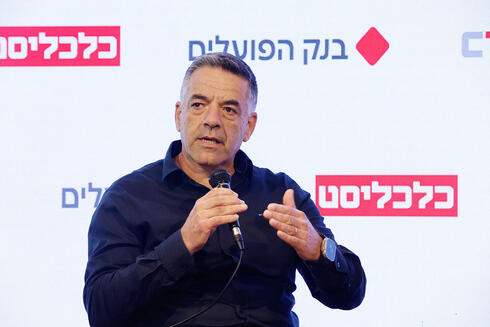
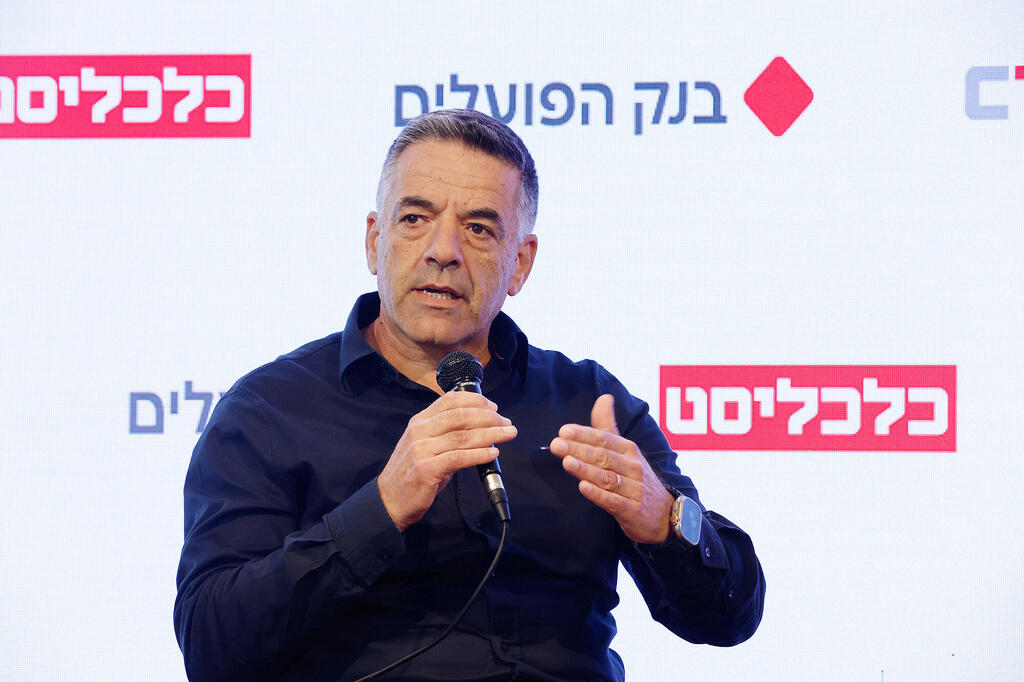
This was stated on Tuesday by Major General (Res.) Amikam Norkin, former Commander of the Israeli Air Force and founder and chairman of Ace Capital Partners, a business platform investing in the aerospace and defense sectors. Norkin spoke with Neta-Li Binshtok of Calcalist at the Calcalist Roadshow+ event, held in Tel Aviv in partnership with Poalim Tech.
The event took place against the backdrop of the resilience demonstrated by Israel's high-tech sector over the past three years, marked by substantial investment and advances in cybersecurity and artificial intelligence. Less than a month ago, the quantum computing sector saw what was described as its largest exit to date, when Intel acquired Israeli company Classiq for $2.3 billion. The event sought to highlight this momentum and connect entrepreneurs with leading investors. Sixteen startups presented their technologies, spanning areas from protecting AI agents and preventing financial fraud to detecting equipment malfunctions at an early stage and managing commercial real estate investments.
As head of the IDF Planning Directorate, you were involved in formulating the U.S. aid arrangement for Israel's defense budget. Over the past year, you have repeatedly spoken out against ending this aid, warning that doing so would disrupt the continuity of defense procurement. Given your familiarity with the defense establishment, how is it responding to President Trump's announcement about ending the aid? What would the implications be?
"The current aid agreement was signed in October 2016, during my tenure as head of the Planning Directorate at the IDF General Staff. I represented the IDF, alongside the National Security Council, in negotiations with the Barack Obama administration. We signed a memorandum of understanding providing Israel with $38 billion over ten years, through 2028.
"This agreement underpins an entire financial framework. Israel relies on receiving this U.S. aid, and the state can secure loans from the banking sector based on the expectation that the funding will continue. Furthermore, some of our military procurement agreements are structured around payments from the aid package over many years.
"The Obama administration decided to phase out a long-standing provision that allowed part of the aid to be converted into shekels and used to purchase equipment from Israel's domestic defense industry. At a certain point, the Americans indicated that this arrangement no longer suited them, and the option has been gradually phased out over the past two years.
"We expected Israel to develop a contingency plan for the possibility that most of the aid would eventually disappear, particularly because long-term procurement agreements can significantly reduce defense costs. However, that has not happened, and agreements worth billions of dollars have already been signed.
"From a long-term strategic perspective, Israel needs to wean itself off this aid. I believe that makes sense for a country that is approaching its 80th anniversary. In the short term, however, there are people who aren't sleeping right now because they have to address defense procurement commitments for the coming years. This is an active concern, and the final word has not yet been spoken in discussions with the U.S. administration. There are various potential models for phasing out aid to Israel. The focus should be on ensuring that the transition is gradual, allowing the Israeli economy to adapt in a healthier manner."
Looking at the threats Israel faces from a geopolitical perspective, should the country change its security doctrine, as envisioned by the prime minister, from one based on containment and defense to one that emphasizes preemptive strikes? Is this the direction Israel is likely to take in the coming years?
"On October 7, we failed. Although I was not in office at the time, I feel a deep sense of shame and disgrace that the military did not protect the country. The Middle East must be transformed, a realization that perhaps not everyone fully grasped at the time. We are in the midst of a historic process. This period in Israel's history will be studied for decades, perhaps even centuries, to come.
"Our primary and most immediate threat was Hezbollah, an intolerable menace with tens of thousands of missiles aimed at Israel's population centers. That threat no longer exists today. In Gaza, there used to be an army; now there is no army, only terrorism, and this has come at a heavy cost. In Syria, there is no army and no air force, although the capacity to carry out terrorist attacks and inflict harm remains. Regarding Iran, the right steps are being taken, but they have yet to be properly integrated into a broader strategy. What is needed now is a strategy that brings all these efforts together.
"Israel is a small country without strategic depth. Given the possibility that it may find itself at war, it is always prudent to enter such a conflict through a preemptive strike. We have done this several times in Gaza and twice in relation to Iran. The Iranians failed to understand that we were prepared to eliminate their entire General Staff in a preemptive strike.
"In my view, the right approach for Israeli strategy is to deepen partnerships that provide strategic depth, including the 'cold peace' with Egypt and Jordan and the Abraham Accords. We must expand agreements with a diverse range of partners, helping create a region that can flourish through improved transportation, communications and energy links. Much depends on the direction we choose. If we make the wrong decisions, nothing will develop here. We are therefore at a critical juncture."
How do you view Turkey's role in this complex regional picture?
"We have cooperated with Turkey in the past, but today it has a leader, Recep Tayyip Erdoğan, who is pursuing a different strategy. His son was in Lebanon and proposed deploying Turkish forces to guard the border in the Galilee Panhandle. Turkey is displaying an expansionist mindset, and our interests are in conflict. We must manage this friction to avoid a military confrontation and seek to resolve the situation through diplomatic channels."
Israel faces challenges on multiple fronts, and this situation is unlikely to change anytime soon. You are familiar with the ongoing debate over the size of the defense budget, which has continued for the past three years. Is such a substantial budget justified for the coming decade?
"Last year, the Israeli government established a committee chaired by Prof. Nagel, of which I was a member. The committee formulated recommendations for the defense budget over the coming decade. It included representatives from the Ministry of Finance and senior figures from Israel's business community. We had to balance several competing considerations: the need to restore the IDF's operational readiness, replenish its stockpiles and strengthen its capabilities, while accounting for the costs of the war, against the question of what share of Israel's GDP should be allocated to defense.
"I believe the report we approved provides the right framework," Norkin said, noting that the budget has since been exceeded several times. "Unfortunately, the recommendations have not been fully implemented. We currently lack an approved budget, and the military is operating on a month-to-month basis. This is a nightmare and highly inefficient. It severely limits the ability to plan and manage a five-year budget. The last time a multi-year budget was established was under the Ya'alon-Kahlon agreement. The system is currently operating inefficiently. In my view, the Nagel framework is the right way forward."
In recent years, we have seen seemingly contradictory trends: an unprecedented boom in Israel's defense industries on the one hand, and an intensifying economic boycott of Israeli companies on the other. Does this negative sentiment pose a real threat to the country and its economy?
"Negative sentiment is a key factor, but there are two dynamics at play. The first concerns Israel's defense-tech sector, which is evolving within a broader global landscape shaped by geopolitical developments. Europe is distancing itself from the U.S. and seeking to build greater strategic independence. Meanwhile, developments involving China have led Western countries to restrict the use of Chinese products. I hope we can improve Israel's standing and legitimacy in large parts of the world, allowing us to trade with European countries. Otherwise, there is a risk that Israel's ability to grow and trade with the West could be compromised."
Is defense tech a passing trend or a long-term phenomenon? Which areas, or critical battlefield challenges, remain inadequately addressed by existing technologies?
"My assessment is that the defense-tech trend will continue for the next five to ten years, as it is rooted in developments that began long before the current media attention. For many years after World War II, countries reduced their defense spending. Now, driven by various geopolitical developments, countries across the board are increasing their defense budgets. We are seeing hundreds of billions of dollars flowing into the defense sector.
"Furthermore, countries are overhauling their procurement processes because they can no longer afford to wait ten or fifteen years for a product. The U.S., for example, has taken the lead by opening the door to younger companies entering the defense ecosystem, with the aim of bringing products to market faster and at lower cost.
"While we often focus on Israel, a comparison with European militaries shows that we are two generations ahead. At the beginning of the current war, we deployed various types of munitions on a massive scale. Replenishing these systems and stockpiles is a long-term process, one that will likely take the next 10 to 15 years."
Should a young defense startup begin by targeting the local battlefield, meaning the Israeli market, or should it focus on larger markets first and approach the Israeli military only after gaining experience?
"There are various considerations when deciding where to establish and incorporate a company, as well as other decisions that need to be made at an early stage. If an entrepreneur makes the wrong choices, they may end up limiting their freedom of action down the line. The Israeli market serves as a form of validation for a startup, demonstrating that the IDF uses its technology. When engaging with companies around the world, one of the first questions they often ask is, 'Does the IDF use your technology?' It is a significant advantage if the answer is yes. Even if selling your technology to the IDF does not generate substantial profits, it can open many doors."
There are still gaps in defenses against low-flying drones and UAVs. Is this an area you are looking at as well?
"Suicide drones and other types of UAVs represent a new layer of threats that did not exist just a few years ago. Which countries currently have comprehensive air defense capabilities? Israel has Arrow, David's Sling, Iron Dome and soft-kill defense systems. Other countries lack comparable protection. As a result, new areas of opportunity are emerging in the defense sector, including space, directed-energy weapons and artificial intelligence.
"An air force can strike a large number of targets every day thanks to intelligence capabilities. This has led to the introduction of a wide range of technologies onto the battlefield. Developments span fields ranging from artificial intelligence and robotics to energy. We look at these developments from the dual perspectives of a customer and an investor. These gaps, which exist in most countries, are undoubtedly a significant factor in determining where capital is directed."
Calcalist previously reported that Anduril was considering establishing a center in Israel, and your name was mentioned as a potential candidate to lead it. What impact could a company of this scale have on the Israeli market?
"There is indeed a process underway. Anduril is looking to enter Israel, although nothing has been finalized or concluded yet. The reason companies want to establish a presence in Israel is also what makes startups want to sell their technology to the IDF. Twenty years ago, the CEO of Lockheed Martin appeared before the Knesset's Foreign Affairs and Defense Committee and said he wanted to see the Star of David displayed on the company's aircraft.
"Companies like Anduril want their technologies to be tested and refined on the Israeli battlefield. This improves the technology and increases its value. A 'champagne pool' of defense companies has formed in Israel, and it needs to be brought onto the global stage. But who will help make that happen? A startup typically lacks the expertise to navigate the world of a massive conglomerate. A company like Anduril therefore represents a significant opportunity, both for the Israeli market and for the company itself."
Finally, what do you look for in entrepreneurs today? What is the one piece of advice or message you would like young entrepreneurs to take away from this event?
"I've only been in the investment business for two years, but a company's calling card is its technological capabilities. The second factor is the entrepreneur. Their values and the way they conduct themselves either create a connection or a disconnect. It is therefore crucial for entrepreneurs to think about their standards, conduct and values, and about how they communicate their vision to investors.
"Another important consideration is understanding what the technology adds: what does it bring to the table that does not already exist, and how can it eventually enable the investor to recoup their investment? Over the past two years, working from the ground up, we have reviewed hundreds of companies. Some resonate with you, while others present themselves in a way that creates a sense of distance."



