










"If 5G were deployed across the country, it would contribute NIS 30 billion to the economy within five years"
Ilan Sigal, CEO of Yes and Pelephone, said at Calcalist's Forecasts Conference that "regulatory barriers need to be removed" in order for this to be achieved.
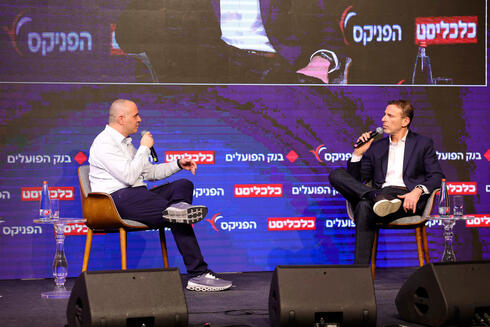
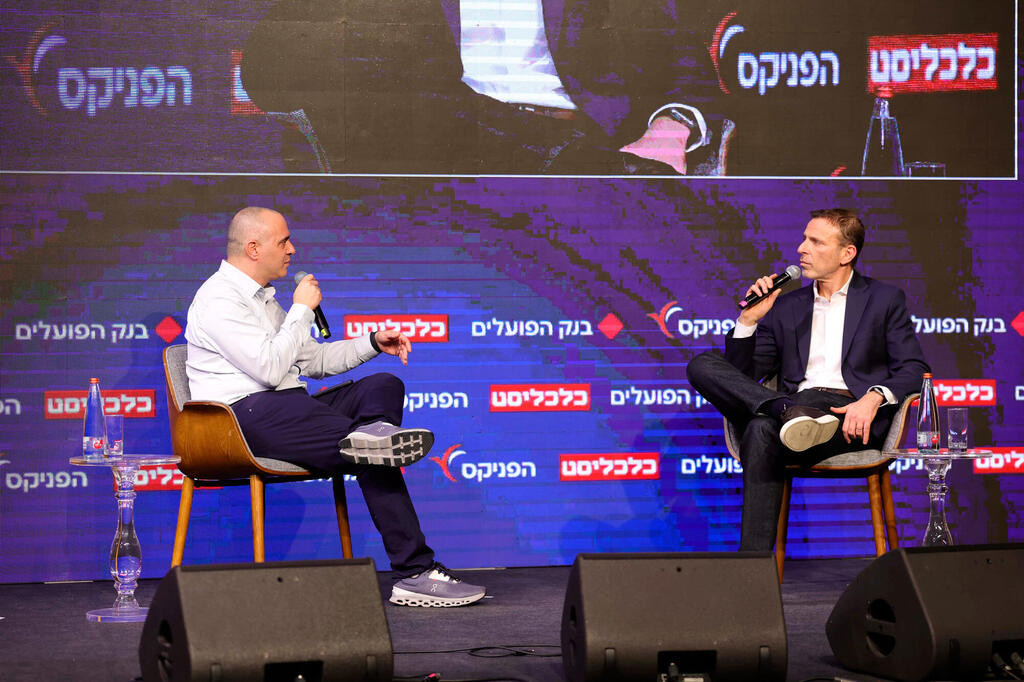
“In Israel, the deployment of 5G is very limited, only about a third of the country, and as a result, speeds remain low,” said Ilan Sigal, CEO of Yes and Pelephone, in a conversation with Calcalist’s Roee Bergman held on Wednesday as part of Calcalist’s Forecasts Conference, in collaboration with Bank Hapoalim and the Phoenix.
According to Sigal, “We may not feel it on a daily basis, but cellular infrastructure is a national asset. If 5G were deployed across the country, it would contribute NIS 30 billion to the economy within five years. Any industry that wants to move forward needs 5G, without it, there is no AI and no autonomous vehicles.”
The problem, he said, is that “establishing a single 5G site costs about one million shekels. In Israel, thousands of antennas are required to support full deployment. That means investments of NIS 5-7 billion, alongside regulatory barriers such as bureaucratic hurdles around site construction that need to be reduced. If the state lowers these barriers, we can move much faster. That is also why we see consolidation in the sector worldwide, mergers make it possible to raise the necessary capital.”
In November, Pelephone signed a non-binding memorandum of understanding to acquire Hot Mobile for NIS 2.1 billion, raising questions about whether the Competition Authority will approve the deal. On this issue, Sigal said:
“Mergers and acquisitions in the mobile sector are already happening in Italy and Spain, and just yesterday a merged company began operating in the UK, with a commitment to invest £11 billion over six years. European operators told regulators it is either mergers or death. We are ready to commit to substantial investments to reach 100% deployment. As for competition, there are 26 mobile players in Israel today, and competition is only intensifying. It will remain strong even after a merger, and regulators should not be afraid of that.”
Addressing Yes’s collaboration with Partner and concerns that it could harm competition, Sigal said:
“Competition in television is even fiercer than in cellular, because there are also international players. Partner, for example, uses content from Sting [Yes], but the service itself is entirely its own. That determines Yes’s future, and Partner can offer better content as a result, meaning competition has only intensified.”
Sigal also commented on Communications Minister Shlomo Karhi’s proposed broadcasting law.
“It is a very broad law that touches on many areas. For us, there are both positive and negative elements. Its goal is to create equality among all players, which could, for example, make sports broadcasting cheaper. That said, discussions with regulators are still ongoing, and not everything will look exactly as it does in the current proposal.”
Regarding foreign players in the streaming market, Sigal said:
“At Yes, we strongly support investment in original productions. Content quality is improving, customers are voting with their feet, and the company is growing. We also collaborate with streaming platforms such as Netflix, Apple, and Disney. If additional players enter the market, it will only further strengthen competition.”



