










Tesla leads Israel's EV market as Chinese rivals struggle to win trust
The company sells just two models locally, but FSD, the Semi and a new Roadster could reshape its offering.
According to vehicle delivery figures from the Israel Vehicle Importers Association, which are due to be published in the coming days, Tesla is the best-selling electric car brand in Israel. How did Tesla become the market leader amid a sea of mass-market Chinese cars, some priced at less than NIS 130,000? The explanation lies partly in the sharp decline in electric vehicle sales, which has created a divide: those still buying electric cars tend to be consumers with the means to install a home charging station.
Then there is the issue of branding. Chinese manufacturers have struggled to establish a strong reputation among Israeli consumers amid concerns over rapid depreciation, shortages of spare parts and high insurance costs. All of these factors are pushing Israelis toward brands they recognize and trust.
Tesla produces only two models for the market: the Model Y and the Model 3. The Model S has been discontinued, while the Model X is no longer available. The flashy Cybertruck has also failed to become a significant sales success. Nevertheless, Tesla has several developments in the pipeline that could affect consumers in Israel.
FSD Europe: vote postponed
Tesla doesn't have many new models in the pipeline, but unlike some other automakers, it has the ability to upgrade its existing vehicles in ways that can generate additional revenue. The clearest example is FSD, Tesla's semi-autonomous driving system, which is already active in the United States, Australia and some European countries, including the Czech Republic.
The European Union was scheduled to vote on FSD regulations that would apply across the bloc. That could be significant for Israel, which generally follows European vehicle standards. However, the vote has been postponed until December.
Approval for FSD in Europe requires a majority of 15 of the EU's 27 member states. Seven member states have already expressed concerns about the system's use within their borders, while Tesla has presented data indicating that vehicles driven in FSD mode are safer than those driven without it.
Last week, however, a safety organization in Belgium, where Tesla FSD is already operational, published data questioning the system's performance. According to Johanna.be, which tested a Tesla equipped with FSD over 400 kilometers, the system, which is designed to detect speed limits by "reading" road signs, failed to do so on some occasions, and the vehicle traveled above the legal speed limit.
Tesla Semi: market launch next year
When it comes to Tesla, it is easy to forget that the company also manufactures trucks. Tesla's Semi is approaching the fourth anniversary of its unveiling, although commercial-scale production in the U.S. only began this year.
According to U.S. reports, Tesla has sold approximately 800 trucks to date, hardly a figure to boast about. However, the company has contracts to deliver thousands more to organizations including PepsiCo. Equally significant is the "European" version of the Tesla Semi, with deliveries scheduled to begin next year.
In practice, the Tesla Semi is designed to operate in Europe as well as the U.S. According to official figures, the base version of the electric truck can travel 550 kilometers between charges and haul approximately 40 tons, just below the maximum permitted weight in Germany.
The Tesla Semi is significant not only for potential customers but also for the European regulatory system. Heavy-vehicle manufacturers selling trucks in Europe are subject to rules requiring them to reduce emissions and, depending on their performance, can face substantial fines for failing to meet the targets. Manufacturers can also use pooling arrangements, effectively combining their emissions performance with that of other automakers.
Unlike most other heavy-vehicle manufacturers, Tesla has never produced a conventional, polluting truck. This means the company could not only sell electric heavy trucks in Europe but could potentially benefit from emissions-pooling arrangements if other manufacturers seek to offset their emissions performance by partnering with Tesla.
The Roadster is just around the corner
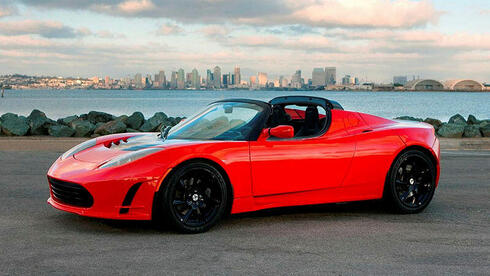
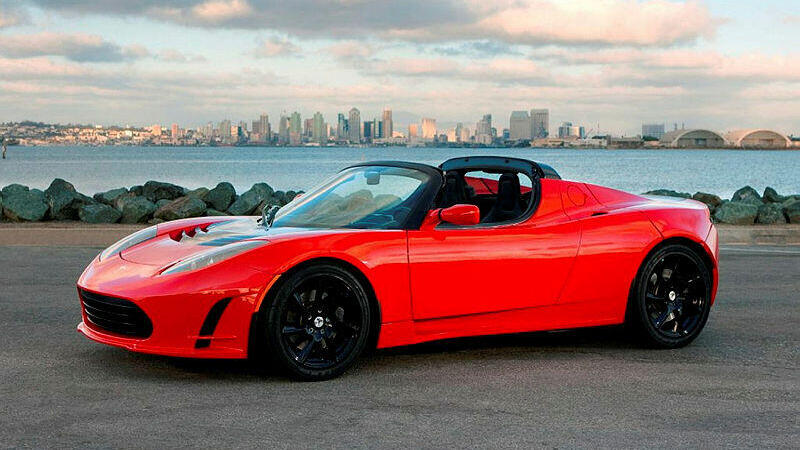
The original Tesla Roadster, the company's first sports car, was electric, sporty and groundbreaking. Since then, Tesla has repeatedly promised to unveil a new Roadster. If recent reports prove accurate, the new model could be revealed in early October.
Details remain scarce, but patent filings with the U.S. Patent and Trademark Office have revealed illustrations of an imposing coupe featuring a large, specialized rear wing that deploys at very high speeds.
Other reports describe a car capable of accelerating from 0 to 100 km/h in under three seconds and equipped with "acceleration thrusters"—a feature whose exact function remains known only to Tesla. One thing is certain: the new Roadster is expected to be extreme.
There is a reason Tesla could use such a vehicle now. The company is facing declining sales in China, where consumers are increasingly shifting toward vehicles from Chinese luxury brands such as BYD's Denza.
Tesla is therefore in need of a vehicle that can reinforce its brand, and the Roadster, if and when it is unveiled, could serve precisely that purpose.



