










Unit 8200 veterans raise $56 million for Gambit to help companies survive inevitable cyberattacks
The Israeli startup’s platform maps infrastructure and backup systems to ensure recovery after attacks.
Cybersecurity startup Gambit Security has raised $56 million in a funding round led by Kleiner Perkins, Spark Capital, and Cyberstarts. The round comes one year after the company raised $5 million in a Seed round.
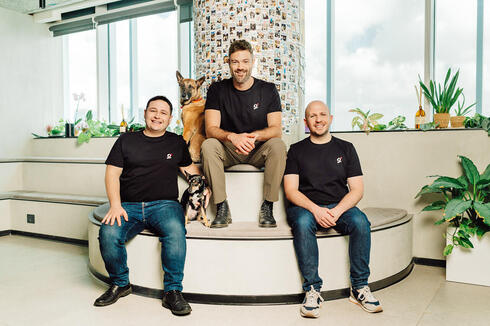
The company was founded in 2024 by CEO Alon Gromakov, CPO Sa’ar Elias, and CTO May Kogan. All three are former members of the IDF’s elite Unit 8200, where they served for several years and received Israel Defense Awards for their contributions. After completing their military service, Gromakov, Elias, and Kogan were among the first employees at cybersecurity startup Sentra.
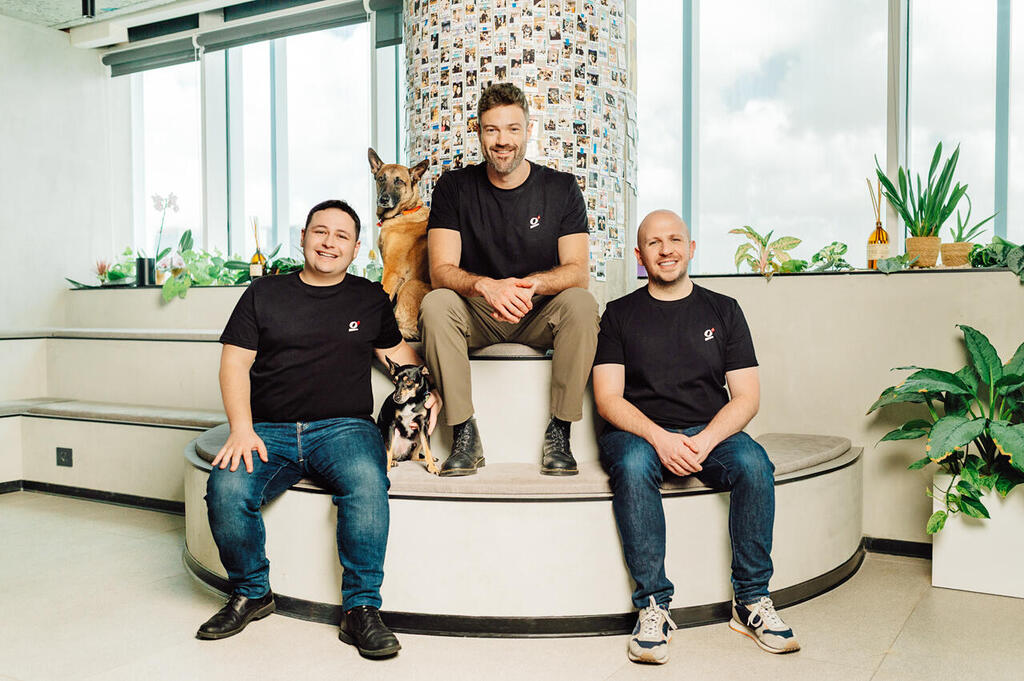
Gambit currently employs about 60 people, including 40 in Israel and 10 in the United States. The new funding will be used to accelerate product development, deepen collaborations with global organizations, and expand hiring across research, development, and sales.
In a conversation with Calcalist, Gromakov said the company was founded on the recognition that preventing cyberattacks entirely is no longer a realistic goal.
“We come from Unit 8200’s research and cyber units, and we understood that developing a product that only prevents attacks does not solve the problem,” he said. “The environment is constantly changing. We assume that an attacker will eventually succeed or that a failure will occur in the cloud. Organizations need to be able to continue operating even after an attack.”
Gambit’s platform is designed to ensure business continuity in the face of cyber incidents or system failures. It connects to an organization’s infrastructure, security tools, and backup systems to autonomously map environments and backup data. By doing so, it identifies gaps that could undermine recovery plans and disrupt operations.
The system continuously measures organizational resilience against evolving threats and enables early remediation, rapid recovery, and uninterrupted business operations, not only in the event of cyberattacks, but also during system outages or technical failures.
Lior Simon, Managing Partner at Cyberstarts, which led the Seed investment in the company, said: “From the moment we invested in Gambit at its early stage, we recognized that the team was tackling a challenge that is redefining the entire market. Their deep understanding of the field allows them to drive a fundamental shift in how organizations address evolving threats in a constantly changing environment, rather than relying on static defense systems. This is the kind of transformation that is reshaping how organizations protect their continuity and revenues, especially in an era when AI is changing the face of cyber.”



