










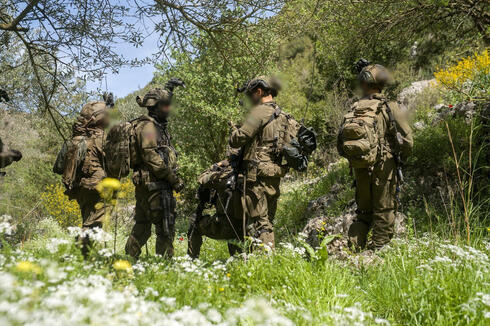
Cheap drones become central threat to Israeli forces in southern Lebanon
Hezbollah’s upgraded UAV arsenal challenges interception efforts and disrupts operations.
An Israeli soldier was seriously injured on Monday when an explosive drone struck during operational activity in southern Lebanon, in what the Israel Defense Forces described as a violation of the ceasefire by Hezbollah. Another soldier was lightly wounded.
The incident reflects a broader pattern in the current campaign, in which Hezbollah has significantly expanded and upgraded its drone capabilities. The group has increasingly relied on unmanned aerial vehicles (UAVs) to target Israeli forces, favoring them over more expensive weapons such as long-range missiles or rocket-propelled grenades.
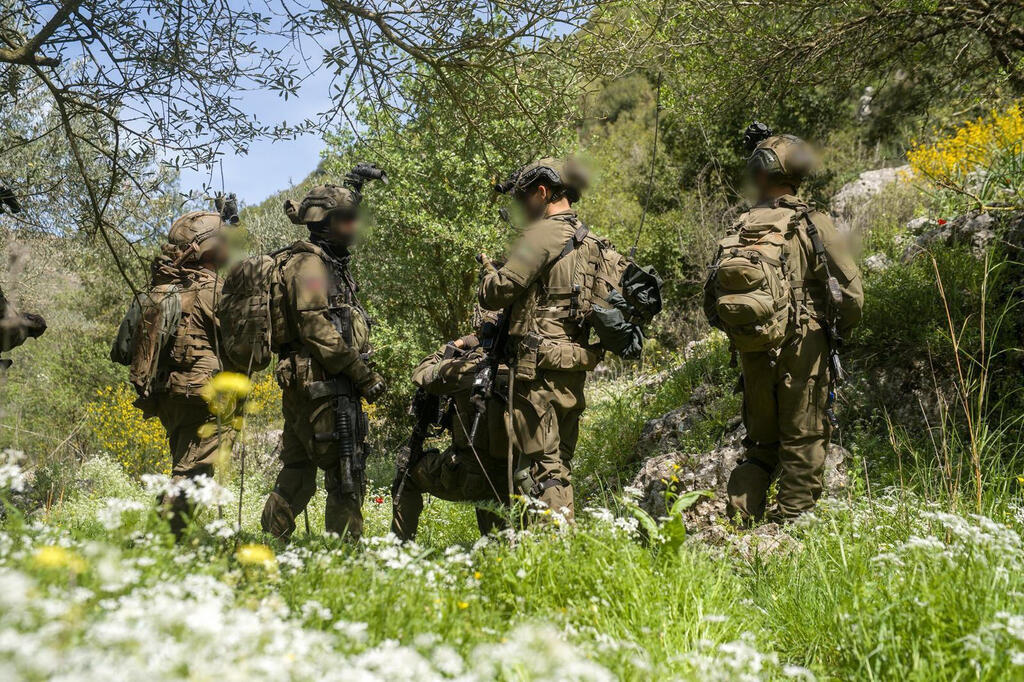
Many of the drones are assembled or modified in southern Lebanon, where operatives add components such as cameras and explosive payloads. A key development in recent months has been the introduction of fiber-optic-controlled drones, adapted from tactics used in the war in Ukraine.
These drones are connected to their operators via an optical fiber cable that can extend up to approximately 10 kilometers. This allows them to operate without relying on radio signals, making them far less vulnerable to detection or disruption by electronic warfare systems.
The use of fiber-optic drones has reduced the effectiveness of some of the IDF’s primary countermeasures. Without a radio signal to intercept or jam, the drones are more difficult to track and neutralize.
In several incidents, Israeli forces have been forced to rely on direct fire using personal weapons to shoot down approaching drones. This was evident in a recent attack during an evacuation mission, in which Sgt. Idan Fox was killed and six other soldiers were wounded.
During that incident, additional drones were launched at the evacuation site. One was intercepted, while another exploded a few meters from a helicopter that was evacuating the wounded.
The Defense Ministry has recently issued a call for solutions to intercept explosive drones, highlighting ongoing gaps in existing defenses.
The growing use of fiber-optic drones reflects lessons drawn from the war between Russia and Ukraine, where both sides have developed low-cost UAVs to conduct attacks and gather intelligence.
Ukrainian officials have described such drones as effective against electronic warfare systems and capable of operating in environments where other tools are less effective. Their relatively simple design also allows for rapid production and adaptation.
Hezbollah’s adoption of similar systems marks a shift toward cheaper, more resilient weapons that can be deployed frequently and with limited infrastructure.
The effectiveness of these drones is also linked to broader operational constraints. Restrictions on Israeli ground and air activity in southern Lebanon have allowed Hezbollah operatives to maintain a degree of freedom of action in the area.
Military officials increasingly view the drone threat as a central challenge on the northern front. While 16 Israeli soldiers have been killed in Lebanon since the start of the current operation, the number could have been higher without partial interception efforts.
Despite this, there is currently no comprehensive solution to the threat posed by fiber-optic drones, and existing countermeasures have had mixed success.



