








"Don't expect IPOs by Israeli high-tech companies on Wall Street this year"
Goldman Sachs International co-CEO Anthony Gutman says market volatility is becoming the new normal.
"Don't expect IPOs by Israeli high-tech companies on Wall Street this year. There are currently no companies that are ready to go public, and even those that have already done so have seen that the IPO did not bring particularly good results. This does not mean that it will be a weak year for IPOs on Wall Street; on the contrary, we estimate that at least 40 American companies under our coverage will go public in 2026, especially if the IPOs of giant companies like SpaceX and Databricks go through.
"But in order to go public today, a company needs to be much larger than before in terms of revenue, and also more profitable. The minimum threshold for annual revenue today already reaches half a billion dollars. On the other hand, in Israel, the surge in mergers and acquisitions will continue, because there is currently a huge amount of private money available and looking for investments, and American technology giants, as well as European companies, are looking to buy great Israeli companies,” said Anthony Gutman, Co-Chief Executive Officer of Goldman Sachs International. The interview with Calcalist was conducted just before the outbreak of the war with Iran.
2 View gallery
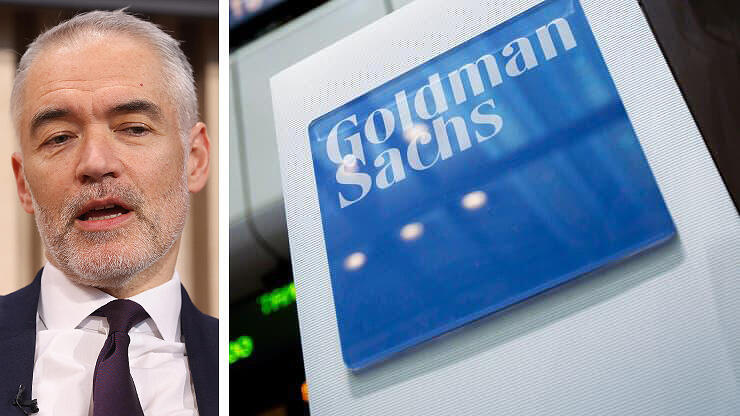
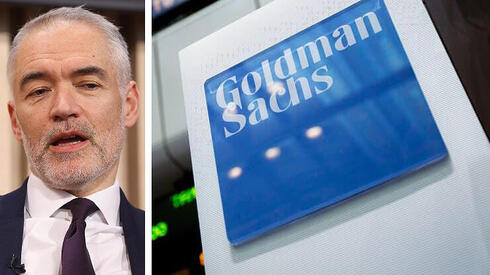
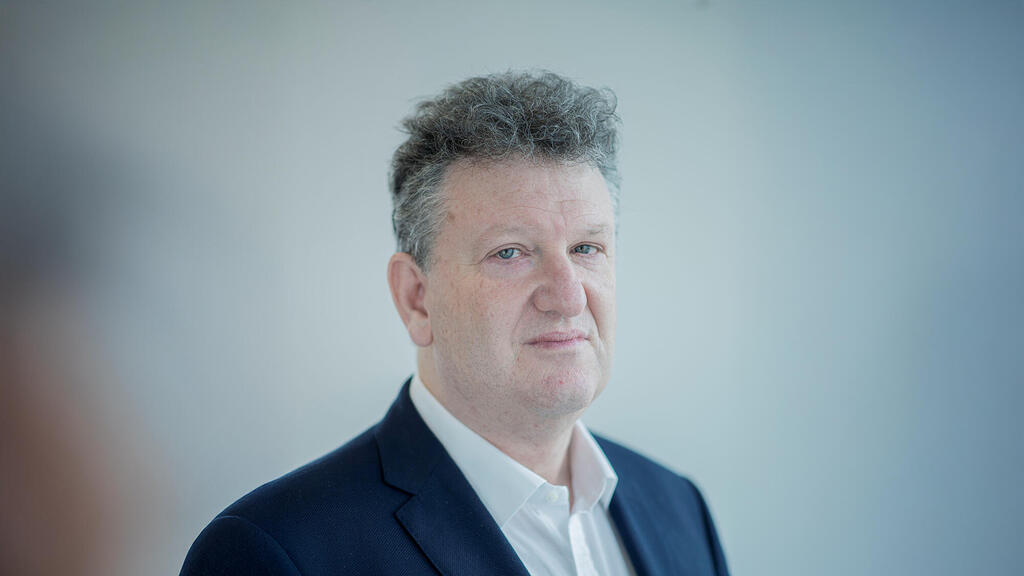
Anthony Guttman next to a sign for Goldman Sachs Investment House
(Chris Ratcliffe/Bloomberg, Bloomberg)
Gutman is referring primarily to the three Israeli IPOs that were completed in 2025, all of which are trading well below their IPO valuations. The market value of fintech company eToro has plunged to $2.6 billion, about 40% below its IPO value; mobility company Via has lost about 60% of its value, falling to $1.5 billion; and fintech company Navan, the latest Israeli IPO in New York, has fallen about 65% to a market value of $2.6 billion. In fact, the only Israeli company currently working with investment banks on an IPO prospectus is Cato Networks, the cybersecurity company founded by Shlomo Kramer. But Cato, which is growing at a rapid double-digit rate, has only recently reached an annual revenue run rate of $350 million. In the current environment, marked by concerns surrounding software company stocks, which have also begun to spill over into the cybersecurity sector, and by the war with Iran unsettling global markets, this will probably not be enough for it to achieve the valuation of more than $5 billion that it is aiming for.
You are referring specifically to European companies that, throughout the war years, avoided making significant investments here. As someone who lives and works in London, do you feel that there has been a change recently?
"Europe has certainly had a harder time with Israel than the US on both the political and business fronts, but we are seeing European businesses returning here. I also notice a change in Israel since my last visit about a year and a half ago. Despite all the hardship you have gone through since October 7, 2023, the level of entrepreneurship, innovation and leadership that comes out of this part of the world is enormous. Every visit I make here, after meeting the people working in the business sector, and of course with an emphasis on high-tech, I leave with the feeling of 'wow, this is simply amazing.'"
Building on Israeli institutional money
Goldman Sachs is one of the oldest foreign banks operating in Israel and currently employs 25 people here, with plans to hire more this year, mainly in the expanding wealth management department. A growth investment fund managed by Irit Kahan recently began operating in Israel.
The fund's first investment, which does not invest the bank's own money but instead raises capital from external entities, was in the latest funding round of cybersecurity company Armis. This round was conducted at a valuation of $6.1 billion, and a few months later Armis was sold for $7.75 billion to the American software giant ServiceNow. Goldman Sachs' local operations have been managed for five years by Jonathan Penkin, who is also responsible for several other branches of the bank around the world, including Australia and South Africa.
According to Penkin, alongside the expansion of wealth management activities, which are growing as the number of exits from Israeli high-tech companies increases, Goldman Sachs is also expanding its work with local institutional investors. "In a few months, there will be announcements about a change in our strategy, with a move to connect investment banking with asset management platforms, credit funds and private investment funds at Goldman Sachs. Institutional investors in Israel receive large monthly cash flows from pensions and need new investment channels and instruments," explain Penkin and Gutman. Gutman has been at Goldman Sachs for 20 years, and before taking up his current position about a year ago he managed the bank's investment banking activities in the UK.
But recently there has been a feeling that the investment bank Jefferies is trying to challenge Goldman Sachs' position in Israel. The bank, which is far smaller than Goldman Sachs, only began operating in Israel in 2022 but has since managed to execute several high-profile deals, such as bringing hedge fund manager Bill Ackman to invest in the Tel Aviv Stock Exchange, and has become one of the most active banks here, both in offerings and mergers and acquisitions.
How much do you feel the competition from Jefferies?
"Jefferies is very good at advertising, but if you examine the landscape, the first three IPOs of Israeli companies on Wall Street in 2025 were led by Goldman Sachs, and the only bank that really counts in IPOs in New York is the lead bank," Gutman and Penkin say, referring to the fact that Jefferies was part of the consortium of underwriters in the IPOs of eToro and Navan, rather than the bank that led them. "We also advised on the major mergers and acquisitions in Israel involving Wiz and Armis. Goldman Sachs has one of the largest local teams among foreign banks. Jefferies does a lot in Israel in the capital-raising sector on the Tel Aviv Stock Exchange, and that’s something we historically haven’t focused on," says Gutman. Penkin adds: "I'm not an arrogant person, but Jefferies is not in the same league as us. They didn’t compete with us on the Google-Wiz deal or others. It’s a different kind of business."
Let’s talk about 2026 and what’s expected to happen in the markets. It seems that the AI bubble narrative that was strong toward the end of 2025 has given way to concern about SaaS. How do you see things?
Gutman: "We're not big believers in the existence of an AI bubble. This is going to be a revolution. We believe in technology and its ability to change society, increase productivity, and drive growth. These are not things that usually create a bubble. I don't think we'll be sitting here in five years and saying, 'Wow, this AI thing was just a passing trend.' Our lives will change fundamentally. We might just not feel it in the first year, but perhaps in the third. This is important because the level of enthusiasm that exists right now affects valuations. In general, we have a relatively calm view of valuations. It's true that the giant AI companies are trading at very expensive prices, but they are also generating real profits. The earnings multiples relative to the dot-com bubble don’t seem unreasonable, and these companies are generating real cash flow that finances the enormous investments required. What you do need to pay attention to is the rate of adoption. That’s very difficult to predict."
Volatility is the new normal
And what does all this mean for the software sector, which has fallen by tens of percent in about three months since the beginning of 2026?
"When pricing is so high and there has been such a strong run-up in SaaS (software-as-a-service) stocks in recent years, it is natural for investors to think, 'The market has run up a lot, maybe I should reduce my risk a little.' Therefore, I see what has happened in recent weeks in software stocks as a move partly driven by a desire to reduce risk. The point is that the money has not necessarily left the market completely, but has moved elsewhere. We are seeing a rotation into other sectors that are absorbing this money, sectors tied to cyclical consumption and the traditional economy. People are looking for areas that are more resistant to AI, and we are seeing a natural rotation toward sectors that are somewhat more defensive. The most prominent example is the rising valuation levels of food retail companies, such as Walmart, which recently reached a trillion-dollar valuation for the first time."
I saw a forecast by the co-CEOs of Goldman Sachs who estimated at the end of 2025 that a correction in the markets was expected this year. This would not be unreasonable given the fact that the market has seen three consecutive years of double-digit increases in the S&P 500 index.
"Our CEOs’ intention in that assessment, which they made before the war with Iran, was that given such a strong market over time, it would not be surprising to see volatility at some point. The graph is never a straight line and there will always be bumps along the way. In my opinion, volatility has also become the new normal, and investors have adapted to a more volatile market where they know how to distinguish between background noise and real events. This has a lot to do with geopolitical tensions, such as what we recently saw around Greenland.
"Even now, when analyzing the American-Israeli attack on Iran, investors are making calculations that take into account that Iran is not a major economy globally and that the attack is unlikely to escalate into World War III but will ultimately remain a limited event. The key economic question is whether a real recession is expected, and this is important because we haven't had one since the 2008 financial crisis. We, as risk managers, are examining all the relevant indicators, and right now there is nothing that scares us. The main risks we identify are geopolitical. But crises driven by events such as wars are often sharp and deep, yet recovery from them is usually very rapid."



