










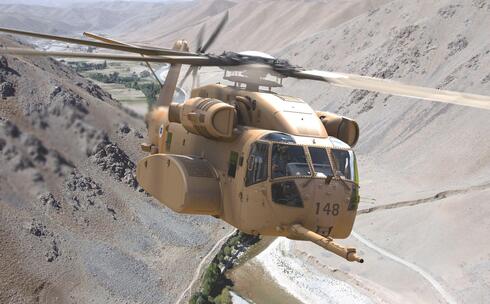
Israel signs $130 million deal with Elbit to outfit next-generation helicopters
Contract will integrate Israeli avionics and anti-missile systems into US-built heavy-lift CH-53K aircraft replacing the aging Yas’ur fleet.
Israel has taken another step toward replacing its aging heavy-lift helicopter fleet, signing a $130 million agreement with Elbit Systems to integrate Israeli avionics, command-and-control, and electronic-warfare technology into a dozen new CH-53K helicopters purchased from the United States.
The contract, announced by the Defense Procurement Directorate within the Israel Ministry of Defense, will see Elbit adapt the American-built aircraft to the specific operational requirements of the Israeli Air Force. The 12 helicopters, manufactured by Lockheed Martin’s Sikorsky unit in Connecticut, are intended to replace the decades-old “Yas’ur” helicopters that have served as a backbone of Israeli transport and special-operations missions.
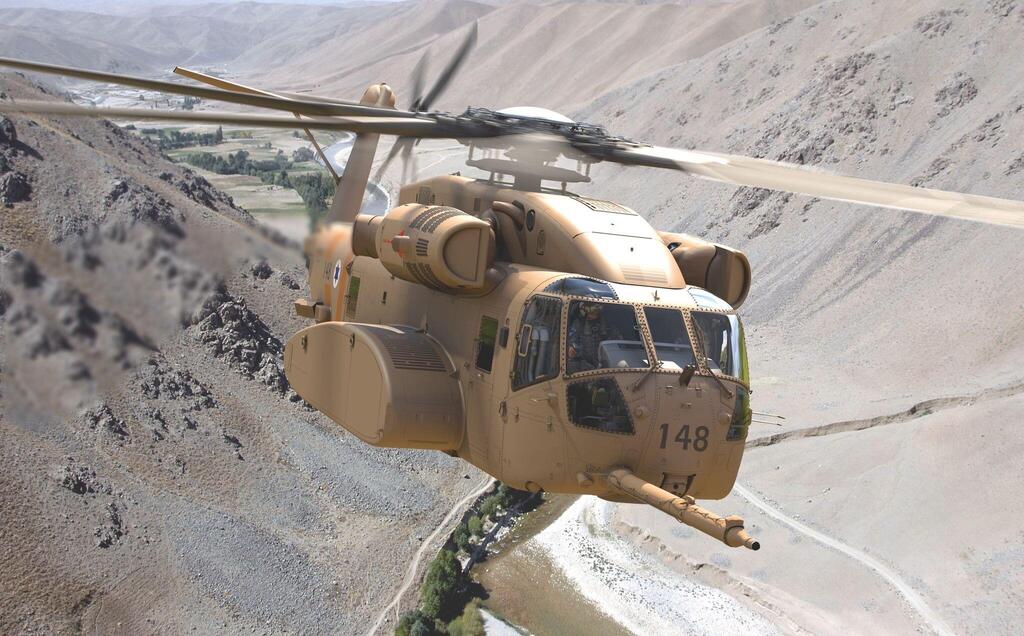
Under the deal, Elbit will install a suite of locally developed systems, including an advanced Direct Infrared Countermeasures (DIRCM) anti-missile system designed to protect aircraft from shoulder-fired threats. The integration is expected to enhance cockpit performance, enable operations in complex weather and terrain, and improve the identification of safe landing zones and obstacles, capabilities regarded as critical for Israel’s operational environment.
The CH-53K helicopters were originally acquired through a Foreign Military Sales agreement between the Israeli and U.S. governments. Once assembly is completed in the United States, the aircraft will move to a dedicated production line where they will be reconfigured from the standard American model to an Israeli variant tailored to Air Force specifications.
Maj. Gen. (Res.) Amir Baram, director general of the Defense Ministry, placed the purchase within a broader, long-term procurement program that also includes new fighter squadrons, aerial tankers, and additional armaments. The helicopter fleet, he said, would help define the IDF’s force structure “for the coming decade and beyond,” and demonstrated the potential of embedding Israeli technology in advanced foreign platforms.
Israel’s reliance on heavy-lift helicopters has only grown in recent years, as the military conducts operations requiring rapid movement of troops, equipment, and medical evacuation under threat of missile fire. The replacement of the Yas’ur fleet, first introduced in the late 1960s, has been a strategic priority, but also a costly one, tying Israel closely to U.S. supply chains while seeking to preserve a substantial role for domestic industry.



